


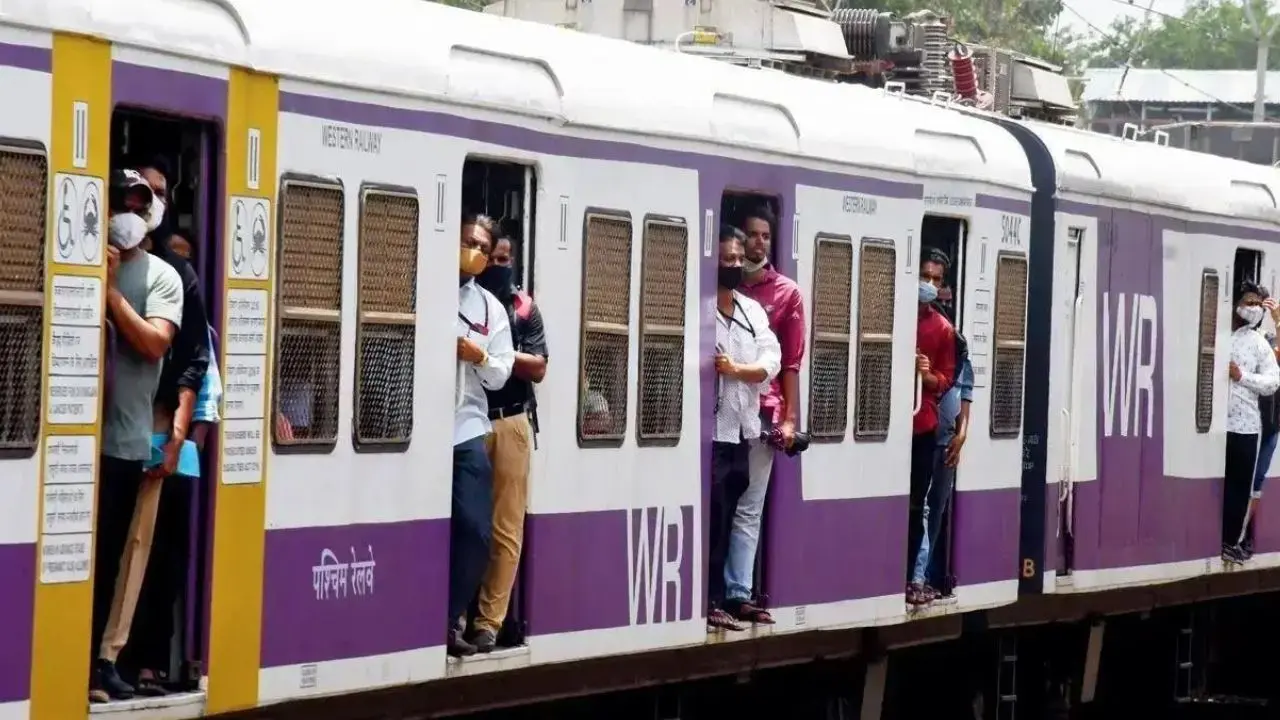
Mumbai commuters face significant travel disruptions on Sunday, August 31, as the Central Railway announces a megablock across the city’s Central and Harbour lines. The temporary suspension of multiple local train services is part of a comprehensive track maintenance and repair programme designed to enhance safety and operational efficiency on heavily used routes.
The Central Railway division has scheduled the megablock during key daytime hours, affecting hundreds of daily passengers. On the Central line, Down Slow Line trains from Chhatrapati Shivaji Maharaj Terminus (CSMT) departing between 10:48 AM and 3:45 PM will be diverted to the Down Fast line between CSMT and Vidyavihar. These services will stop at Byculla, Parel, Dadar, Matunga, Sion, and Kurla before rejoining the Down Slow line. Up Slow Line trains departing Ghatkopar from 10:19 AM to 3:22 PM will similarly be rerouted to the Up Fast line, halting at major junctions including Kurla, Sion, Matunga, Dadar, Parel, and Byculla.The Harbour line will witness parallel disruptions, with services between Kurla and Vashi suspended on both Up and Down tracks from 11:10 AM to 4:10 PM. All Down Harbour Line trains from CSMT to Panvel, Belapur, and Vashi during this window will be cancelled, alongside corresponding Up line services returning to CSMT. Authorities have urged commuters to plan alternate routes via Thane–Vashi or Neral stations between 10:00 AM and 6:00 PM to minimise inconvenience.
Also Watch: An Exclusive Interview with Sanjeev Jaiswal (IAS), CEO MHADA
Officials highlighted that the megablock coincides with the Ganeshotsav festivities, potentially complicating travel for devotees visiting local pandals along the affected corridors. To support passengers, special trains will operate between CSMT–Kurla and Panvel–Vashi during block hours, providing partial relief for impacted commuters.Railway experts note that such large-scale maintenance interventions are critical for ensuring long-term reliability on Mumbai’s heavily congested suburban network. While short-term disruptions are inevitable, these upgrades aim to reduce delays, improve track integrity, and enhance safety, particularly on high-density routes serving millions daily.Urban planners and transport authorities emphasise the importance of timely public communication ahead of such megablocks. Real-time updates, digital alerts, and alternate travel advisories are essential to ensure commuter safety and prevent overcrowding at stations.
The megablock also underscores broader challenges for Mumbai’s urban transit infrastructure, where rapid population growth, festival-season surges, and high suburban train density necessitate periodic, large-scale maintenance interventions. Officials remain committed to balancing commuter convenience with safety imperatives, signalling a proactive approach to urban rail management.
