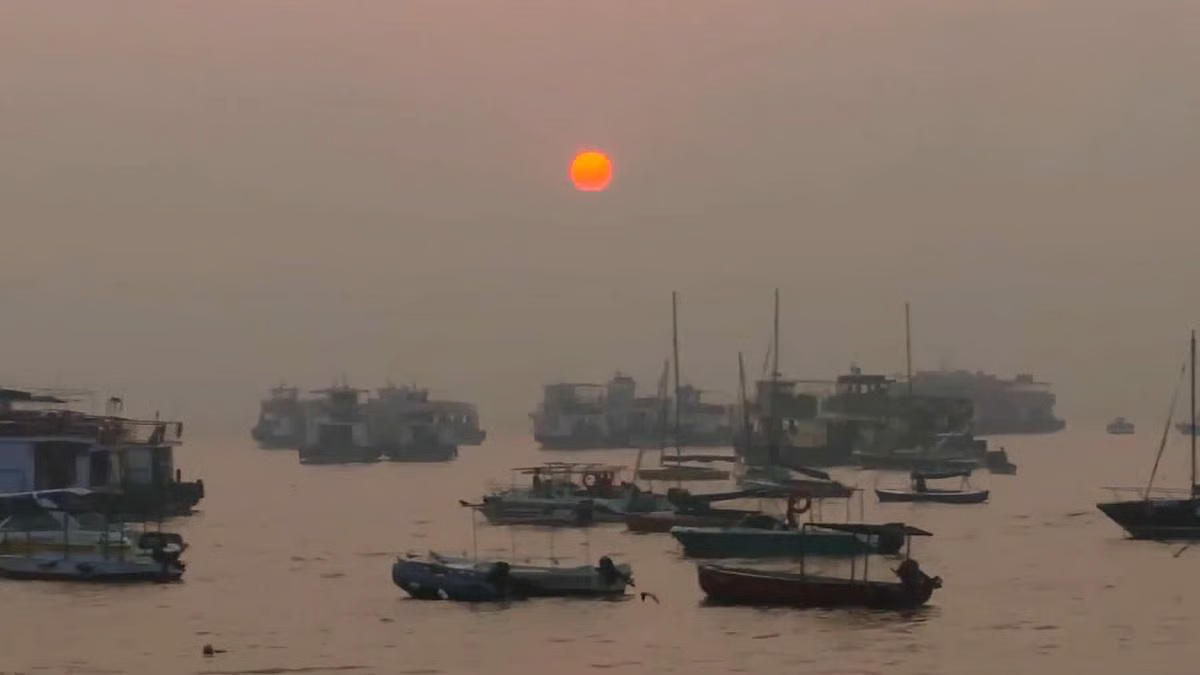
Mumbai began its final day of 2025 with an unusually reflective pause as residents and visitors gathered along the waterfront to witness the year’s last sunrise near the Gateway of India. The quiet moment, framed by winter haze and gentle sea winds, stood in contrast to the high-intensity celebrations expected later in the night, highlighting the city’s dual character of calm resilience and relentless energy.
As daylight broke shortly after 7 am, the historic precinct overlooking the Arabian Sea drew early risers seeking a symbolic close to the year. Urban observers noted that such spontaneous public gatherings reflect Mumbai’s deep relationship with shared civic spaces, particularly its coastal landmarks, which continue to serve as social anchors in an increasingly dense metropolis. The subdued atmosphere also underscored the importance of preserving accessible, open public realms amid rapid redevelopment pressures across South Mumbai. While the morning unfolded quietly, municipal agencies spent the day shifting gears towards managing one of the city’s most demanding nights. Law enforcement authorities confirmed large-scale deployment plans across beaches, promenades and transport hubs, aiming to balance public safety with uninterrupted urban movement. According to officials, the strategy prioritises crowd management, emergency readiness and equitable access to public spaces without excessive restrictions.
Public transport emerged as a critical pillar of the city’s year-end operations. Continuous overnight services on the underground Metro Line 3 were positioned as a step towards encouraging mass transit use during large events, reducing dependence on private vehicles and easing congestion. Transport planners noted that extended metro and suburban rail operations align with longer-term goals of promoting low-emission mobility and improving night-time connectivity for shift workers and service staff. Surface transport agencies also scaled up bus services along key corridors, particularly coastal routes that attract large crowds. Urban mobility experts pointed out that such interventions, while temporary, offer insights into how cities can design flexible, people-centric transport systems for peak-demand scenarios. They added that consistent investment in public transport capacity is essential for Mumbai’s ambition to remain economically productive while reducing its environmental footprint.
Weather conditions remained favourable through the day, though civic authorities flagged air quality concerns in select neighbourhoods. Environmental specialists reiterated the need for sustained action on emissions, noting that festive peaks often worsen local pollution levels. They argued that cleaner transport, better crowd dispersal planning and enhanced green buffers along public spaces could collectively improve urban liveability during mass events. As Mumbai prepares to usher in 2026, the final sunrise of 2025 offered a brief reminder of the city’s shared rhythms — where heritage, infrastructure and people intersect. For urban planners and policymakers, the day encapsulated a broader challenge: ensuring that celebration, safety and sustainability progress together in one of the world’s most complex cities.
Mumbai Marks Last Sunrise Of 2025 With Golden Dawn At Gateway