


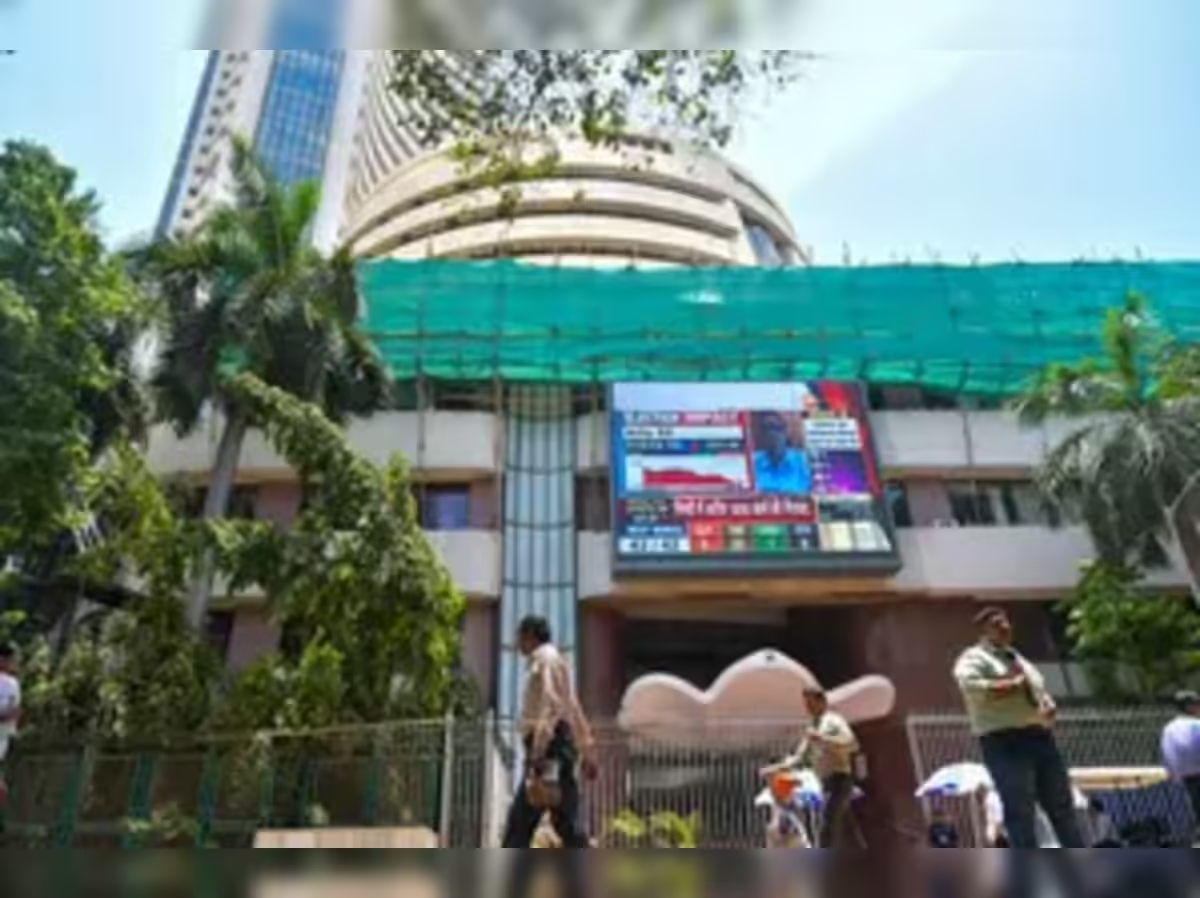
Indian equity markets are navigating renewed volatility after a sharp correction in technology stocks pushed the benchmark index close to a key technical support level, raising concerns that a prolonged tech selloff could ripple through urban consumption and housing demand.
The benchmark NIFTY 50 briefly approached its 200-day moving average this week a threshold widely tracked by institutional investors as a long-term trend indicator before recovering marginally. The move followed weakness in global technology counters linked to shifting expectations around artificial intelligence valuations. Market strategists say the risk extends beyond equity portfolios. India’s large software exporters play a central role in employment generation and income growth in cities such as Bengaluru, Hyderabad and Pune. A sustained tech selloff, if accompanied by slower hiring or bonus moderation, could soften discretionary spending and delay home purchase decisions in premium and upper mid-income segments. International fund managers are signalling caution. Fidelity International has indicated that emerging market equities, including India, may face additional downside if earnings expectations weaken further. Meanwhile, RBC BlueBay Asset Management is positioning for relative currency weakness, reflecting concerns about capital flows and export-linked earnings.
Globally, investors are awaiting earnings from Nvidia, viewed as a bellwether for artificial intelligence investment trends. Policy signals from US President Donald Trump are also under scrutiny, particularly around trade and technology strategy. For India’s urban economy, the implications of a tech selloff are layered. Over the past decade, technology-driven wealth creation has underpinned demand for high-rise residential projects, co-working spaces and mixed-use developments in innovation corridors. Real estate consultants note that booking momentum in certain micro-markets often tracks IT sector confidence. However, sector specialists caution against drawing immediate parallels with previous downturns. India’s property cycle currently benefits from lower leverage among listed developers, improved balance sheet discipline and steady infrastructure investment across major metropolitan regions. Metro rail expansions and new airport projects continue to anchor long-term growth expectations. Urban economists suggest that if technology sector weakness remains limited to valuation resets rather than employment contraction, the spillover into housing and retail may prove temporary.
Yet prolonged uncertainty could reshape capital allocation, influencing both commercial leasing and residential absorption patterns. As global markets recalibrate expectations around artificial intelligence and growth stocks, India’s cities deeply intertwined with software exports will be watching closely. The durability of domestic demand, alongside infrastructure-led expansion, will determine whether the current tech selloff becomes a short-lived correction or a broader urban economic inflection point.
Also Read: NAREDCO Calls For Affordable Housing Reset
Mumbai Markets Reel As Tech Selloff Deepens
