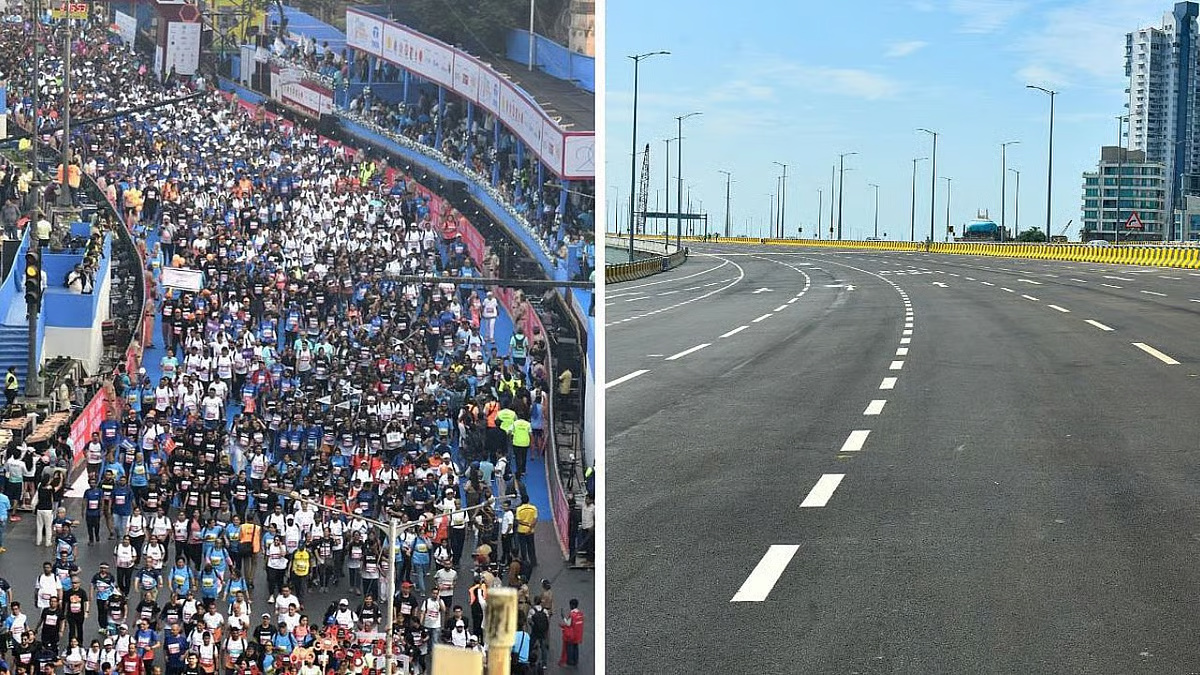
Mumbai’s evolving transport infrastructure will take centre stage this January as the city’s flagship marathon adopts a newly built coastal corridor into its race course for the first time. The inclusion of the Mumbai Coastal Road marks a significant moment where large-scale urban infrastructure is not just functional, but also becomes part of the city’s public and cultural life, reflecting how mobility assets can reshape civic experiences.
The revised route, scheduled for January 18, allows runners to traverse both historic precincts and newly engineered waterfront stretches, underscoring Mumbai’s transition into a more connected, future-ready metropolis. Urban planners say the move highlights how major road projects, often viewed purely through a congestion or real estate lens, can also serve broader social and community purposes when integrated thoughtfully. Under the updated layout, the full marathon will continue to originate and conclude at the city’s heritage railway terminus, preserving its long-standing association with South Mumbai. Other race categories will branch across multiple nodes, including Mahim, Marine Drive precincts and central business districts, before converging near established civic landmarks. The Coastal Road section offers uninterrupted sea-facing views and a flatter gradient, which organisers believe will improve race flow while offering participants a distinct visual experience.
From a city management perspective, the route redesign has required extensive coordination between traffic authorities, municipal agencies and infrastructure operators. Senior officials involved in planning say the exercise tested the operational readiness of the Coastal Road for large-scale public events, including crowd control, emergency access, and traffic diversions across adjoining arterial roads. Such simulations, experts note, are valuable stress tests for new infrastructure ahead of regular high-volume usage. Beyond the race itself, the Coastal Road’s debut in the marathon has wider implications for how Mumbai positions its infrastructure globally. City branding specialists point out that internationally televised sporting events offer rare opportunities to project urban transformation narratives, particularly around climate-adaptive coastal engineering and public realm improvements. While the road has drawn debate around environmental trade-offs, its controlled use during the marathon also demonstrates potential for car-free, people-first activation of waterfront infrastructure.
Inclusivity remains a core element of the event design. Shorter runs, senior citizen categories and assisted races will continue to operate from central locations, ensuring participation across age groups and abilities. Urban mobility advocates argue that such events reinforce the importance of accessible streets and universal design, principles that should extend beyond race day into everyday transport planning. As Mumbai prepares to host thousands of runners and spectators, the integration of the Mumbai Coastal Road into the marathon route serves as a live demonstration of how infrastructure, sport and civic identity can intersect. The real test, urban experts say, lies in whether the city can carry forward these people-centric, low-emission usage models into regular planning, ensuring that new infrastructure enhances not just movement, but quality of urban life.
Mumbai Marathon Integrates Coastal Road Corridor