


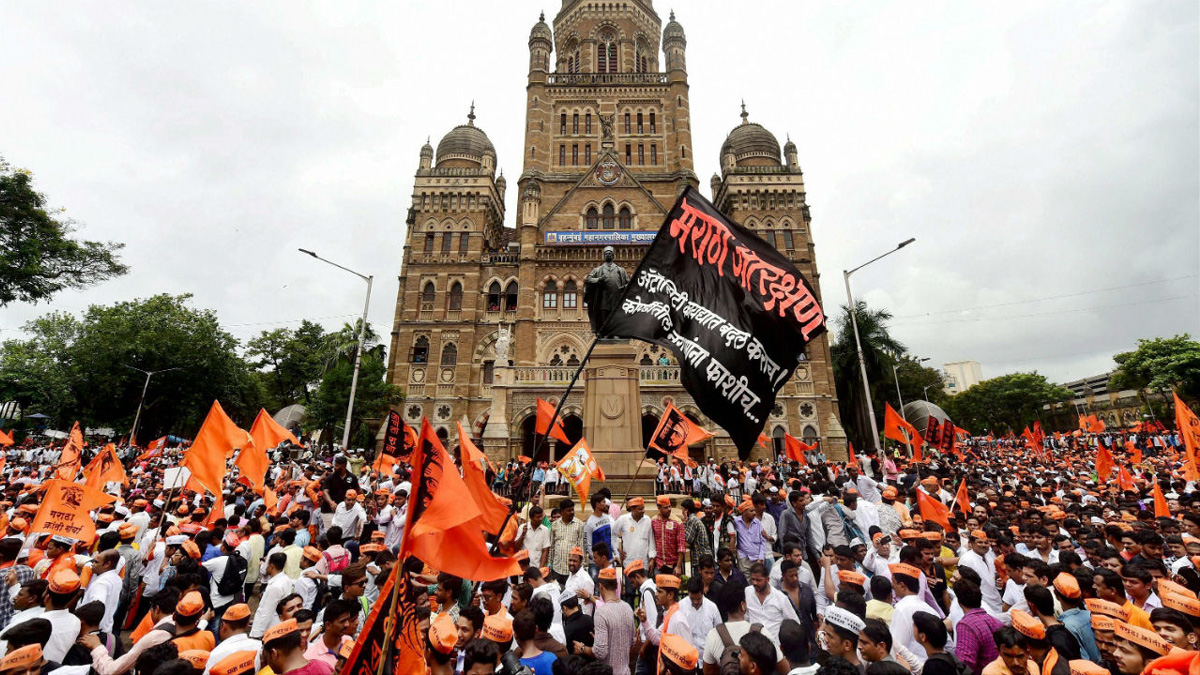
Mumbai and Navi Mumbai faced paralysing gridlock on Saturday as the Maratha quota protest entered its second day, choking one of the city’s busiest road corridors. The Sion-Panvel Highway, particularly around the Vashi Bridge toll plaza, witnessed kilometres-long queues of stranded vehicles as thousands of demonstrators marched towards central Mumbai to press for reservations in education and government jobs.
Authorities moved swiftly to redirect heavy vehicles away from the Vashi toll and into alternative routes around Navi Mumbai. Despite the diversion, commuter woes multiplied with buses, private cars, and goods carriers stuck in standstill traffic. For a city where every hour of mobility loss directly impacts commerce, the protest highlighted the growing tension between civic infrastructure and socio-political movements.
Also Watch: An Exclusive Interview with Sanjeev Jaiswal (IAS), CEO MHADA
The agitation, which drew participants from across Maharashtra’s rural belts, spilled into Mumbai’s heart as groups converged at Azad Maidan and the Chhatrapati Shivaji Maharaj Terminus. Roads around these areas were blocked intermittently for over half an hour, disrupting office-goers and weekend travellers alike. Visuals circulating online showed the Vashi Bridge gridlocked, with serpentine rows of vehicles underlining the fragility of Mumbai’s overburdened transport spine.Protest leaders reiterated that the demand is centred on a 10 per cent quota for the Maratha community under the Other Backward Classes category, arguing it is a rightful claim rather than a political bargaining tool. Officials, however, cautioned against misinformation being spread around reallocation of existing OBC quotas, underlining that any policy move would require legislative clarity.
Experts tracking Maharashtra’s reservation debate note that such mobilisations carry wide economic and civic repercussions for metropolitan areas. Mumbai, already struggling with air pollution, rising emissions, and inadequate public transit load, faces additional environmental stress during prolonged traffic jams. Stationary vehicles idling for hours on highways significantly spike carbon emissions, amplifying the city’s climate burden. From an urban sustainability perspective, protests that stall arterial highways expose the urgent need for eco-friendly transport reforms and alternative negotiation platforms.
Local civic planners warn that repeated highway disruptions also undermine confidence in Mumbai’s infrastructure resilience. “Cities must accommodate democratic expressions without paralysing essential mobility,” said an urban governance expert, pointing to global practices where dedicated protest corridors or decentralised civic squares balance rights with urban sustainability.As the agitation continues, the Maharashtra government faces a double test: addressing a long-standing social demand while preventing Mumbai’s economic engine from grinding to a halt. For the financial capital, the episode serves as a reminder that policy deadlocks on inclusivity often spill directly onto its streets, with ripple effects on environment, economy, and everyday urban life.
