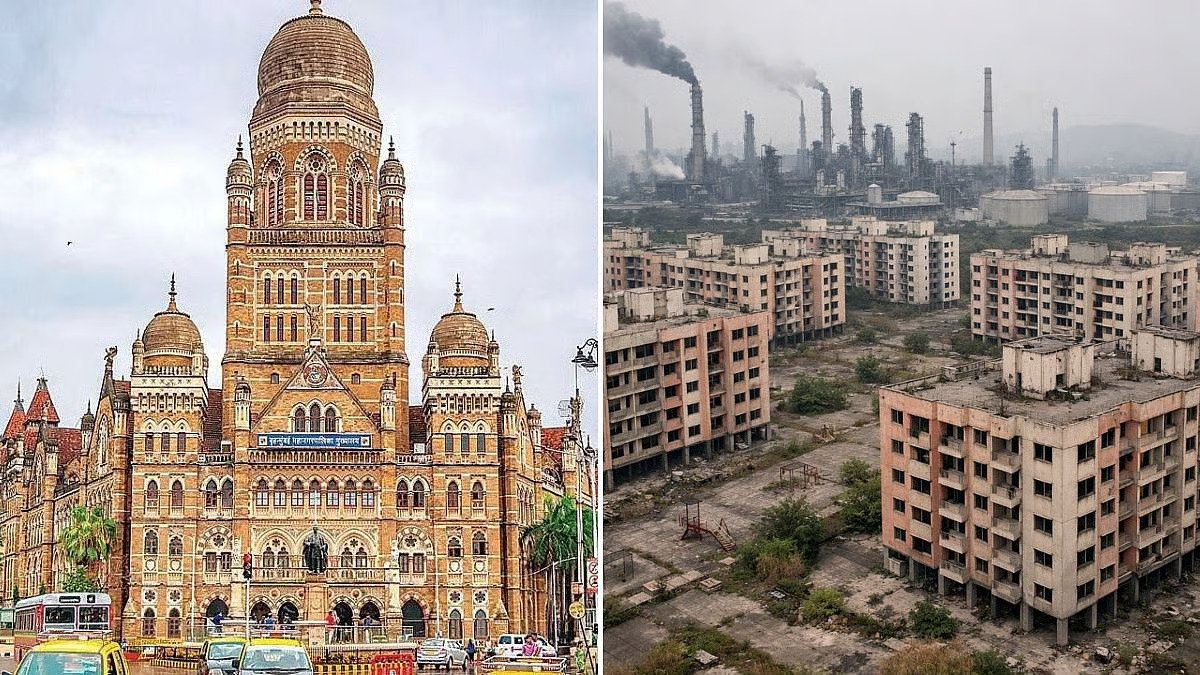
Thousands of rehabilitation homes developed in Mumbai’s Mahul continue to remain unoccupied, highlighting a persistent gap between housing provision and liveability in the city’s resettlement strategy. The issue underscores broader challenges in aligning affordable housing supply with environmental safety and public health standards in high-density urban regions.
Civic data indicates that a significant number of units built for project-affected persons (PAPs) in Mahul have not been taken up, despite sustained efforts to relocate families displaced by infrastructure and redevelopment projects. The reluctance stems largely from concerns around industrial pollution, with the area located in close proximity to petrochemical and manufacturing facilities. Urban health experts point out that Mahul has historically recorded high levels of air pollution, raising serious concerns about respiratory illnesses and long-term exposure risks. While authorities maintain that environmental conditions have improved in recent years, many eligible beneficiaries remain unconvinced, choosing to delay or refuse relocation.
The Mahul PAP housing challenge reflects a structural issue in urban resettlement planning, where availability of housing does not automatically translate into occupancy. “Livability factors such as air quality, access to healthcare, and connectivity are critical in determining whether people accept relocation,” said an urban planning expert. “Without addressing these, even well-built housing can remain underutilised.” Authorities are now exploring third-party validation of environmental conditions, with plans to involve pollution control agencies to assess current air quality levels and verify improvements. Officials suggest that such assessments could help rebuild confidence among potential residents, although scepticism remains among affected communities.
The housing stock in Mahul was originally developed to accommodate displaced households, with standardised units designed to meet basic urban housing requirements. However, the location—within an industrial belt—has consistently been flagged as a concern by civil society groups and environmental researchers. The underutilisation also carries economic implications. Idle housing assets represent a financial burden on the civic body, while delays in rehabilitation can stall critical infrastructure projects that depend on timely resettlement of affected populations.
Looking ahead, Mumbai’s municipal administration is planning to expand its rehabilitation housing inventory significantly over the next few years, with a large share of units expected to come up in western suburbs such as Andheri and Malad. These areas are seen as more viable due to better infrastructure access and comparatively lower environmental risks. Urban development experts argue that future resettlement projects must integrate environmental due diligence at the planning stage rather than as a post-construction concern. Ensuring that housing sites meet health, connectivity, and sustainability benchmarks will be key to achieving equitable and people-centric urban growth.
As Mumbai continues to balance infrastructure expansion with social equity, the Mahul experience serves as a cautionary case. The success of rehabilitation programmes will depend not only on the number of homes built, but on whether they offer safe and dignified living conditions that residents are willing to accept.
Mumbai Mahul Housing Units Remain Vacant Amid Pollution Fears