


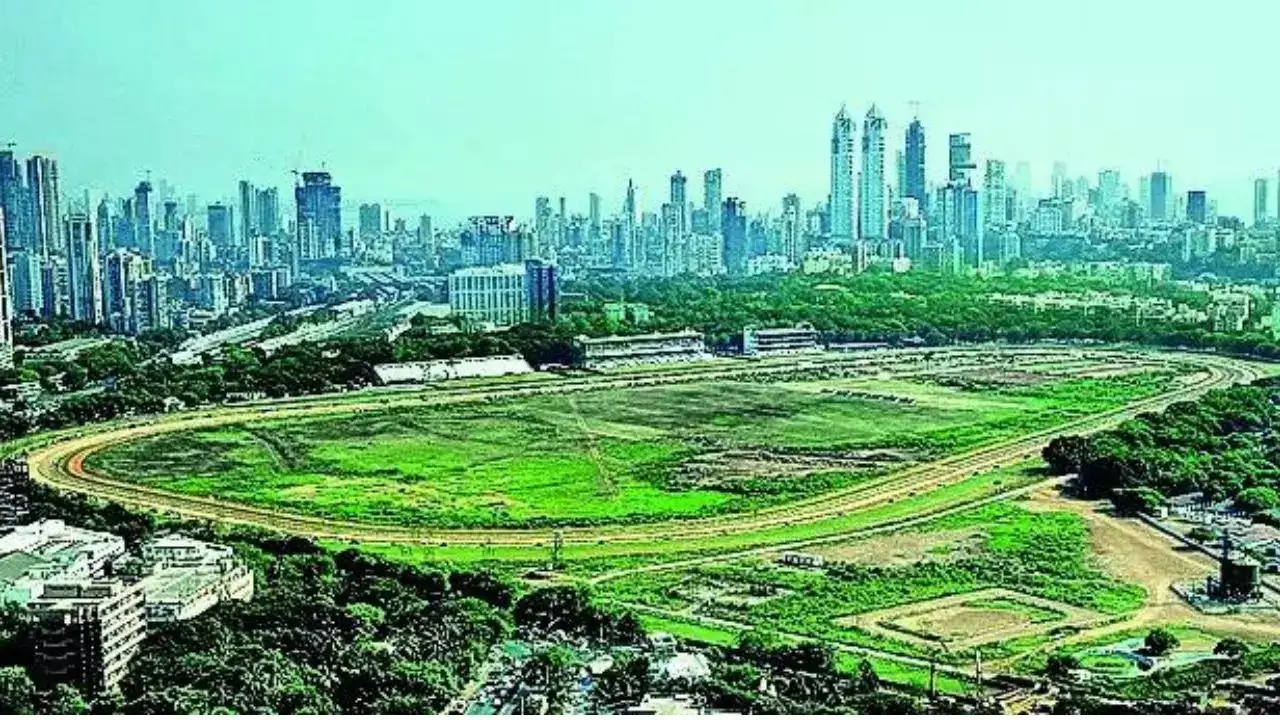
The historic Mahalaxmi Racecourse in Mumbai is witnessing a major transformation, with the city’s civic authorities initiating the construction of a state-of-the-art clubhouse and ancillary facilities as part of a wider plan to reimagine the sprawling 225-acre space with public-centric and sustainable infrastructure.
The Brihanmumbai Municipal Corporation (BMC) has begun demolishing sections of the Royal Western India Turf Club’s (RWITC) second enclosure and neighbouring structures to make way for a new seven-storey clubhouse. The upgraded facility, designed by Aakar Architects and Consultants, will be spread across 17,000 square metres and incorporate modern amenities with a strong emphasis on eco-friendly architecture. According to officials from BMC’s building proposals department, the new structure will feature two basement levels for parking, while the upper five floors will accommodate 177 lodging rooms. The plan also includes a second building to function as a banquet hall with kitchen and pantry services. The entire development is being carried out under guidelines outlined in a state-sanctioned public notice issued six months ago.
The first floor of the new clubhouse will house a bakery, department store, children’s play area, crèche, card and table tennis rooms, banquet hall, swimming pool and kitchen services. On the second floor, a library, mini theatre, fitness centre, meeting rooms, restaurants and additional kitchen space will be developed. From the third to sixth floors, there will be 38 rooms per level reserved for lodging purposes, while the seventh floor will feature 25 rooms. Beyond the clubhouse, the broader redevelopment plan envisions a complete transformation of the Mahalaxmi Racecourse into a public-friendly and environmentally responsible urban space. This aligns with Mumbai’s wider ambition to provide equitable access to open spaces and recreational infrastructure for its citizens while promoting sustainable urban growth.
The BMC’s land-use classification for the racecourse area has divided it into six plots earmarked for different purposes. Plot A, which measures 29.4 acres, is planned as a public or theme park. This park will be landscaped with green features including a botanical garden, walking trails, water bodies, and designated zones for art, culture, yoga, and vipassana. Officials confirmed that the park will offer unobstructed views of the racecourse from various stand levels, ensuring its integration with the site’s heritage. Plot B, the largest, spans over 77 acres and will retain its designation as a recreational ground. Plot C, a 1.96-acre segment, currently has no specific allocation. Plot D, covering 26.32 acres, will house modernised horse stables. Plot E comprises the 34.12-acre race track, while Plot F — measuring 32.17 acres — is home to the existing club, gymkhana, and spectator stands.
Civic officials confirmed that several new facilities are being proposed on the club’s 32.17-acre portion. These include an upgraded gymnasium, departmental store, swimming pool, viewing decks, and state-of-the-art spectator stands. A veterinary hospital, staff quarters, water recycling systems, and other infrastructure for equestrian care are also part of the plan to modernise the adjacent stable grounds. In keeping with Mumbai’s climate-conscious and inclusive development goals, the entire plan has been evaluated for minimal carbon impact and maximum public benefit. Experts familiar with the blueprint say that the redevelopment is a critical opportunity to retain the racecourse’s legacy while integrating it into the city’s future as a green, inclusive metropolis.
“Urban land like Mahalaxmi Racecourse must serve both heritage and the needs of a growing city,” an official involved in the project said. “We’re trying to achieve that balance by introducing sustainable design, greater public access, and modernised infrastructure while retaining equestrian and recreational activities.” The redevelopment aligns with a vision originally articulated by the state leadership to make Mumbai’s key land parcels accessible, multi-functional, and environmentally friendly. The state cabinet had earlier identified the Mahalaxmi Racecourse as a critical urban node with high potential for adaptive reuse and public engagement.
City planners have praised the BMC’s approach of not only preserving but revitalising the open space. By steering away from aggressive commercialisation, the redevelopment places long-term public interest and ecological balance at the core. With components like a botanical garden, a yoga and wellness area, and a theatre, the proposal marks a significant shift in how Mumbai’s civic land is being reimagined. However, concerns remain among heritage conservationists who fear the gradual erosion of the racecourse’s original character. “It is essential that any development in this sensitive zone respects the history of the space and keeps avenues open for traditional activities such as horse racing,” a city-based architect pointed out.
While the fate of racing activity on the grounds is yet to be fully addressed, BMC officials have reiterated that there is no immediate plan to phase out the sport. Instead, the focus remains on enhancing the facilities around it to broaden community participation and sustainability. As Mumbai continues to grapple with severe space constraints, climate stress, and demand for green zones, the Mahalaxmi Racecourse redevelopment could become a benchmark in balancing urban functionality with ecological mindfulness. Whether it ultimately sets a precedent or triggers controversy will depend on how inclusive and transparent the execution remains.
For now, as demolition makes way for creation, the city waits to see if this heritage address can evolve into a model for Mumbai’s next urban chapter — rooted in history, but reaching for a greener, more inclusive future.
Also Read : Mumbai Gets Vande Bharat Depot Boosting Green Rail Connectivity
