


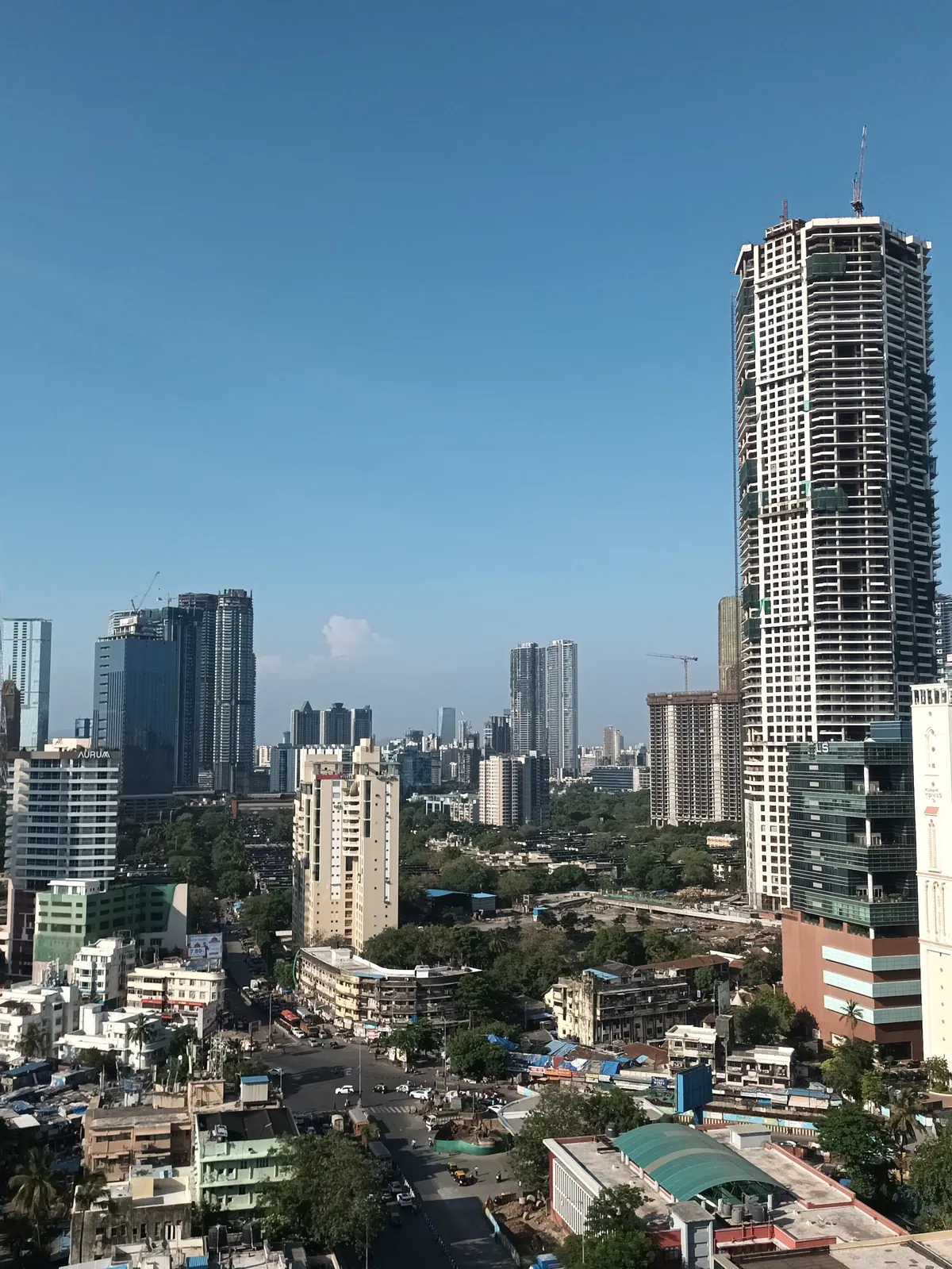
Mumbai has further cemented its position as India’s most expensive luxury housing market, with prices that significantly outpace every other major city. New market data shows that the country’s financial capital now commands a median quoted price of Rs 9.66 crore for luxury homes, underlining its unmatched pricing power and the depth of its affluent buyer base.
According to a recent luxury housing market assessment, Mumbai’s median luxury price is almost twice that of Gurugram and more than three times higher than Bengaluru. Other Tier-1 cities trail well behind, with Hyderabad, Chennai and Pune recording median luxury prices closer to the Rs 2 crore mark. The figures reinforce a widening gulf between Mumbai and its peers, even as premium housing gains traction across urban India. Industry analysts point out that Mumbai’s dominance is not simply about higher prices, but about sustained demand resilience. While luxury price growth across Tier-1 cities has moderated in recent years, Mumbai has continued to strengthen its premium positioning. Its luxury coefficient, a measure of how sharply luxury prices diverge from mainstream housing, has climbed further this year, highlighting the city’s ability to command exceptional valuations. This resilience is being driven by a concentrated pool of high-income professionals, entrepreneurs, investors and overseas Indians, many of whom view Mumbai real estate as a long-term store of value. A senior property consultant noted that Mumbai’s role as India’s financial nerve centre continues to attract wealth in a way few other cities can replicate.
Demand remains tightly focused in established high-value neighbourhoods. South Mumbai precincts such as Malabar Hill and Walkeshwar, along with Worli-Lower Parel and Bandra West, continue to draw the strongest interest. Search and enquiry data suggest that buyer appetite has intensified in the Rs 5-10 crore and above-Rs 10 crore segments, signalling both end-user confidence and a return of investor-led purchases. Developers have responded by reshaping their offerings. New projects increasingly feature larger residences, enhanced privacy, and lifestyle amenities inspired by global hospitality standards. Gated developments with wellness facilities, green spaces and energy-efficient design are becoming more common, reflecting changing buyer expectations around comfort and sustainability. Elsewhere in the country, emerging luxury corridors in cities such as Noida, Bengaluru and Kolkata are gaining visibility. However, experts caution that scale and maturity remain key differentiators. “Many markets are seeing premiumisation, but Mumbai’s luxury ecosystem is uniquely deep and diversified,” said an industry expert, adding that supply, liquidity and buyer sophistication are difficult to replicate. Urban planners also note the broader implications for city development. As luxury prices rise, pressure on land and infrastructure intensifies, making balanced planning essential.
Integrating high-end housing with efficient transport, mixed-use development and climate-sensitive design will be critical to ensure Mumbai’s growth remains inclusive and sustainable. For now, the data makes one conclusion clear Mumbai’s luxury housing market continues to operate in a league of its own, shaping not just real estate trends, but the future contours of India’s urban wealth.
Also Read: India Credai Urges Budget 2026 Affordable Housing Cap Hike To Rs 90 Lakh
