


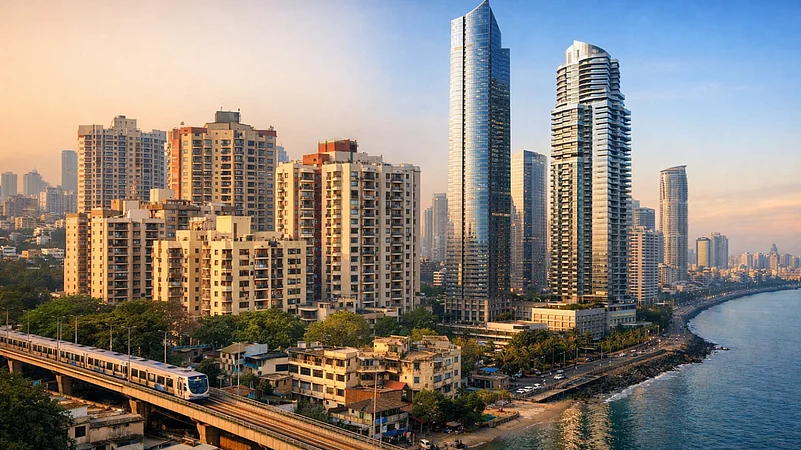
Mumbai’s luxury housing market is undergoing a structural recalibration, shaped less by legacy wealth and more by a new class of self-made professionals and entrepreneurs. Recent project announcements in the city’s prime commercial districts point to a growing demand for ultra-premium residences that prioritise location, discretion, connectivity and long-term value. This shift reflects broader changes in how India’s urban elites engage with real estate as both a personal milestone and a strategic asset.
Developers active in the high-end segment indicate that buyer profiles have evolved significantly over the past decade. Senior professionals, startup founders, global executives and institutional leaders now dominate demand in neighbourhoods linked closely to employment centres and international business districts. In Mumbai, this has sharpened focus on Bandra Kurla Complex (BKC), long known as the city’s financial nerve centre but now increasingly positioned as a residential destination. Urban planners note that BKC’s transformation is infrastructure-led. Ongoing and proposed projects including underground metro connectivity, regional high-speed rail integration, and improved road networks have reduced travel friction while enhancing resilience in a flood-prone city. These upgrades have made dense commercial zones viable for residential living, particularly for households seeking proximity to work, global mobility, and controlled urban environments. Market data suggests that residential pricing in BKC, while premium, continues to lag established coastal micro-markets. This has created what analysts describe as a convergence window, where infrastructure maturity and institutional presence are yet to be fully reflected in property values. The presence of consulates, corporate headquarters, cultural venues and upcoming judicial infrastructure has reinforced long-term demand stability.
At the same time, developers are preparing for the next phase of luxury expansion beyond the traditional westward corridor. Wadala, supported by multiple metro lines, the Mumbai Trans Harbour Link and arterial road upgrades, is being positioned as the city’s third central business district. Urban economists argue that such decentralisation is critical for a city grappling with congestion, housing affordability pressures and climate vulnerability. By distributing commercial and residential density, Mumbai can reduce commute emissions while creating more balanced growth. Importantly, sustainability considerations are becoming more prominent in the luxury segment. Energy-efficient building systems, water-sensitive design and integrated public transport access are no longer optional add-ons but baseline expectations for high-value developments. Industry experts observe that affluent buyers increasingly assess environmental performance and governance standards alongside design and brand positioning.
For Mumbai, these trends underline a broader urban narrative. Luxury housing is no longer defined solely by scale or exclusivity but by how well it integrates with the city’s economic engines, infrastructure networks and climate realities. As new districts mature and established ones evolve, the challenge for policymakers and developers alike will be to ensure that high-end growth supports wider urban resilience rather than deepening spatial inequality.
Also Read: Dubai Real Estate Gains Momentum With India Investors
Mumbai Luxury Housing Shifts Toward Earned Wealth
