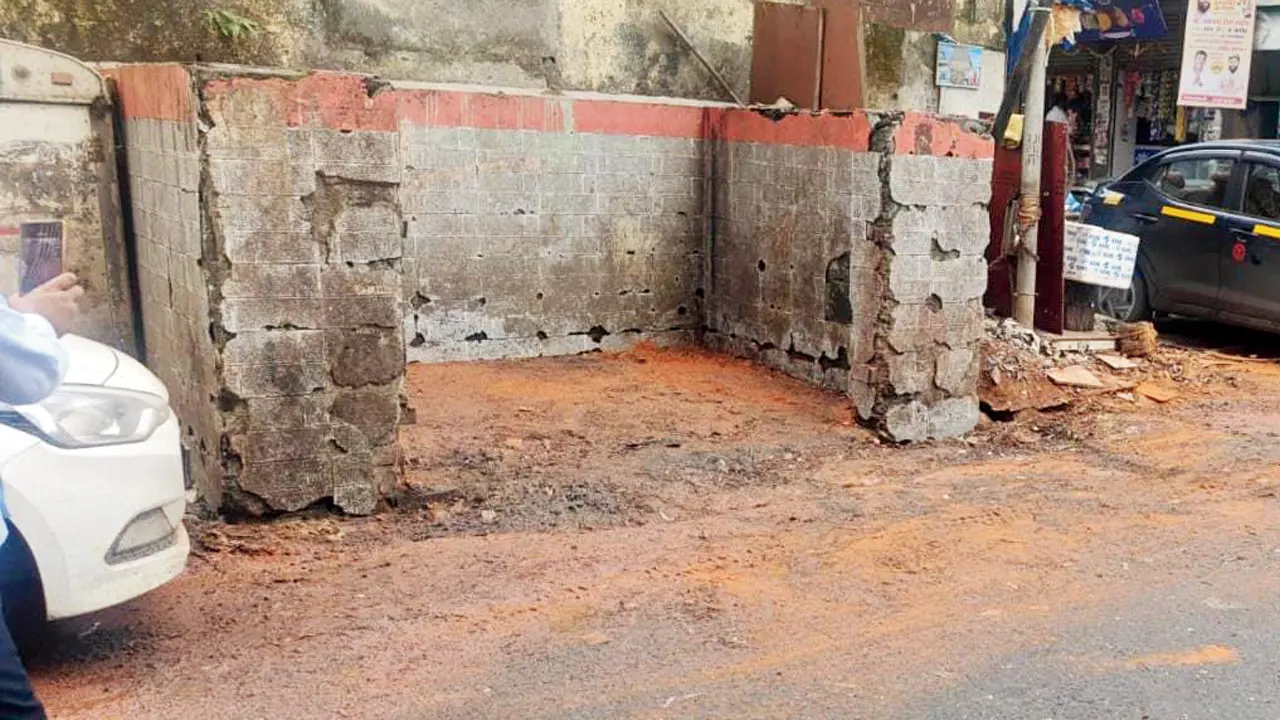
A long-neglected garbage site in Mumbai’s Govandi has once again sparked civic debate after a recent clean-up by the Brihanmumbai Municipal Corporation (BMC) offered temporary relief but little hope for a lasting solution. Residents along Road No. 5 in Shivaji Nagar, where the garbage pile has festered for years, are demanding a sustainable and permanent fix to what they call a recurring public health and safety hazard.
The site, located dangerously close to two schools Geeta Vikas School and Anjuman Inayatul Islam Urdu High School has long forced students to navigate overflowing trash bins and spilt waste along the busy road. Locals say the condition not only compromises hygiene but also endangers children who are compelled to walk on the main road to avoid the filth.Following public complaints, civic workers from the BMC’s M East ward recently undertook a major clean-up drive, clearing accumulated garbage and disinfecting the area.
While residents welcomed the action, they insist the measure is temporary and fails to address the root cause. “The issue is structural,” said a community representative. “Without a proper boundary or waste segregation system, people will continue dumping here. The problem returns every few weeks.”Officials from the BMC confirmed that garbage collection is carried out daily but admitted that the gaps between disposal cycles and lack of on-site infrastructure contribute to repeated spillage. The absence of a protective barrier around the dumping spot has turned the area into an open bin, with residents and passers-by adding to the pile whenever garbage overflows.
Experts say this recurring cycle reflects deeper issues in Mumbai’s decentralised waste management system. Without dedicated micro-collection points, proper segregation practices, and community awareness, waste often ends up in public spaces undermining the city’s larger sustainability goals. Urban planning experts also warn that poorly maintained waste points near educational institutions or residential clusters pose long-term environmental and health risks.Officials in charge of the M East ward indicated that a new “feedable” disposal mechanism is under consideration to streamline waste segregation at source. However, no concrete timeline or project plan has been announced, prompting criticism from local residents who have long awaited a permanent barrier or containment system at the site.
Govandi’s garbage challenge underscores Mumbai’s broader struggle to reconcile rapid urbanisation with sustainable civic management. As the city advances toward cleaner, greener, and more equitable neighbourhoods, citizens say the test lies not in reactive clean-ups but in systemic reforms that combine infrastructure, accountability, and public participation.For now, the residents of Govandi remain cautiously hopeful waiting for the day when the city’s promise of cleanliness extends beyond temporary clean-ups to lasting change.
Mumbai Locals Demand Permanent Solution As BMC Clears Govandi Garbage Site