


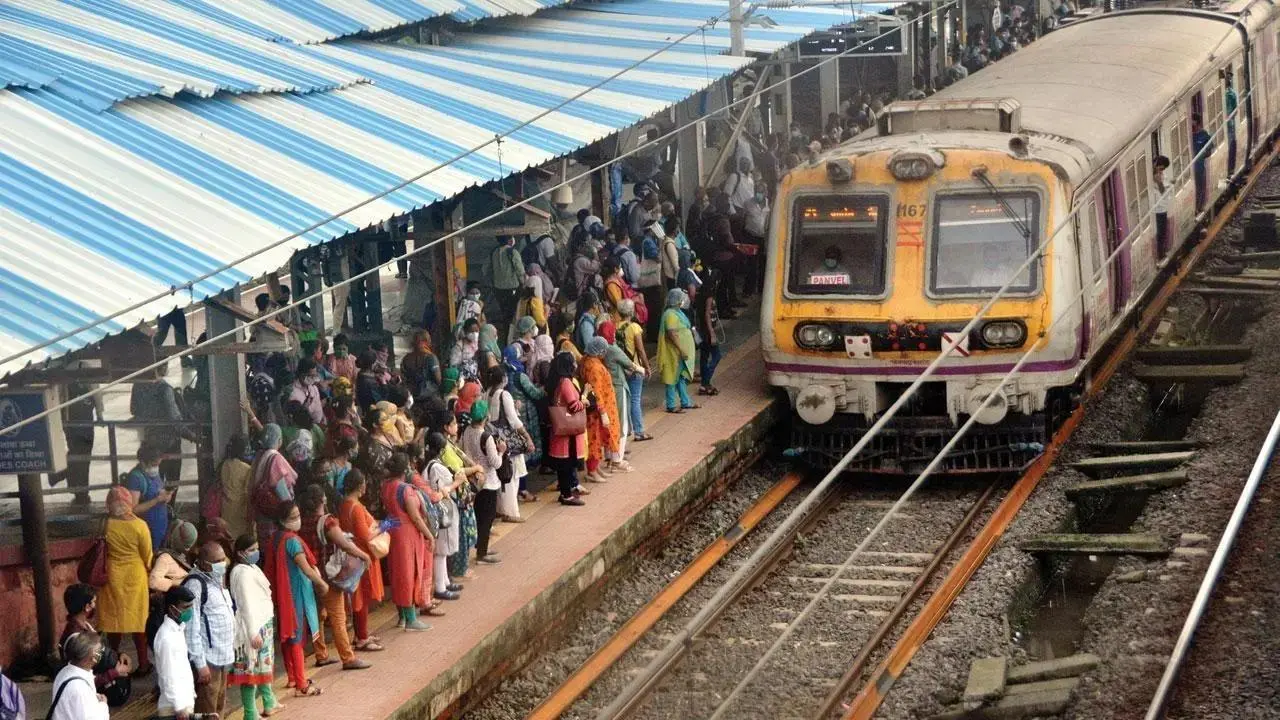
Mumbai’s suburban train network, the city’s daily lifeline, was thrown into disarray on Tuesday after a technical failure at Andheri station disrupted services on the Western line. Thousands of commuters were left stranded during peak hours, with delays stretching from 30 minutes to over an hour, sparking widespread frustration across the city.
According to railway officials, a sudden technical snag at Andheri, one of the busiest junctions on the Western line, caused multiple services to run behind schedule. Social media was inundated with images of overcrowded platforms and trains, with commuters voicing concerns about safety and lack of timely updates. The disruption came a day after torrential overnight rainfall paralysed several sections of the city’s transport infrastructure. Waterlogging was reported in parts of Dadar, Kurla, and Bandra stations, forcing trains to run slower than usual. Although railway authorities assured on Monday morning that services were largely normal despite the downpour, by evening the combination of weather-related challenges and infrastructure faults had begun to strain the system.
The India Meteorological Department (IMD) had issued a red alert for Mumbai and neighbouring districts after recording heavy showers on Monday. The intense rainfall, accompanied by lightning and thunder, also triggered water accumulation in several low-lying areas. Civic authorities scrambled to clear blocked drains, but commuters were forced to navigate flooded streets while trains and buses struggled to keep pace. The cascading effect of such weather-induced disruptions is not new to Mumbai, a city that depends on suburban railways to ferry nearly eight million passengers daily. Transport experts argue that while authorities have invested in track upgradation and flood management measures, climate change-driven extreme weather is testing the resilience of existing infrastructure. They stressed the urgent need for climate-proofing the railway system, with eco-friendly drainage solutions, elevated track structures in vulnerable zones, and modernised signalling systems to prevent service breakdowns during heavy rains.
The disruption also highlighted the strain on commuters, who increasingly depend on timely transport to maintain the pace of the city’s economy. Airlines, anticipating travel chaos, issued advisories urging passengers to check flight statuses and allocate extra time to reach the airport, further underscoring the interconnectedness of Mumbai’s transport ecosystem. While services were gradually restored later in the day, the incident reignited debate about the preparedness of the city’s transport systems to withstand both technical failures and extreme weather. Officials have assured commuters that long-term measures are being prioritised, but citizen groups argue that unless sustainability and resilience are built into every upgrade, such disruptions will continue to haunt Mumbai’s transport future.
Also Read: Mumbai Metro Line 3 Phase 2B Awaits CMRS Approval For Launch
