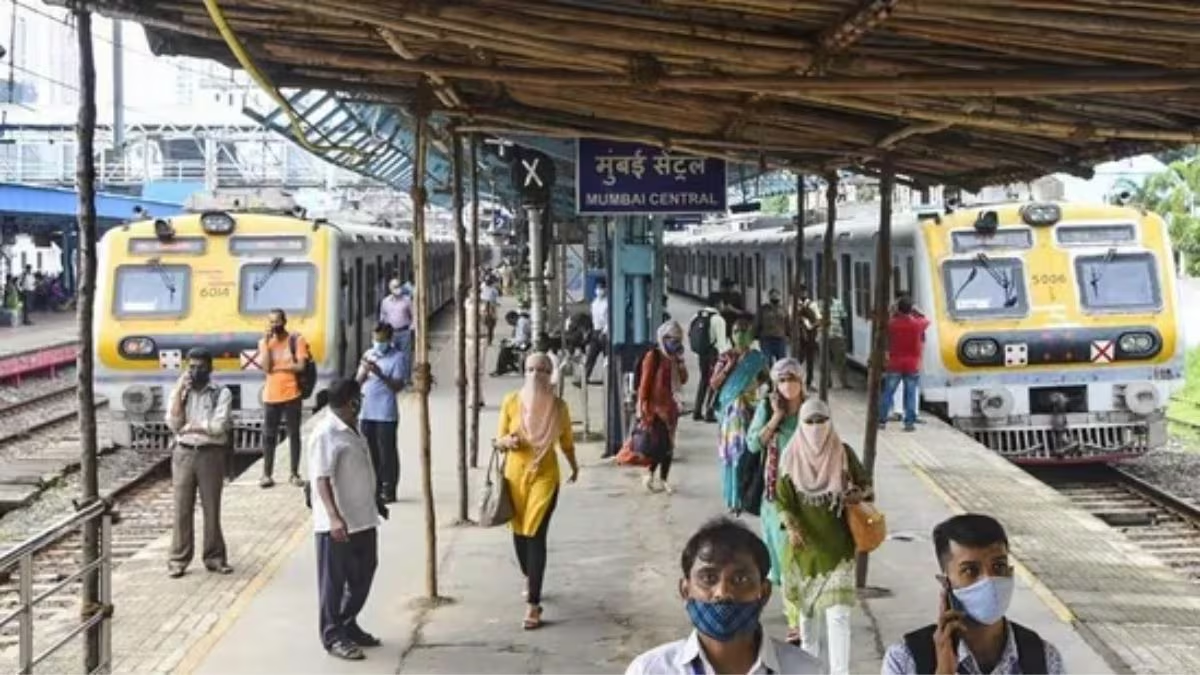
Mumbai’s suburban rail network faced fresh disruption on Friday morning after a trespassing incident near Mahim briefly halted Western Railway services and slowed operations across adjoining lines. The episode, which occurred during the mid-morning rush, has renewed concerns about commuter safety and highlighted the persistent vulnerabilities in one of the country’s busiest public transport systems.
Railway officials confirmed that the incident took place on the Up fast corridor, where an unauthorised entry onto the tracks forced a train to be detained for nearly 25 minutes. Although the obstruction affected only a single line, the ripple effect was immediate, triggering delays across multiple services between Bandra and Mahim. Traffic flow was restored gradually once the track was cleared, but the disruption reignited discussion about the recurring nature of trespassing along the city’s rail corridors.
A senior railway officer noted that despite repeated advisories and awareness campaigns, Mumbai continues to record high levels of unsafe pedestrian behaviour on railway land. Trespassing remains a punishable offence under the Railways Act, attracting fines and potential imprisonment, but enforcement challenges persist in densely populated neighbourhoods where crossings and pedestrian infrastructure remain inadequate. Urban planners argue that safer mobility hinges not only on penalties but also on redesigning access points, improving footbridges, and enhancing last-mile connectivity to reduce track-level conflict.
The service delay comes at a time when the state government is pushing substantial upgrades to Mumbai’s legacy rail infrastructure. Earlier this week, the Chief Minister announced that the city will soon receive a fleet of metro-style air-conditioned local trains with automatic doors, designed to reduce accidents caused by overcrowding and open-door travel. The planned procurement of 268 new AC rakes marks a significant shift towards safer and more energy-efficient public mobility systems, aligned with broader sustainability goals for the metropolitan region.
Transport analysts observe that the introduction of automated doors extended even to future non-AC rakes signals an important evolution in commuter safety norms. The move follows public concern over a recent fatality involving passengers falling from an overcrowded coach. Experts believe that technology-enabled safety features, combined with inclusive commuter infrastructure planning, can significantly reduce preventable accidents.While Friday’s incident caused only short-term disruption, it underscores the complexity of managing mobility in a high-density city where millions depend on the suburban network every day. Sustainable solutions, they argue, must integrate behavioural change, modernised rolling stock, and safer station design to create an equitable and resilient urban transport ecosystem.
Mumbai Local Services Disrupted After Trespassing Incident Near Mahim On Western Railway