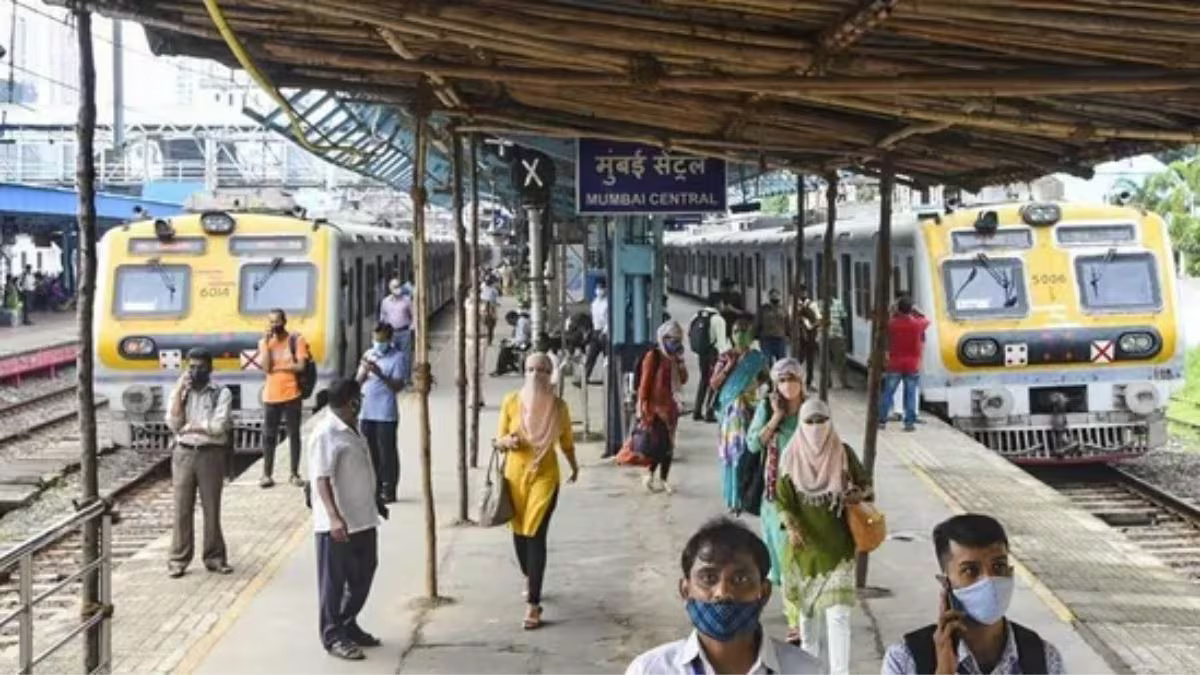
Mumbai’s suburban rail network will face significant disruption this weekend as a key section of the Western Railway undergoes an extended traffic block to facilitate bridge demolition works in South Mumbai. The planned shutdown, spanning overnight Saturday into Sunday afternoon, marks another critical step in the city’s ongoing effort to modernise ageing road and rail infrastructure along one of its busiest commuter corridors.
The 13-hour block will affect slow-line operations between Grant Road and Mumbai Central, a stretch that handles a dense mix of daily office commuters, weekend travellers and service-sector workers. Railway officials say the intervention is essential to safely dismantle a decades-old road overbridge, a structure that has long been flagged by engineers as incompatible with current traffic volumes and safety standards. During the shutdown, suburban services normally operating on slow lines will be diverted onto fast corridors, altering halting patterns and reducing overall capacity. Several central Mumbai stations will not be served by affected trains due to platform and alignment constraints, while a sizeable number of suburban services have been cancelled or curtailed over the weekend. Transport planners note that such operational compromises are unavoidable in tightly built urban rail environments where upgrades must be executed without prolonged closures.
Compounding the impact, a second overnight block is scheduled on a neighbouring stretch to enable dismantling work linked to another road overbridge project. This will require temporary bidirectional travel arrangements, allowing passengers to reverse direction at select junction stations using the same ticket. While operationally complex, railway managers argue that these measures are designed to maintain a minimum level of connectivity during essential engineering works. From an urban development perspective, the disruptions highlight the scale of infrastructure renewal underway across Mumbai’s rail network. Many bridges spanning suburban tracks were built decades ago for lighter traffic and narrower road widths. As the city expands vertically and travel demand intensifies, replacing these structures has become critical for both rail safety and surface-level mobility.
Economists point out that while short-term inconvenience is inevitable, such interventions carry long-term economic value. Improved bridge clearances, modern designs and better integration with surrounding road networks can reduce bottlenecks, improve freight movement and enhance last-mile access in adjoining neighbourhoods. For the rail system itself, removing outdated structures reduces maintenance risk and improves resilience against extreme weather events. Railway authorities have urged commuters to plan journeys carefully, consider alternative travel windows and use public information channels for real-time updates. Urban mobility experts stress that transparent communication and predictable scheduling are key to maintaining public trust during large-scale upgrades.
As Mumbai continues to retrofit its transport backbone for future growth, weekend blocks of this nature are likely to become more frequent. The challenge for city planners will be balancing the urgency of infrastructure renewal with the everyday mobility needs of millions who rely on the suburban rail system to power the city’s economy.
Mumbai Local Network Faces Weekend Mega Block on 3rd & 4th Jan