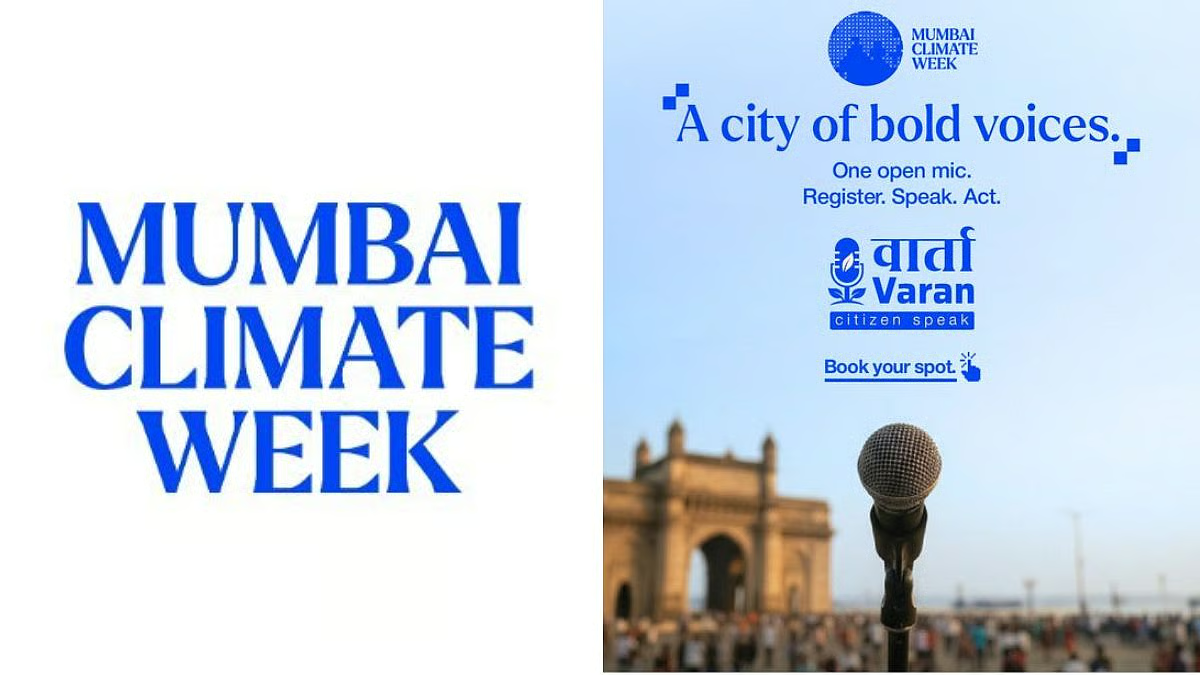
Mumbai Leads Global South With Climate Action Week
In a strategic effort to elevate climate action beyond policy dialogue to practical, community-centred solutions, the inaugural Mumbai Climate Week (MCW) is set to convene from 17–19 February 2026, positioning the city as a Global South leadership platform for urgent climate engagement. The event will host delegations from over 30 countries, uniting governments, philanthropies, private sector leaders, civil society and innovators to advance inclusive climate strategies with global relevance.
Organised by Project Mumbai in partnership with the Government of Maharashtra and the Brihanmumbai Municipal Corporation (BMC), MCW aims to bridge global ambition with local urban reality, focusing on mitigation, adaptation and resilience. The three-day agenda will tackle pressing challenges in food systems, energy transition and urban resilience, reflecting both Mumbai’s climate vulnerabilities and its potential as a model for other cities across Asia, Africa and Latin America.Unlike traditional high-level summits dominated by technical negotiation, the Week emphasises citizen engagement, inclusivity, and actionable outcomes. A core theme will be people-centred solutions — from community dialogues and youth innovation showcases to climate storytelling and public artworks — that make the abstract contours of climate science tangible in everyday urban life.
For Mumbai — a coastal megacity facing rising heat stress, monsoon flooding and air quality pressures — anchoring climate action in lived experience is both timely and pragmatic. Urban resilience initiatives within MCW include spotlighting heat mitigation strategies and showcasing local knowledge systems alongside global expertise. A dedicated short film on extreme heat and community impacts, screened ahead of the event, highlights the lived urgency of these issues.Crucially, MCW is also expanding the role of youth and women’s leadership in climate planning. Collaborations with UNICEF’s YuWaah platform and other partners will bring student-led innovation, e-waste awareness campaigns and youth green solution challenges into the core agenda, aiming to weave together social equity with climate science.
In addition to knowledge exchange, MCW includes initiatives such as the Climate Innovation Challenge, launched with the National Stock Exchange (NSE) to spotlight scalable climate solutions across mitigation, adaptation and finance. This multi-stage programme invites startups, researchers and civil society actors from the Global South to prototype, refine and scale solutions that can be deployed across heterogeneous urban contexts.Experts say the MCW model blends policy insight with bottom-up participation, an approach that resonates with the needs of cities in developing regions where governance capacity varies and climate impacts are immediate. By prioritising cross-sectoral partnerships — from public health to food security — MCW seeks to foreground integrated solutions that are socially equitable, economically viable and environmentally resilient.
As Mumbai steps into its role as host, planners and civic groups emphasise that long-term impact will depend on sustained follow-through, governance integration and robust financing for urban climate action. Implementing learnings from MCW — in concrete projects like green infrastructure, cooling solutions, transport decarbonisation and community resilience investments — will be crucial to cementing the city’s legacy as a climate leader in the Global South.