


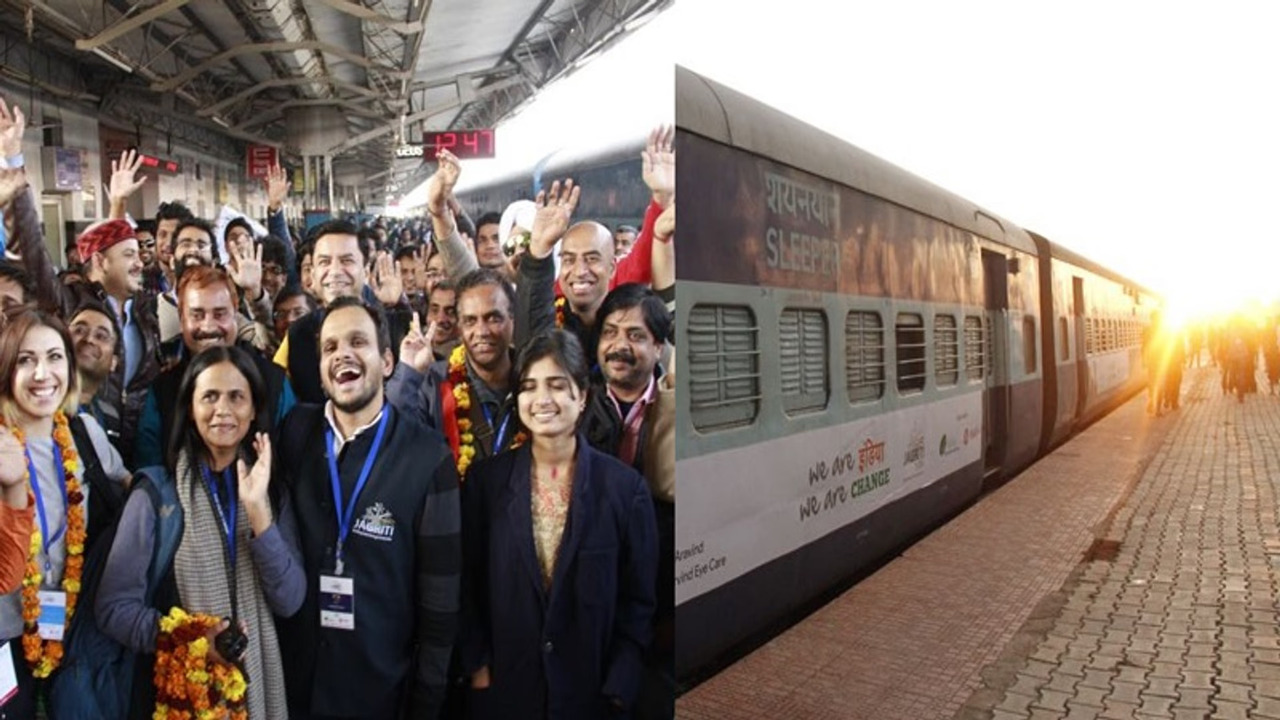
In a bold move to cultivate a new generation of socially conscious entrepreneurs and changemakers, Mumbai has once again flagged off the annual Jagriti Yatra—a transformative 15-day train journey traversing 8,000 kilometres across the country.
Far from a typical travel itinerary, this initiative is tailored for young Indians who aim to drive equitable development through innovation, enterprise, and grassroots leadership.Since its inception in 2008 by non-profit organisation Jagriti Sewa Sansthan, the Yatra has grown into one of India’s most ambitious platforms for fostering inclusive and sustainable socio-economic transformation. The 2025 edition, set to roll out from Mumbai on 7 November and conclude on 22 November, will host over 500 carefully selected participants—referred to as ‘Yatris’—representing the diverse fabric of India’s small towns, rural belts, and a few global communities.
At the heart of this expansive journey is the mission to spotlight real-world examples of entrepreneurship that tackle systemic issues such as poverty, education inequality, public health, and climate resilience. Over the course of the Yatra, participants will engage with successful social entrepreneurs and changemakers who have built schools, hospitals, rural enterprises, and environmental movements from the ground up.
Crucially, the programme targets what it calls “Middle India”—young citizens aged 20 to 27 from non-metropolitan regions—who often face barriers to access in leadership development and enterprise support. The initiative’s selection process is both competitive and inclusive. Applicants undergo a rigorous evaluation through detailed essays, reference checks, and interviews by a global panel of over 30 experts. Diversity is a central pillar—ensuring gender, regional, and social balance among the selected cohort, along with an annual inclusion of around 20 international candidates to foster intercultural exchange and global dialogue.Participation comes at a cost of ₹1,00,000. However, scholarships are provided to economically underprivileged applicants, enabling a level playing field and ensuring that financial constraints do not hinder impactful talent from entering the programme.
Beyond individual transformation, the Jagriti Yatra is influencing how India—and the world—views the potential of travel. It redefines the industry paradigm by leveraging travel as a medium for experiential learning, civic engagement, and sustainable development. By bringing participants face-to-face with India’s innovation hubs and grassroots realities, the Yatra promotes responsible travel rooted in empathy and purpose. It also nudges local economies by drawing attention to underrepresented geographies, potentially unlocking new avenues for inclusive tourism and infrastructure development.The programme’s long-term impact has been tangible. Alumni have gone on to establish startups and social enterprises, enter policy circles, and lead development projects in their hometowns. These ripple effects align with India’s broader economic goals—especially those aimed at decentralised innovation, self-reliance, and equitable growth.
In an increasingly globalised world, the Jagriti Yatra stands as a compelling model for how emerging nations can empower youth leadership while embedding values of sustainability, inclusivity, and collaborative development. As cities like Mumbai continue to grapple with urban challenges, such platforms can be instrumental in shaping a new wave of leaders committed to building greener, fairer, and more resilient communities from the ground up.
Also Read : Hyderabad Railway Station Now Run by Women
