


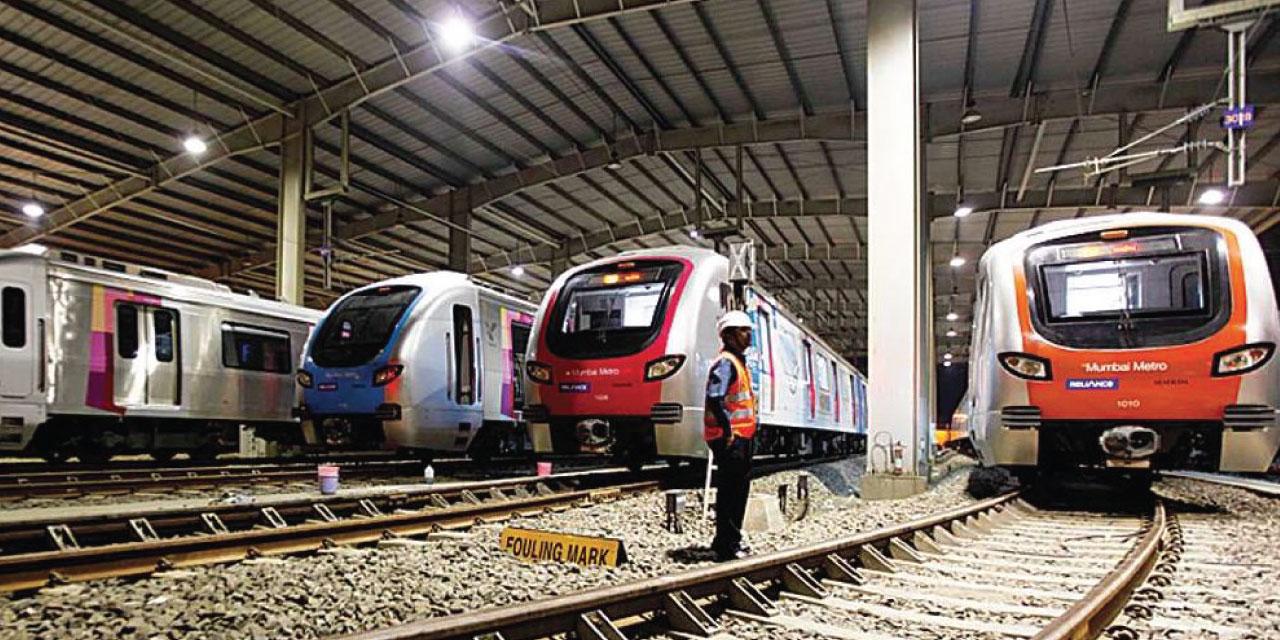
Mumbai is embarking on a transformation to integrate its suburban railway and metro networks at key stations—Dadar, Andheri, Ghatkopar and Kurla—to enable hassle‑free transfers, reduce travel times and foster inclusive, eco‑friendly mobility for millions daily. The Mumbai Rail Vikas Corporation (MRVC), working with Mumbai Metro Rail Corporation (MMRC) and MMRDA, has initiated joint feasibility studies and infrastructure designs to unify stations via skywalks, common concourses and travelators.
MRVC and metro authorities are targeting interchange hubs where suburban lines intersect with metro corridors, aiming to eliminate the need for passengers to exit stations during modal transfers. Stations such as Dadar, Kurla, Andheri, Bandra and Ghatkopar are priority locations. Engagements include cross-referencing Metro Line 1’s existing seamless exchanges at Andheri and Ghatkopar with newly designed multimodal infrastructure. A joint coordination committee chaired by MMRDA, with members from Central and Western Railway, MRVC, CIDCO, BEST and urban planning bodies, has been constituted to streamline planning and execution. The committee will assign clear accountability and oversee physical design alignment—including pedestrian bridges, unified entry‑exit zones and shared concourse access.
The urgency of this coordination stems from commuter feedback and urban planning mandates. Commuters have often criticised existing metro lines—except Line 1—for lacking direct linkage to railway stations, causing inconvenient transfers of 200–300 metres. Analysts view integrated infrastructure as essential to achieve modal shift from vehicular to public transport, reduce carbon emissions and support equitable city access. This integrative approach complements the broader Mumbai Urban Transport Project (MUTP), which has received ₹52,724 crore in funding to upgrade rail and transit infrastructure. Future expansions include Metro Line 3 nearing full operational status by August 2025, targeting major nodes including Dadar and Dharavi—mandating seamless interfacing with suburban rail.
Existing successful examples include Ghatkopar, where an upgraded 12 m‑wide foot‑over‑bridge now connects the suburban station with Metro Line 1, easing congestion and improving commuter flow. The new walkway includes escalators and a sky-deck to channel metro passengers directly into suburban platforms. Officials emphasise that integrated hubs will support last‑mile connectivity, reduce pedestrian congestion, encourage walkable access, and complement other sustainable mobility options like cycling and feeder buses. A unified ticketing app—‘Mumbai One’—is also under development to facilitate fare integration across modes.
Experts acknowledge that execution may face coordination challenges across agencies. Lessons from other metropolitan networks—such as Delhi and Bengaluru—are being studied to mitigate delays and ensure equitable station design, including accessible infrastructure for women, elderly and differently-abled commuters. As Mumbai Metro extends beyond 350 km and suburban rail capacity exceeds 400 km, alignment of physical and operational systems becomes vital. This multimodal integration aims to make travel efficient, inclusive and environmentally benign—ensuring the urban commute is safer, greener, and equitable for all.
Also Read :Nagpur‑Pune Vande Bharat Sleeper Express to Launch Soon
