


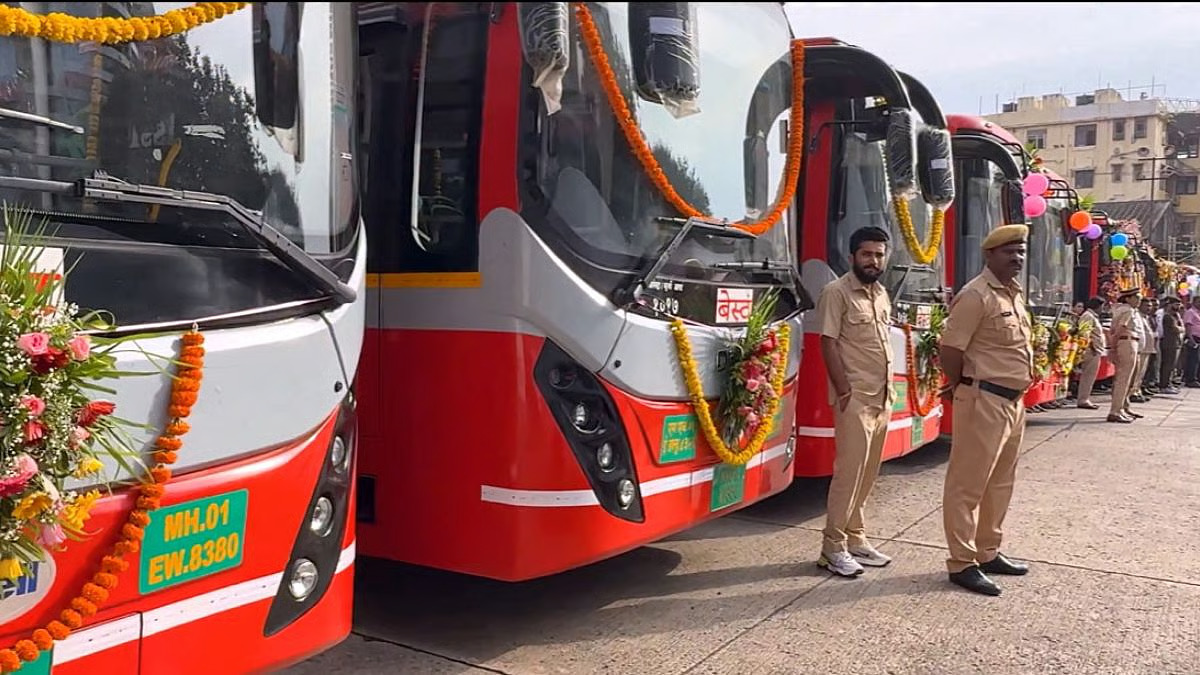
Mumbai’s public transport system took a decisive step toward cleaner urban mobility as the Brihanmumbai Electric Supply and Transport (BEST) Undertaking rolled out new air-conditioned electric buses across Oshiwara, Gorai, Anik and Kurla depots this week. The initiative follows the induction of 157 new electric buses under a wet lease system, marking one of the most significant expansions of the city’s green public transport fleet in recent years.
According to officials, the new 12-metre-long e-buses—operated by Mumbadevi Mobility and Evey Trans (Maharashtra) Pvt. Ltd.—will not only improve passenger comfort but also help in reducing carbon emissions and curbing noise pollution in densely populated neighbourhoods. This expansion has raised BEST’s total operational strength to nearly 2,800 buses, a much-needed boost after months of fleet shortages that left commuters facing long waiting times and overcrowded buses. Transport experts view this move as a critical step toward meeting Mumbai’s broader sustainability goals. The addition of electric buses is expected to cut operational emissions significantly, especially in suburban corridors such as Goregaon, Andheri, and Kurla, which experience some of the city’s heaviest traffic. The electric fleet will also enhance last-mile connectivity, offering smoother and quieter rides compared to diesel or CNG-powered buses.
Officials stated that the newly commissioned routes, including key connections such as Goregaon Bus Station to Worli Depot, Kurla Station to Santacruz Station, and Mulund to Oshiwara Depot, have been strategically selected based on passenger density, energy efficiency and route length. The effort underscores BEST’s commitment to improving service reliability while aligning with Mumbai’s broader net-zero carbon vision. In addition to expanding the fleet, authorities have urged the transport body to improve its financial sustainability by increasing non-fare revenue through advertising, digital services, and station redevelopment projects. Experts suggest that targeting at least 40 per cent of total income from such sources could help offset operational costs associated with green mobility initiatives.
Public transport advocates believe that this latest expansion will have a positive social impact as well, making clean and affordable commuting accessible to all sections of society. With quieter rides, enhanced comfort and zero tailpipe emissions, these electric buses represent the city’s evolving approach to mobility—one that places sustainability, equity, and commuter experience at its centre. As Mumbai continues to modernise its transport infrastructure, initiatives like this reaffirm the city’s vision of becoming a model for low-carbon, inclusive, and resilient urban living.
Also Read: Thane Metro Project Worth Rs 12200 Crore To Start Civil Work In November
