


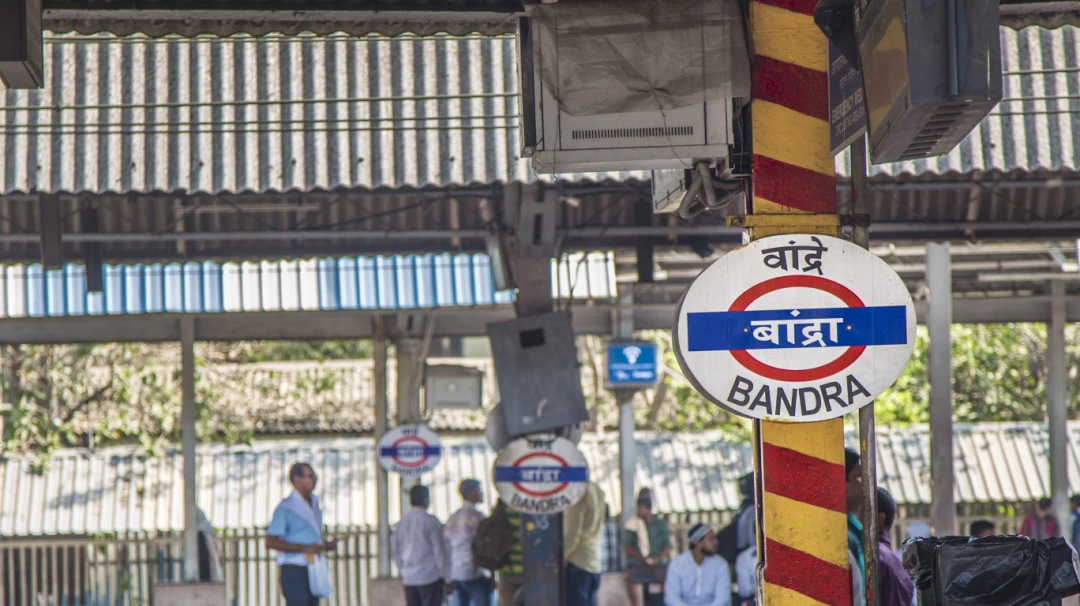
Mumbai has taken a strategic step toward optimising urban transport and space management with the launch of its first integrated parking-cum-parcel stacking facility at Bandra Terminus. The facility, located beneath the elevated road adjacent to the station, commenced operations on July 12 under the Western Railway’s jurisdiction.
This dual-use infrastructure marks a milestone in the Mumbai Central division, introducing a hybrid model that combines parking services with logistics support for parcels. Awarded via a competitive e-tendering process, the facility spans 3,735.02 square metres, with 3,362.02 square metres dedicated to vehicle parking and 373 square metres earmarked for parcel stacking. The contract, valid until July 11, 2028, is expected to earn the Western Railway an annual licence fee of INR 1.52 crore—a significant 145.7% jump from the previous parking lease value. Officials have indicated that the move was prompted by increasing demand for structured parcel operations at Bandra Terminus. Its proximity to Mumbai’s bustling commercial zones, including wholesale hubs and high-density retail markets, made it a prime candidate for such a facility. The stacking space will aid transporters and logistics agents in temporarily storing consignments, enabling smoother last-mile delivery within the city’s urban core.
Experts from the infrastructure and logistics sector note that the initiative aligns with broader goals of urban resilience and sustainable transport. By repurposing an underutilised space under an elevated road, the project exemplifies efficient land use without the need for new construction. This not only conserves urban land but also reduces emissions associated with unregulated loading, unloading, and vehicle congestion near the station precinct. The integration of parcel logistics into existing railway premises signals a shift in how Indian Railways is approaching multi-modal transport needs in megacities. It reflects a progressive model where railway stations act as both transit hubs and logistics nodes. Such hybridisation will be crucial for urban regions like Mumbai, where land scarcity and rising freight demand coexist.
With an eye on replicating this model elsewhere, officials suggest that success at Bandra could trigger similar projects in other urban centres like Dadar, Andheri, and Borivali, which face comparable congestion and commercial freight pressures. For daily commuters, this also promises more organised parking, easing the notorious space crunch at suburban stations. By monetising its real estate more strategically, Indian Railways is not only enhancing revenue generation but also contributing to city-level goals around cleaner mobility and efficient freight handling. While the project is still in its early stages, stakeholders across the board have welcomed its long-term potential to serve as a blueprint for integrated urban infrastructure.
Also Read : Mumbai to Receive 238 New AC Local Trains by 2025
