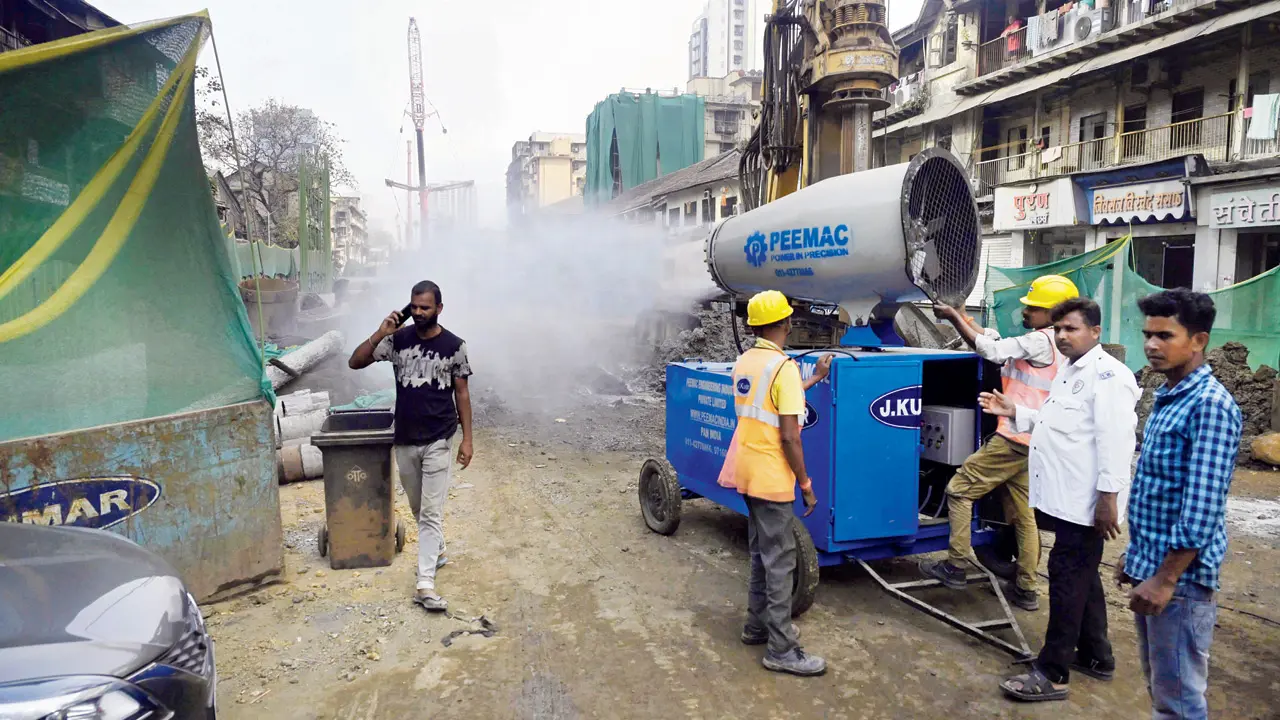
Mumbai has initiated an extensive road-cleaning programme aimed at addressing one of the city’s most persistent environmental challenges: construction-related dust. With development activity at elevated levels outside the monsoon season, the city’s civic administration has begun a coordinated, multi-month effort to wash roads across all wards, seeking to reduce airborne particulate matter and stabilise neighbourhood-level air quality.
The initiative, led by Brihanmumbai Municipal Corporation, is designed to operate for nearly five months each year, aligning with the peak construction window between October and early summer. During this period, thousands of active building sites and hundreds of road works generate fine dust that settles on carriageways and footpaths. Once disturbed by traffic, these particles re-enter the air, contributing to localised pollution hotspots. Senior civic officials overseeing environmental services say the strategy focuses on prevention rather than reaction. High-pressure water tankers and misting units are being deployed daily along corridors with intensive construction, freight movement, and road resurfacing activity. The objective is to remove dust before it becomes airborne, reducing exposure for pedestrians, commuters, and roadside communities.
Urban air quality specialists note that road dust is a significant but often under-addressed contributor to particulate pollution in dense cities. While vehicle emissions receive greater policy attention, resuspended dust from construction and infrastructure works can account for a substantial share of PM10 levels, particularly during dry months. Regular road washing, when combined with site-level dust control, is considered an effective short-term mitigation tool. The scale of the challenge in Mumbai is substantial. Industry estimates indicate that more than 2,400 construction sites are active across the metropolitan area, alongside over 600 ongoing road projects. Together, they reflect the city’s rapid infrastructure expansion but also expose the environmental costs of growth if not carefully managed. Urban planners argue that operational measures such as road washing must be paired with stricter enforcement of on-site practices, including covered material transport and debris containment.
From a civic perspective, the programme also signals a shift towards more responsive urban management. Residents in high-growth districts have long raised concerns about declining air quality, particularly near large redevelopment clusters. By standardising road-cleaning operations citywide, officials aim to ensure that pollution control does not remain limited to select neighbourhoods. Looking ahead, environmental analysts suggest that such operational responses should evolve into permanent systems, supported by mechanised sweeping, real-time monitoring, and coordination with construction scheduling. As Mumbai continues to build vertically and expand its transport network, maintaining breathable streets will remain a core urban governance challenge.
For now, the road-washing drive represents a pragmatic intervention—one that acknowledges the realities of a fast-growing city while attempting to soften the environmental impact on everyday urban life.
Mumbai Launches Citywide Dust Control Drive