Mumbai Lake Levels Cross 73%, Modak Sagar Overflows After Heavy Rains
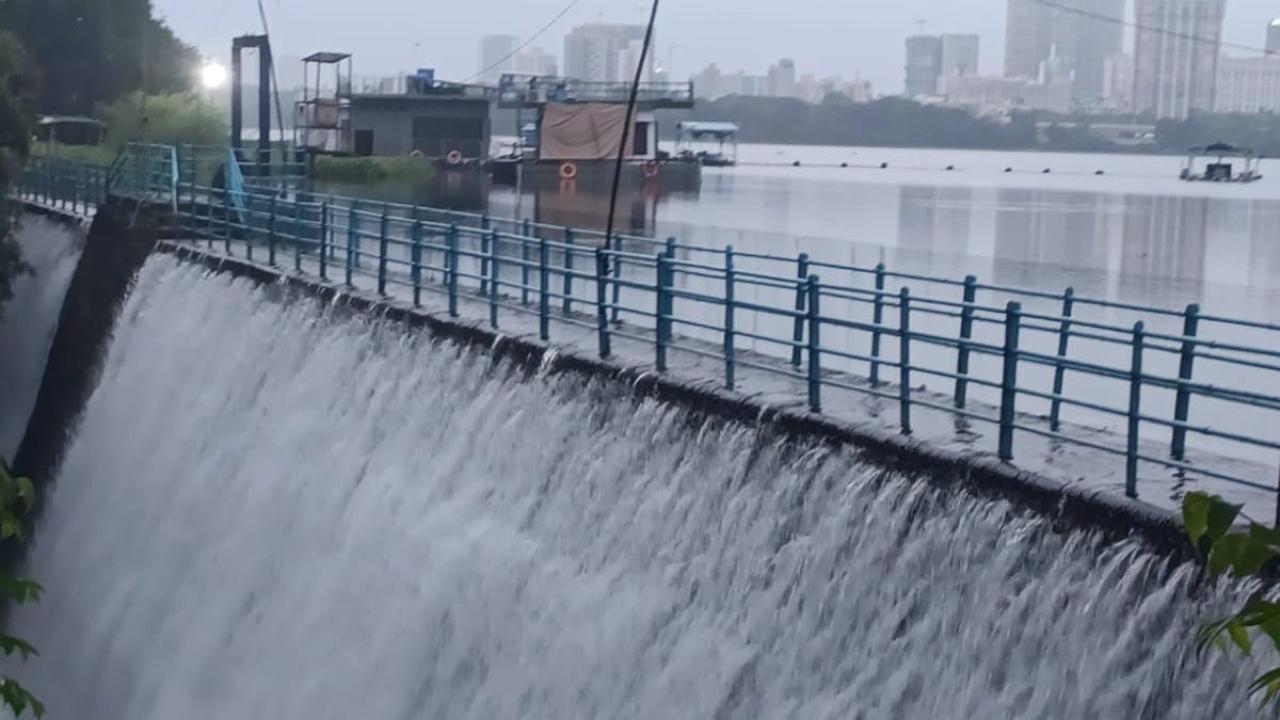
Mumbai’s water reserves have significantly improved, with the seven key lakes supplying the city crossing 73% of their useful storage capacity following consistent heavy rainfall. According to the Hydraulic Engineer’s Department, the current storage stands at over 10.5 lakh million litres, marking a promising shift in the city’s water security. Notably, Modak Sagar Lake began overflowing early Wednesday, prompting officials to initiate controlled water release as a precautionary measure against potential downstream flooding.
The overflowing of Modak Sagar Lake has become a key indicator of the monsoon’s impact on Mumbai’s reservoir health. At 6:27 am Wednesday, the lake reached 99.99% of its storage capacity, prompting authorities to release water through one gate at a rate of 1,022 cusecs per second. With a full capacity of 128,925 million litres, Modak Sagar alone contributes significantly to the city’s water needs. This development is part of a larger trend across the city’s lake system, where most reservoirs have seen rapid rises in water levels. Bhatsa Lake, the largest contributor, currently holds 4.45 lakh million litres at 62.01% capacity. Tansa and Upper Vaitarna have reached 77.66% and 73.18%, respectively. Meanwhile, the Middle Vaitarna reservoir lags at just over 20%. Still, the cumulative storage now exceeds 73%, a stark contrast to last year’s mere 20% around the same time, indicating promising improvements in supply outlook.
Rainfall patterns across the lake catchment zones have been instrumental in raising water levels. In the past 24 hours, Vihar Lake recorded the highest rainfall at 196 mm, followed by Bhatsa at 67 mm and Modak Sagar at 40 mm. In total, 686 mm of rain was recorded across all lakes. Authorities have adopted a proactive approach by beginning controlled discharges from Upper Vaitarna on July 5 and Middle Vaitarna on July 7 to manage excess inflow and minimise flood risks downstream. Smaller lakes like Tulsi and Vihar are also showing promising signs of replenishment, reaching 62.61% and 47.97%, respectively. The Bhandup Complex, crucial for the city’s water treatment and distribution, also received modest rainfall, aiding operational readiness. With reservoir levels rising steadily, city officials are closely monitoring trends to decide whether the current water cuts can be eased or entirely lifted, depending on sustained monsoon performance.
As Mumbai’s reservoirs continue to fill rapidly amid persistent rainfall, the city may be poised for a reversal of the ongoing water supply restrictions. With lakes now holding over 73% of their capacity, officials are expected to review the water cut policy soon. This improvement brings a measure of relief to residents and industries alike, who have faced reduced supply amid concerns of drought earlier in the year. Authorities remain vigilant, closely monitoring lake levels and rainfall forecasts to balance flood preparedness with urban water security in the weeks ahead. If current trends persist, full water restoration seems imminent.