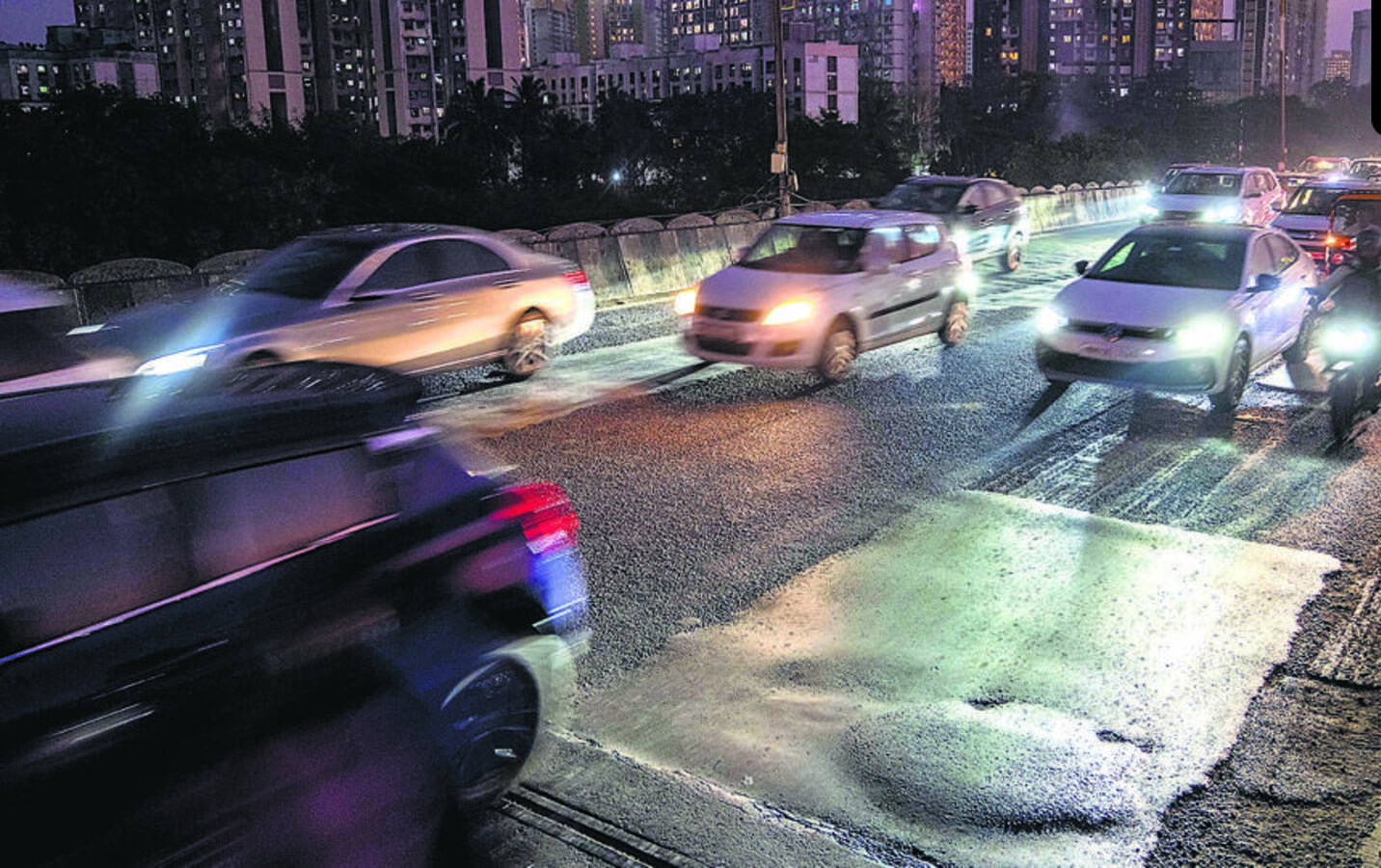
Mumbai’s transport authorities have issued a final warning to the private toll operator responsible for maintaining several key flyovers across the region, after inspections confirmed that many structures have not been resurfaced for more than a year. The move highlights mounting concerns around the city’s ageing road infrastructure and its implications for commuter safety, mobility efficiency, and long-term urban resilience.
According to officials overseeing regional road development, the flyovers under the operator’s jurisdiction have shown visible deterioration, particularly in the upper layers designed to provide a smooth and safe driving surface. Despite repeated reminders, resurfacing schedules were allegedly ignored, prompting the authorities to issue a last notice and demand immediate rectification. The warning follows a recent high-level review meeting where agencies were asked to accelerate maintenance work to avoid further strain on the city’s already congested corridors. Institutionally, the responsibilities for these structures are split. While the state road development body manages a handful of flyovers, the toll operator oversees a significantly larger network, including several busy connectors in northern and eastern suburbs. Officials noted that the operator continues to collect toll at five major entry points to the city, even though its financial performance has reportedly weakened. The tolling concession, originally set to end in 2026, was extended by the state following policy changes that waived toll fees for smaller vehicles. Authorities argue that despite financial challenges, contractual obligations regarding safety and upkeep cannot be diluted.
If the operator fails to initiate repairs immediately, officials indicated that they may transfer maintenance responsibilities to the municipal corporation and recover the associated costs from the operator. Such a step could also strengthen oversight and align repairs with broader civic initiatives aimed at improving road safety and promoting sustainable mobility. The condition of several important flyovers—including those in Thane, Mankhurd, Vikhroli Junction, Aarey Colony, Vakola, Rani Sati Marg, and National Park—has raised concerns among mobility experts. They argue that poorly maintained elevated structures increase risks for pedestrians, cyclists, and motorists alike, undermining efforts to build safer, more inclusive transport networks. Smooth, well-managed flyovers are also essential for reducing travel turbulence and unnecessary fuel consumption, both of which carry climate and air-quality implications for a dense metropolitan region like Mumbai.
Sector specialists believe the episode signals a wider need for consistent monitoring frameworks and transparent maintenance contracts, particularly as Indian cities shift towards more equitable and low-carbon transport systems. Ensuring that critical mobility infrastructure remains safe, efficient, and accessible is central to creating resilient urban environments. For now, authorities expect the operator to submit a time-bound plan and begin on-ground repairs by next month, subject to approval. With daily commuters already facing multiple mobility pressures, swift action will be essential to restore confidence in the city’s elevated road network and support a more sustainable urban mobility future.
Mumbai Issues Final Notice To Toll Agency Over Neglected And Unsafe Flyovers