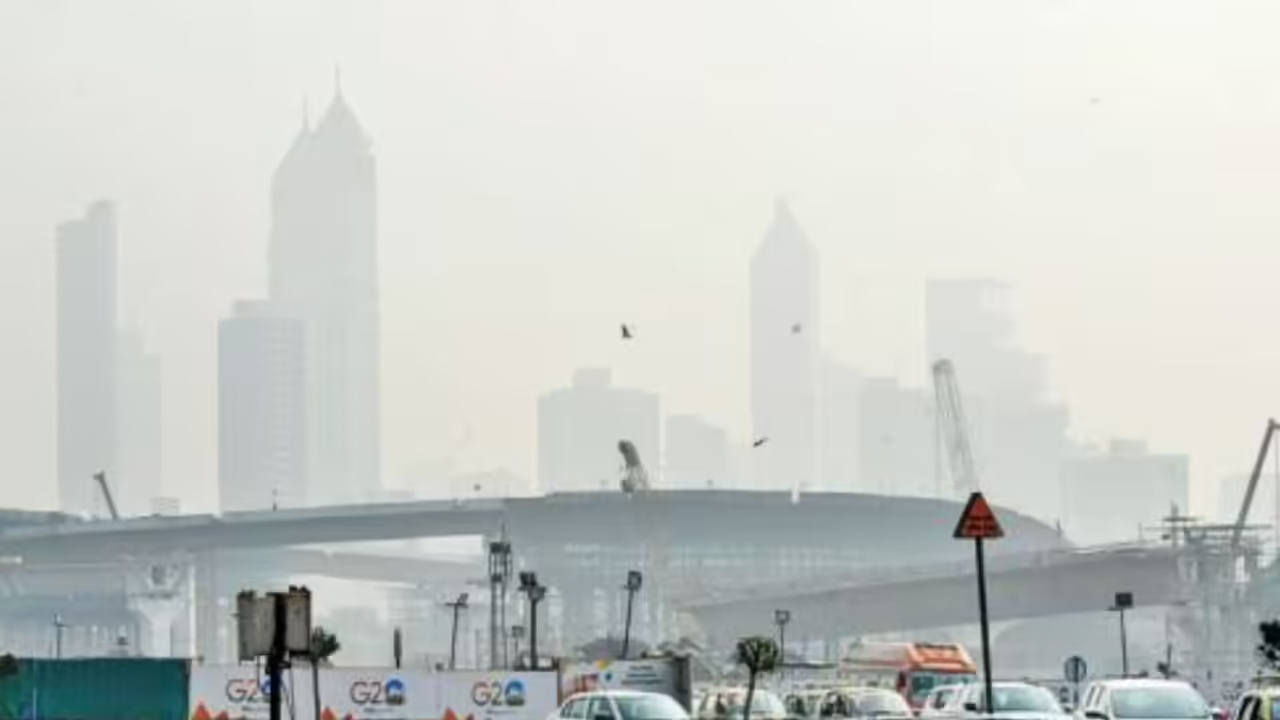
Mumbai’s civic administration has triggered its most stringent air-quality response of the season as pollution levels across the city move into the ‘very poor’ category, prompting preparations for targeted construction pauses and a wider crackdown on emission sources. The Brihanmumbai Municipal Corporation (BMC) has warned that if localised air quality fails to improve, temporary work stoppages will be imposed in pockets where Air Quality Index (AQI) readings cross critical thresholds.
Monitoring stations in neighbourhoods such as Mazgaon recorded AQI levels above 300, signalling deteriorating conditions that mirror northern India’s annual winter pollution patterns. Senior civic officials confirmed that actions are now being guided under the Graded Response Action Plan (GRAP), which enables authorities to enforce rapid interventions when pollution escalates. Officials emphasised that such measures are essential for safeguarding public health in a dense coastal metropolis where vulnerable communities face disproportionate exposure to toxic air. Before imposing construction bans, the BMC plans to intensify “positive interventions,” including large-scale water misting, deep mechanical road cleaning, and heightened enforcement against industrial units, ready-mix concrete plants, bakeries, and construction sites that violate dust-control norms. A senior civic official said the administration aims to “address hotspots through targeted action rather than blanket shutdowns,” aligning with the city’s broader agenda of sustainable and climate-resilient urban management.
Flying squads deployed across all municipal wards have already increased patrols, issuing show-cause notices to several establishments found flouting the civic body’s 28-point pollution control framework. Areas such as Deonar—long associated with open burning—are receiving particular scrutiny as part of a citywide effort to eliminate legacy pollution sources. Police units have also been alerted to strengthen night inspections to curb unauthorised burning of waste. The civic body indicated that construction activities in Mazgaon will be halted if AQI levels above 300 persist for two consecutive days. Similarly, if the citywide AQI remains consistently above 200, restrictions will be implemented in multiple wards identified as high-risk zones. This approach echoes the emergency actions taken last winter, when the BMC enforced temporary construction halts in localities including Byculla and Borivali East.
The polluted haze has reduced visibility across major corridors, with social media flooded with images of Mumbai’s coastline and transport landmarks shrouded in smog. Urban planners note that the situation underscores the urgent need for long-term air-quality management strategies, including cleaner construction practices, dust-free infrastructure systems, and accelerated transitions to low-emission urban transport. With Mumbai’s average AQI currently hovering around 173—bordering the ‘poor’ range—the BMC’s escalated response is seen as an important step in preventing the city from slipping into the severe winter pollution cycle that has become routine across parts of northern India. Officials maintain that immediate actions, combined with structural reforms, are essential for building a healthier and more equitable urban environment for residents across the Mumbai Metropolitan Region.