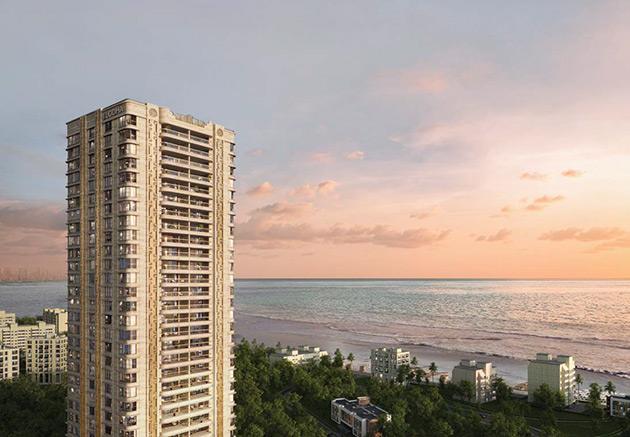
A fresh development pact in Mumbai’s western suburbs is set to unlock significant residential capacity, as Oberoi Realty moves forward with a project in Versova that could deliver over 17 lakh square feet of saleable housing. The agreement, centred on land held by a state housing authority in Andheri West’s Aram Nagar, highlights how public-private collaborations are increasingly shaping the city’s redevelopment pipeline.
At a time when land scarcity continues to constrain Mumbai’s expansion, such arrangements allow private developers to tap into underutilised public land while facilitating rehabilitation obligations. Industry experts note that the Versova project sits within a high-demand micro-market where infrastructure access, proximity to employment hubs, and coastal connectivity sustain residential interest despite elevated property values.
The scale of the proposed development points to a broader shift in the Mumbai real estate market, where redevelopment and land optimisation are replacing greenfield expansion. Urban planners say these projects are not just about supply creation but also about reconfiguring ageing neighbourhoods into higher-density, service-efficient urban clusters. However, the success of such initiatives depends heavily on timely regulatory clearances and the integration of transport, water, and waste systems. The Versova project also reflects a growing reliance on Development Control and Promotion Regulations, 2034, which aim to balance density with liveability. While increased floor space index (FSI) allowances enable developers to maximise output, experts caution that without parallel investment in civic infrastructure, higher density could strain already stressed urban systems.
Oberoi Realty’s recent land acquisitions and redevelopment agreements across Mumbai indicate a strategic focus on premium and mid-income housing segments. The company’s participation in large-scale land bids and redevelopment deals suggests confidence in sustained housing demand, particularly in well-connected urban pockets. Analysts tracking the Mumbai real estate market observe that developers are prioritising locations where demand resilience can offset rising construction costs and regulatory complexities. From a policy perspective, such projects also play a role in addressing the city’s long-standing housing imbalance. By combining free-sale components with rehabilitation commitments, they contribute to both market-driven supply and social housing obligations. Yet, urban policy specialists argue that ensuring inclusivity requires transparent allocation processes and long-term maintenance frameworks for rehabilitated units.
As Mumbai continues to densify, projects like the Versova development underline the need for integrated planning that aligns real estate growth with climate resilience and urban infrastructure capacity. The coming years will test whether large-format redevelopment can deliver not just housing numbers, but also more liveable, equitable neighbourhoods in one of the world’s most space-constrained cities.