Mumbai Hosts India Inc On The Move Manufacturing Sum
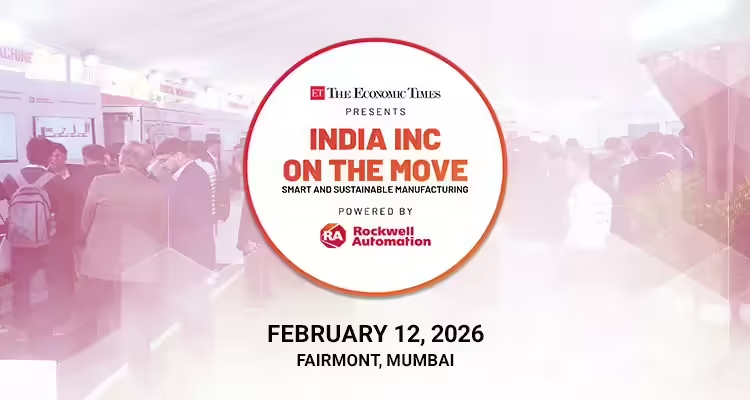
Mumbai has become the nexus for India’s manufacturing and technology leadership this week as India Inc On The Move (IIOTM) 2026 convenes business strategists, industrial technologists, and policymakers to decode how artificial intelligence is reshaping domestic industry. The seventh edition of this marquee summit, organised jointly by Rockwell Automation and The Economic Times, underscores the sector’s strategic pivot towards AI-enabled, sustainable manufacturing systems that can elevate competitiveness while addressing energy, workforce and supply-chain imperatives.
At its core, AI-driven manufacturing combines advanced analytics, machine learning, robotics and sensor networks to optimise production, reduce downtime and lower the environmental footprint of factory operations. For a country seeking to grow industrial output while committing to low-carbon goals, the technology is not just about automation — it’s about creating resilient value chains that can withstand supply shocks and rising resource costs.Industry leaders at the event emphasised that India’s manufacturing sector is transitioning from pilot-phase experimentation to scalable AI adoption. Discussions have centred on software-defined manufacturing, where digital layers orchestrate machines, materials and energy flows in real time, and on embedding sustainability into core operations rather than as an add-on. Panels explored how data analytics can improve energy efficiency in automotive plants, optimise throughput in pharmaceuticals, and strengthen worker connectivity across industrial campuses.
A key theme emerging from the summit is that intelligent manufacturing is increasingly multidimensional — encompassing AI, cloud adoption, autonomous robotics and digital twins — and deeply interlinked with labour-skilling strategies. Business strategists argue that as factories become connected enterprises, the workforce will need targeted programmes to build digital skills and to ensure that automation enhances job quality without sacrificing inclusion.For many participants, sustainability is no longer peripheral but central to competitive advantage. Supply chains powered by real-time data can significantly reduce energy use and waste, crucial in a resource-constrained world where manufacturing accounts for a substantial share of emissions. Industry leaders also highlighted the need for robust frameworks governing responsible AI, data governance and cybersecurity to build trust among partners and customers.
From an urban and regional development standpoint, India’s focus on AI-enabled manufacturing intersects with broader industrial policy goals. Emerging hubs in Maharashtra and other states are seeking to attract investment in high-tech production facilities and digital infrastructure, catalysing employment and economic diversification beyond traditional sectors. Deploying AI and automation responsibly — with emphasis on sustainability, workforce inclusion and regional equity — will be essential if India aims to be a global manufacturing leader.
While dialogue is a critical first step, converting insights into tangible infrastructure investments and regulatory certainty will be the real test. As delegates return to factory floors and policy tables, the sector’s ability to innovate at scale and to integrate AI into everyday industrial practice will shape India’s manufacturing trajectory in the decade ahead.