


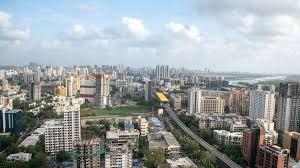
Mumbai’s housing market closed 2025 with its strongest performance in over a decade, underscoring the city’s enduring pull despite high prices and persistent affordability challenges. Property registrations crossed the 1.5 lakh mark during the year, reflecting robust end-user demand and a market increasingly driven by genuine homebuyers rather than speculative investors. The scale of transactions also delivered record revenues to the state exchequer, reinforcing real estate’s role as a critical urban economic engine.
Industry data indicates that both primary sales and resale transactions contributed to the surge, spanning residential and selective commercial assets. The sharp rise in stamp duty collections points not only to higher volumes but also to a gradual upward shift in per-unit transaction values, particularly in well-connected suburban micro-markets. Urban economists say this reflects confidence in Mumbai’s long-term growth fundamentals amid expanding metro connectivity and infrastructure-led regeneration. A closer look at buyer preferences reveals a subtle but important change in demand patterns. Mid-to-upper price segments gained traction during the year, while the share of sub-Rs 1 crore homes edged lower. Homes priced between Rs 1 crore and Rs 2 crore strengthened their dominance, suggesting that salaried professionals and self-employed buyers are stretching budgets to secure homes closer to workplaces and transit corridors. At the top end, high-value transactions continued to grow steadily, signalling sustained wealth concentration within the city.
Size preferences also remained pragmatic. Compact and mid-sized homes accounted for the bulk of registrations, with units under 1,000 sq ft forming the backbone of demand. This trend, urban planners note, aligns with Mumbai’s push towards higher-density living, especially around transport nodes, but also highlights the need for better liveability standards, open spaces, and social infrastructure within dense neighbourhoods. Geographically, the Western and Central suburbs continued to dominate transaction activity, benefiting from improved road and metro connectivity, redevelopment projects, and a steady pipeline of new supply. South Mumbai, by contrast, saw a gradual erosion in its market share, reflecting limited new inventory and affordability constraints, even as it retains its premium positioning. The momentum carried through to the final month of the year, with December emerging as one of the strongest periods for registrations. Residential properties formed the majority of transactions, reinforcing the narrative of a market anchored in end-use demand rather than short-term speculation.
Urban policy specialists caution that while record sales signal market depth and resilience, they also sharpen questions around housing affordability, equitable access, and sustainable growth. As Mumbai continues to attract capital and people, the challenge ahead lies in aligning housing supply with transit-oriented planning, climate resilience, and inclusive urban development ensuring that the city’s real estate success translates into broader civic gains rather than deeper spatial inequality.
Also Read: Mumbai Infrastructure Drive Extends Metro Beyond Core
Mumbai Homebuyers Drive Strongest Sales Cycle Since 2011
