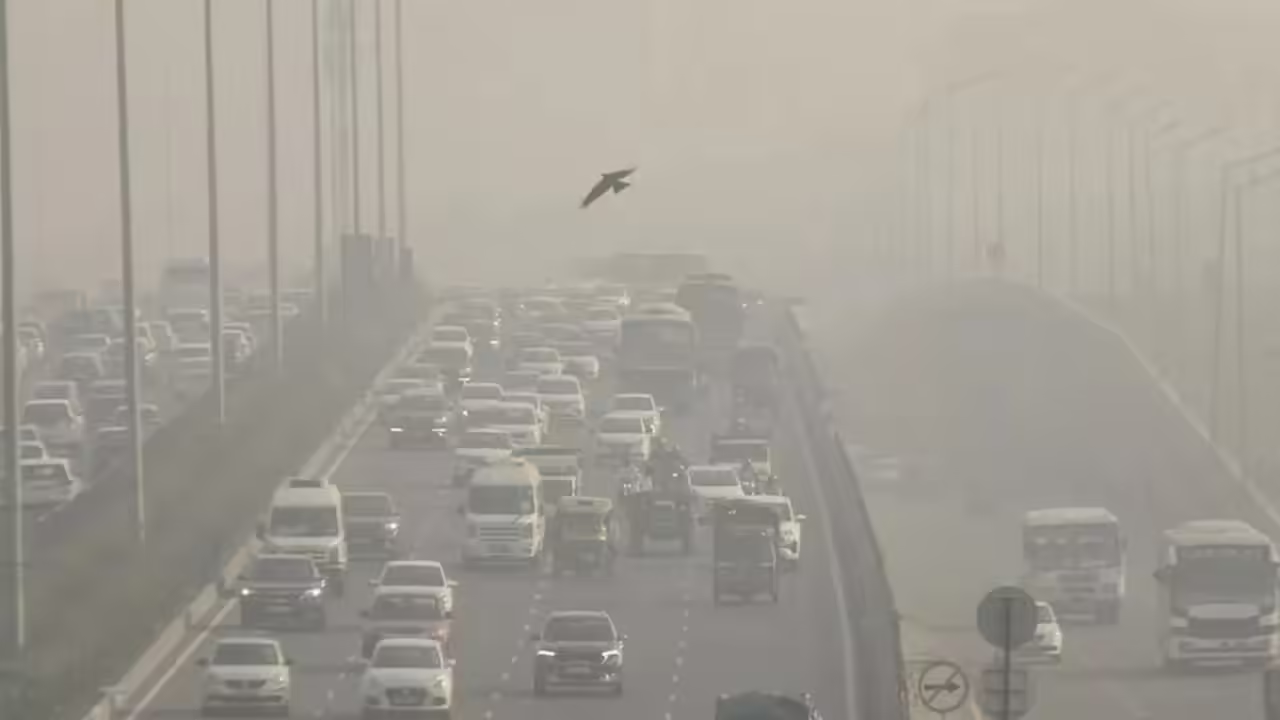
Mumbai’s air quality has come under sharp judicial scrutiny after the city’s high court warned that unchecked pollution from construction activity could push India’s financial capital towards a crisis similar to that experienced in Delhi. The court’s observations underline growing institutional concern that delayed enforcement and fragmented oversight are undermining public health and the city’s long-term urban resilience.
Hearing a court-initiated public interest case on deteriorating air quality, the bench questioned civic and environmental authorities on the lack of visible improvement despite repeated warnings. Judges expressed alarm at the scale of dust emissions from construction sites, noting that rapid urban growth without adequate safeguards risks eroding Mumbai’s economic competitiveness and liveability.
According to submissions made during the hearing, particulate pollution linked to excavation, debris handling and unregulated transport movement remains a persistent contributor to poor air quality. Industry experts say that while Mumbai has expanded aggressively to meet housing and infrastructure demand, environmental compliance has failed to keep pace with the scale of development.
The court asked senior municipal and pollution control officials to account for immediate measures taken to protect construction workers, who remain among the most exposed groups. Public health specialists note that prolonged exposure to fine dust particles significantly increases respiratory and cardiovascular risks, particularly for informal workers lacking protective equipment or regular health monitoring. Urban policy analysts argue that Mumbai air pollution reflects a deeper governance challenge. Multiple agencies oversee construction, transport, waste and emissions, but coordination gaps often result in weak enforcement on the ground. As a senior urban planner observed, “Cities that grow faster than their regulatory capacity tend to externalise environmental costs onto workers and residents.”
Data from environmental monitoring stations shows seasonal spikes in particulate matter, often coinciding with peak construction cycles. While authorities have announced dust suppression norms and penalties for violations, experts say compliance remains inconsistent, especially at smaller sites and redevelopment projects spread across dense neighbourhoods. The court’s warning carries broader implications for Mumbai’s development trajectory. With real estate, infrastructure and logistics forming a critical pillar of the city’s economy, sustained air quality deterioration could affect workforce productivity, healthcare costs and investor confidence. Sustainable construction practices, including covered material transport, on-site dust control and real-time monitoring, are increasingly viewed as economic necessities rather than regulatory burdens.
Urban economists point out that global cities addressing similar challenges have aligned growth with environmental accountability through transparent data, strict enforcement and incentives for cleaner building methods. For Mumbai, the moment presents an opportunity to recalibrate urban expansion towards low-carbon, inclusive and health-focused development. As the case continues, the court has signalled that inaction is no longer acceptable. The coming months will test whether Mumbai can balance its development ambitions with the urgent need to safeguard air quality a defining factor in shaping a resilient, equitable and future-ready city.
Mumbai High Court Warns Air Pollution Could Trigger Delhi Like Health Crisis