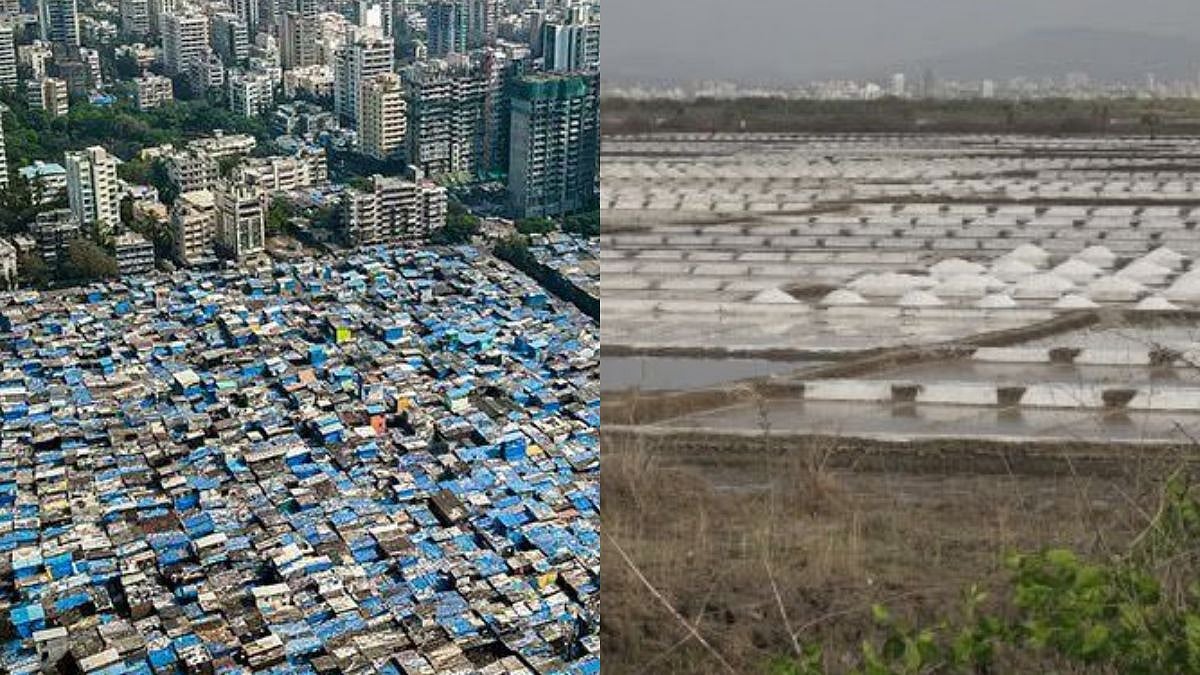
The Bombay High Court has dismissed a new public interest litigation challenging the allocation of salt pan lands for the rehabilitation of project-affected persons (PAPs) under the Dharavi redevelopment project, reaffirming the state’s authority to execute urban renewal plans while maintaining procedural integrity. The ruling signals judicial recognition of structured redevelopment efforts amid persistent urban pressures in one of the city’s most densely populated settlements.
A bench comprising the Chief Justice and a sitting judge held that a third party unconnected to the original tender process cannot introduce fresh objections under the guise of a PIL. The petitioner, a senior citizen and technical consultant, had sought to question allotments of Mother Dairy land in Kurla and several salt pan parcels at Kanjurmarg, Bhandup, and Mulund, alleging violations of earlier court orders and undervaluation of government assets. The court emphasised that merely adding new prayers or challenges does not maintain a writ petition in public interest. The plea targeted multiple stages of the redevelopment project, including the 2022 tender notice, Letters of Approval, development agreements executed in 2024 and 2025, and subsequent government resolutions awarding the project to Adani Properties as the lead developer. Advocates for the petitioner argued that government lands had been transferred at rates significantly below market value, potentially compromising public finances.
Responding on behalf of the state, senior legal officials noted that the redevelopment had been classified as a project of “vital public importance,” with rehabilitation plans extending to nearly four lakh ineligible occupants. Officials clarified that bidders had been informed of the possibility of acquiring additional land, including salt pan parcels, as part of comprehensive resettlement measures. Representatives for the lead developer highlighted that the tender explicitly allowed acquisition of both private and government lands to ensure complete rehabilitation. They also underlined that the salt pan properties had been transferred from the Central Government to the State Government, not to private entities, and that premiums were paid to maintain state ownership.
Urban planners and redevelopment analysts observing the case note that the decision reinforces the legal framework for large-scale urban renewal in Mumbai, where land scarcity and dense populations necessitate careful planning and consolidated rehabilitation. The ruling may reduce litigation-related delays, providing clarity for ongoing and future projects in Dharavi and similar high-density zones. While the court’s decision upholds the current land allotments, experts emphasise the need for continued transparency, monitoring of rehabilitation quality, and adherence to sustainable urban development standards. Ensuring equitable resettlement and integrating climate-resilient infrastructure remain crucial for the long-term success of Dharavi’s transformation.
Mumbai HC Upholds Dharavi Salt Pan Allotment