


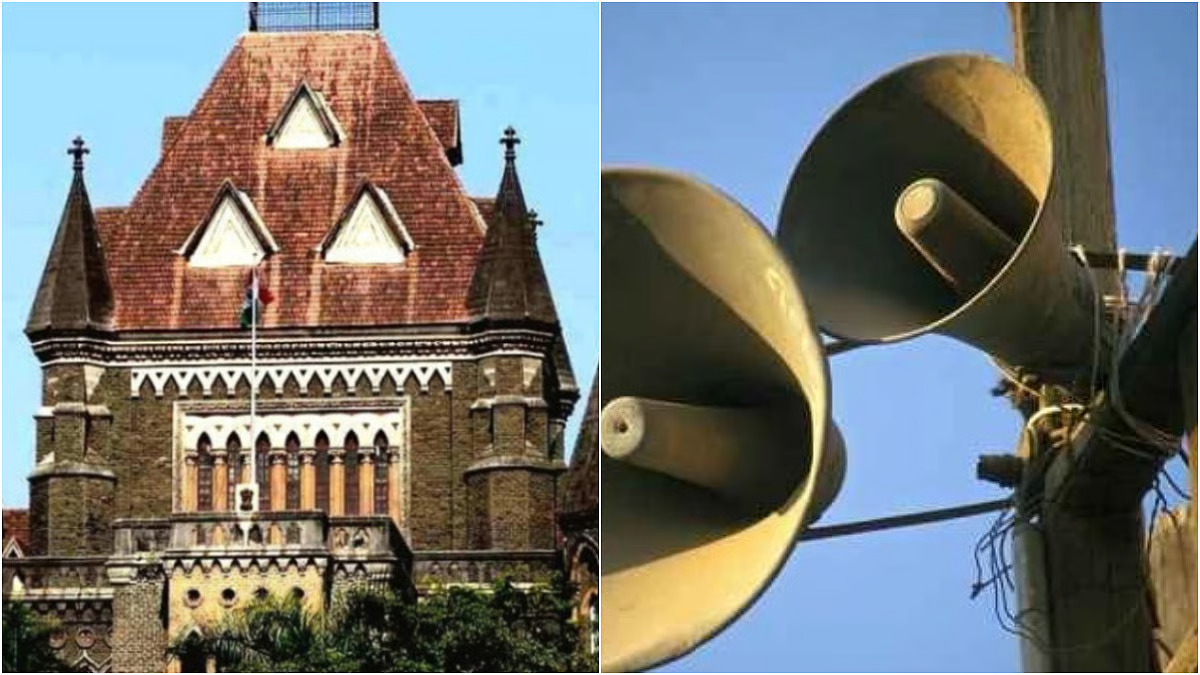
Maharashtra government informed the Bombay High Court that it has removed 343 unauthorised loudspeakers from religious premises across the state. The disclosure came in response to a contempt petition challenging the government’s compliance with a 2016 court directive aimed at regulating noise levels near places of worship.
A division bench, while reviewing the case, acknowledged that the authorities had taken “substantial steps” to adhere to the earlier order. The court found no grounds for initiating contempt proceedings, stating that enforcement of noise pollution rules was now visibly underway. The affidavit presented by a senior state police official revealed that as of April 2025, a total of 2,812 loudspeakers were active at religious sites statewide. Among these, 831 had secured necessary permissions, while 767 establishments received warnings and subsequently adhered to prescribed decibel limits. In 19 instances, formal complaints were registered for violations.
The petition in question had pointed to a 2019 Right to Information (RTI) reply, alleging the existence of nearly 3,000 illegal loudspeakers and accusing the state of inaction. However, the court noted progress on multiple fronts, including the appointment of a state-level nodal officer to supervise enforcement and the filing of cases under relevant environmental regulations. Referencing previous court rulings and scientific reports, the bench reiterated that sustained high-decibel noise can harm public health by disturbing sleep, impairing hearing, and triggering other stress-related disorders. The Noise Pollution Rules empower local police commissioners and officers to act against violators, with penalties extending up to ₹1 lakh or imprisonment in severe cases.
Officials confirmed that decentralised monitoring, combined with strict enforcement, is improving compliance. The court concluded that the state’s efforts reflect measurable progress, aligning with judicial directions issued to promote more liveable and acoustically sustainable urban environments. This development signals growing institutional willingness to address noise pollution, reinforcing the importance of regulatory oversight in ensuring healthier cities, especially in densely populated areas like Mumbai.
Also Read : Mumbai Schools Banks Power May Face Disruptions Amid Bharat Bandh Today
