


Maharashtra Chief Minister Devendra Fadnavis on Sunday unveiled a sweeping series of infrastructure, transport, energy, and governance initiatives aimed at boosting urban connectivity, reducing costs for citizens, and stimulating regional economic development. Key announcements included the launch of the 450-kilometre Mumbai-Hyderabad expressway, expansions of Mumbai’s Metro network, annual domestic electricity tariff reductions, and the creation of a new business district in Nagpur.
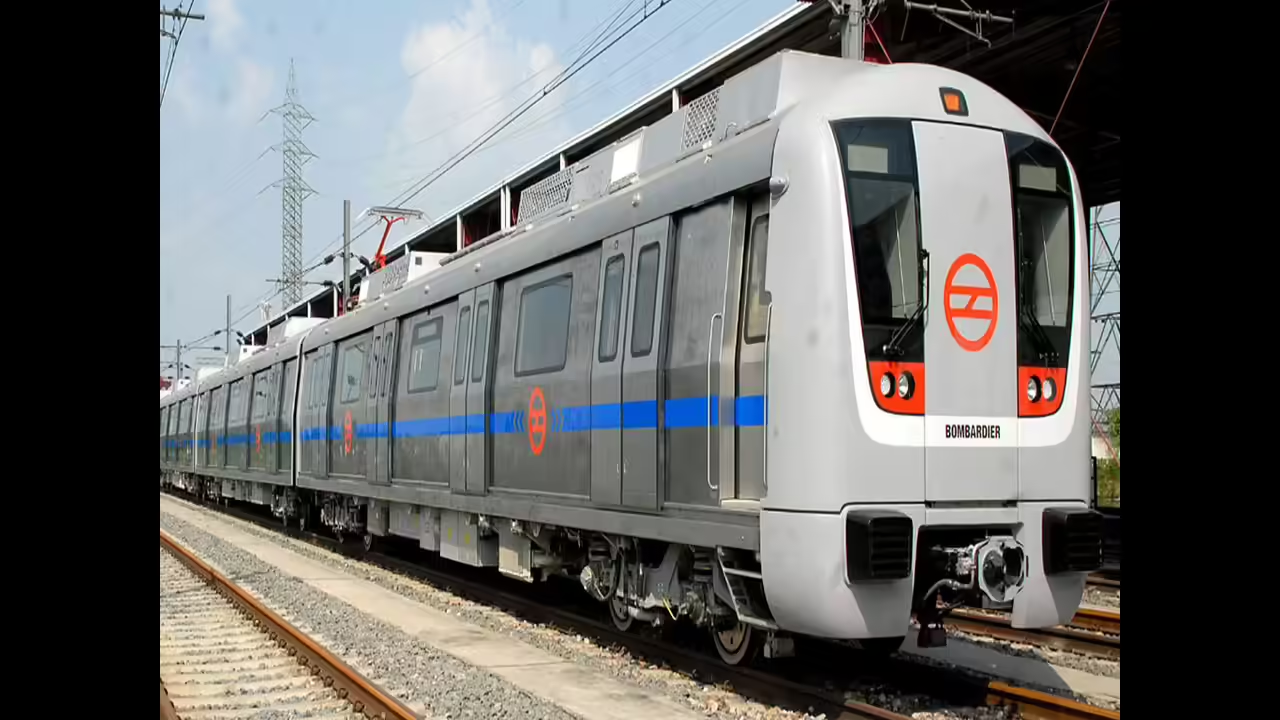
Addressing the winter session of the Maharashtra legislature, Fadnavis said the government was prioritising projects that strengthen mobility, enhance urban living, and streamline governance. The Jankalyan Expressway, an access-controlled corridor connecting Mumbai and Hyderabad via Kalyan and Latur, is projected to cost Rs 36,000 crore. By cutting the Mumbai-Hyderabad distance from around 710 km to approximately 530 km, the expressway is expected to reduce travel time between Mumbai and Latur to four-and-a-half hours, while linking Thane, Pune, Ahilyanagar, Beed, and Latur districts. Strategic integration with Atal Setu and a proposed Badlapur tunnel will also reduce travel time between Mumbai and Badlapur to roughly 35 minutes. Urban transport received a major boost, with plans to expand Mumbai’s operational 91 km Metro network to 132 km over the next two years. At least 50 km of new corridors are expected to be operational annually, supporting the city’s daily ridership of 9.5 lakh commuters. Pune and Nagpur will continue to see incremental growth, with 33 km and 40 km of Metro lines currently in service, respectively.
Fadnavis also addressed law enforcement and public safety, noting an overall reduction in crime, higher conviction rates rising from 9% to 96.24%, and improved police response times to emergency calls, now averaging 7.37 minutes. Cybercrime enforcement has been strengthened through the Mahacyber headquarters in Mumbai, which has intercepted frauds and prevented at least 100 suicides. Officials said the model is being studied by several other states and international agencies. Energy policy reforms include a 2% annual reduction in domestic electricity tariffs for the next five years, reversing a historical trend of rising tariffs. Fadnavis additionally announced the development of a state-of-the-art air training centre in Amravati and the creation of ‘Navin Nagpur’, a 1,710-hectare business district modelled on Mumbai’s Bandra-Kurla Complex and Pune’s Hinjewadi, projected to generate over 500,000 jobs.
Industry experts highlighted that these initiatives could significantly accelerate sustainable urban development, improve ease of living, and foster inclusive economic growth. However, careful planning will be required to balance infrastructure expansion with environmental considerations and equitable access to housing and mobility.
Also Read: Mumbai Lauren Gottlieb Home Purchase Marks Personal Milestone With Griha Pravesh
