


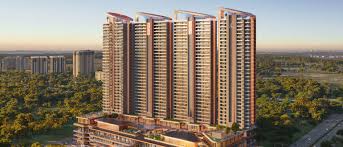
Mumbai’s western suburbs continue to emerge as the city’s most active redevelopment frontier, with a listed real estate developer securing development rights for a large mixed-use project in Goregaon West. The project, planned at Bangur Nagar, signals how private capital is increasingly being channelled into ageing suburban precincts where land scarcity, transport access, and housing demand converge.
Spread across a site of roughly 4,600 square metres, the redevelopment is designed to combine mid-to-large residential homes with commercial premises. Industry observers say such configurations reflect a shift away from mono-use residential towers towards compact, walkable neighbourhoods that reduce daily commute pressure and activate street-level economies. Goregaon’s proximity to business districts, metro corridors, and social infrastructure makes it a natural testing ground for this model. The project carries an estimated gross development value of about Rs 350 crore and forms part of a broader expansion strategy in the Goregaon Malad belt. A second nearby redevelopment is expected to be introduced shortly, pushing the combined pipeline value in the micro-market to nearly Rs 600 crore. According to sector analysts, clustering multiple projects within the same locality allows developers to achieve operational efficiencies while creating a coherent urban fabric rather than fragmented towers. Mumbai redevelopment projects have gathered pace over the past three years as older cooperative housing societies seek modern, safer buildings with improved amenities. With limited greenfield land available, redevelopment has become the primary mechanism for unlocking new housing supply within established neighbourhoods.
Data from property consultancies indicate a sharp rise in both launch volumes and transaction values since the pandemic, particularly in suburban districts where infrastructure upgrades have reduced travel times to employment hubs. Urban planners note that Goregaon and Borivali illustrate the new suburban growth equation: high residential density supported by metro connectivity, upgraded road networks, and access to workplaces in Andheri, Lower Parel, and the western business corridor. Mixed-use redevelopment is also seen as more climate-resilient, as it shortens travel distances and supports local employment, reducing dependence on long daily commutes. Beyond this project, the developer has outlined an ambitious pipeline across the Mumbai Metropolitan Region over the next two years, backed by significant capital investment. While market conditions remain sensitive to interest rates and construction costs, demand for larger homes in well-connected locations continues to hold firm, particularly among end-users.
For city authorities, the acceleration of Mumbai redevelopment projects underscores the need for coordinated infrastructure planning from drainage and water supply to last-mile transit and open spaces. As Goregaon’s skyline evolves, the success of these projects will ultimately be measured not just by sales, but by how well they integrate with the surrounding neighbourhood and improve everyday urban living.
Also Read: Mumbai BKC Signals Shift in Corporate Realty
Mumbai Goregaon Sees Major Redevelopment Push
