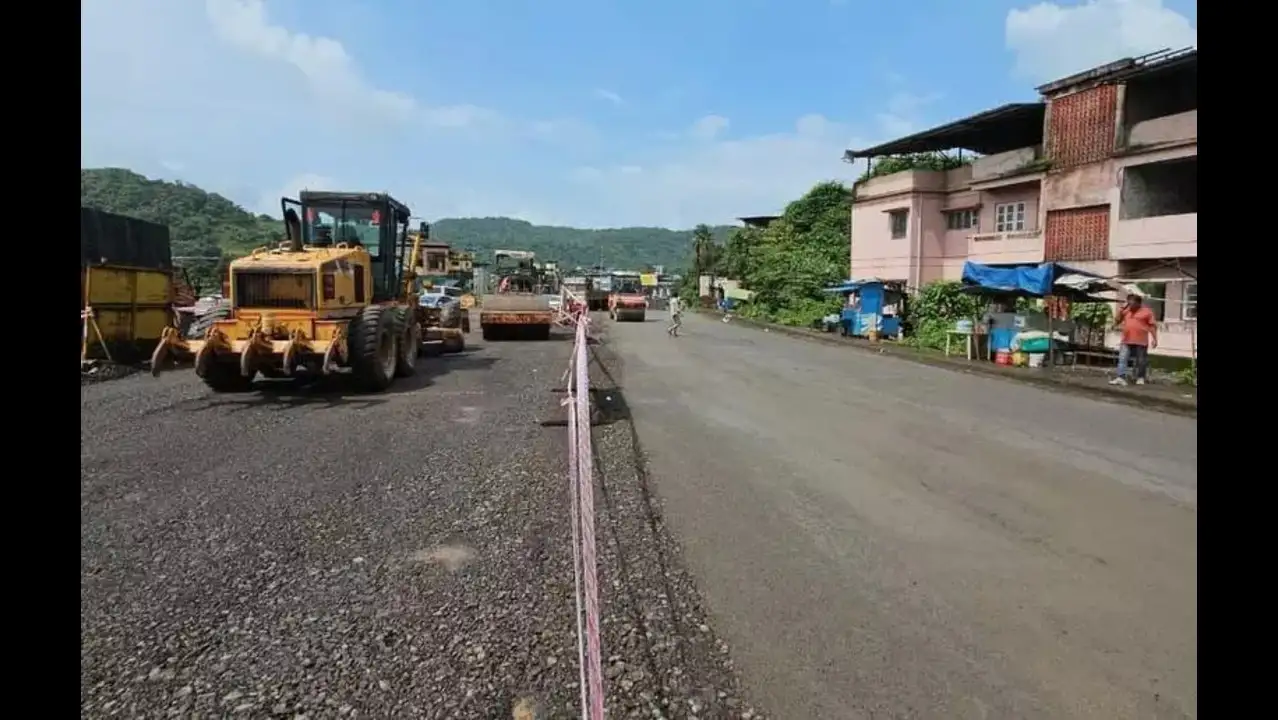
Mumbai Goa Highway Repairs Reach 70 Percent Before Ganeshotsav
With barely days left for the festive rush, the state’s public works department has reported that nearly 70 per cent of repairs on the Mumbai-Goa highway are now complete, even as heavy rain slowed progress. Officials said the highway is being readied to handle more than 10 lakh travellers heading towards the Konkan region for Ganeshotsav this year.
The Mumbai-Goa highway, stretching 460 kilometres, remains one of the most vital corridors for seasonal and tourist travel. While 84 kilometres fall under the National Highways Authority of India, the rest is managed by the state agency. Repair works have been intensified in recent weeks, with authorities relying on steel slag, a byproduct of steel manufacturing, to speed up the process of sealing potholes.
Officials explained that this innovative material has already been piloted in Gujarat and Andhra Pradesh, and is now being applied at several points on NH-66. Steel slag is known to improve load-bearing strength, provide higher skid resistance, and reduce long-term maintenance costs. More importantly, its durability significantly lowers the recurrence of potholes, a problem that has historically plagued the route during monsoon.
A senior public works department official noted that, had it not been for relentless rainfall, 90 per cent of the repair work could have been completed by now. Yet, the urgency of preparing for the festival rush has pushed engineers to accelerate the use of new techniques. “We have ensured that sensitive points, especially bridges and intersections, are being given priority treatment,” the official said. Concerns about road safety had intensified after a recent drone video of the Vashishti bridge in Chiplun, showing crater-like potholes, went viral on social media. The public works department has since repaired the damaged portions, reiterating that the bridge is safe for travel. To further ease congestion, the regional transport office has banned the movement of heavy vehicles above 16 tonnes on designated festival days.
The accelerated use of steel slag not only demonstrates the urgency of road preparedness but also hints at a gradual shift towards sustainable construction practices. By reusing industrial byproducts, the state reduces landfill waste and lowers its carbon footprint, while simultaneously building stronger road networks. Transport experts have emphasised that such measures could set a benchmark for other states where road deterioration is a recurring challenge. For commuters heading to Konkan during Ganeshotsav, the highway’s readiness remains a matter of cultural and economic significance. The annual migration is not only a journey home but also a vital boost to the rural economy, with transport infrastructure playing a decisive role. As authorities work against time, the highway’s condition will be closely watched by travellers and policymakers alike, both for its immediate efficiency and its long-term sustainability.