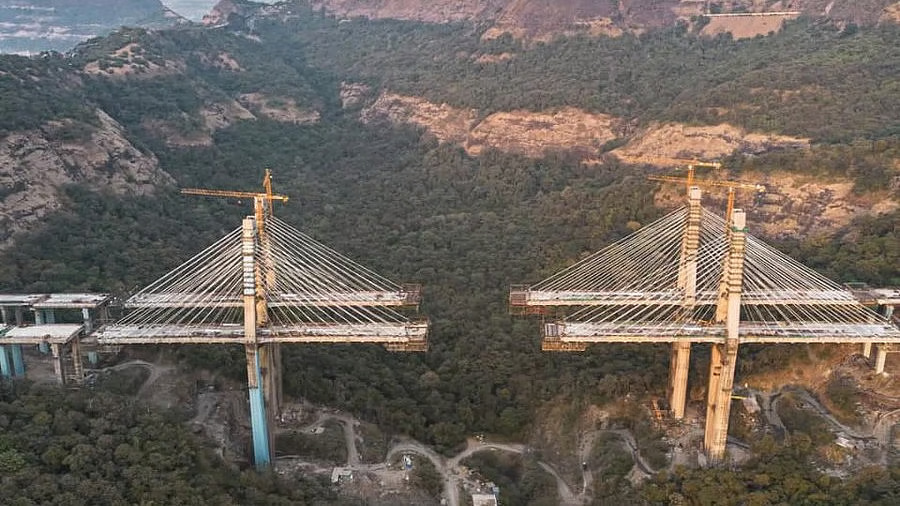
The long-awaited expansion of the Mumbai–Goa national highway, a vital corridor linking the city to the Konkan coast, continues to face significant delays, highlighting persistent infrastructure challenges in key urban and semi-urban regions. Initiated in 2013 to upgrade the two-lane road to a four-lane corridor, progress along the route remains uneven, with some stretches now functioning efficiently while others remain bottlenecks.
The National Highways Authority of India (NHAI) has largely completed the Panvel–Kasu and Indapur stretch, spanning approximately 84 kilometres, providing smoother commuting conditions. However, officials acknowledge that congestion intensifies beyond Indapur, particularly where incomplete bypasses and flyover projects impede traffic flow. The Indapur–Zarap section, covering nearly 470 kilometres, falls under direct supervision of the Union Ministry of Road Transport and Highways. Major delays are linked to the three-kilometre Indapur bypass and seven-kilometre Mangaon bypass, both part of the original project plan. Despite fresh tenders issued earlier this year and renewed construction activity, officials anticipate completion no earlier than March 2027.
Motorists report ongoing traffic snarls through Indapur and Mangaon towns, especially during peak hours. Temporary widening measures have alleviated congestion slightly, but conflicting movements between internal town traffic and highway vehicles continue to create long delays. A senior highway official commented, “While interim measures help, the bypasses are essential for restoring uninterrupted traffic flow and reducing travel times substantially.” Beyond Mangaon, conditions improve notably. Construction along the Parshuram Ghat–Zarap stretch is nearing completion, offering commuters a smoother drive. However, the pace of work on four flyovers near Lanja, Nivali, Pali, and Sangameshwar—each approximately 800 metres in length—has slowed overall progress, with openings now projected for March 2026. Service roads around these construction zones are being utilised to maintain vehicular movement, minimising disruption.
The situation gained public attention after engineer Chaitanya Patil conducted a 29-day, 470-kilometre survey along the corridor, documenting hazards, incomplete sections, and congestion points. His findings were submitted to the Union minister for further review, emphasising the need for accelerated execution and strategic planning to reduce citizen inconvenience. Industry experts note that the Mumbai–Goa highway expansion remains critical for regional economic connectivity, tourism, and freight movement. Resolving bottlenecks through timely bypass and flyover completion will support sustainable mobility and ease pressure on existing road infrastructure.
Mumbai Goa Highway Expansion Faces Delays Due To Bypasses And Flyover Bottlenecks