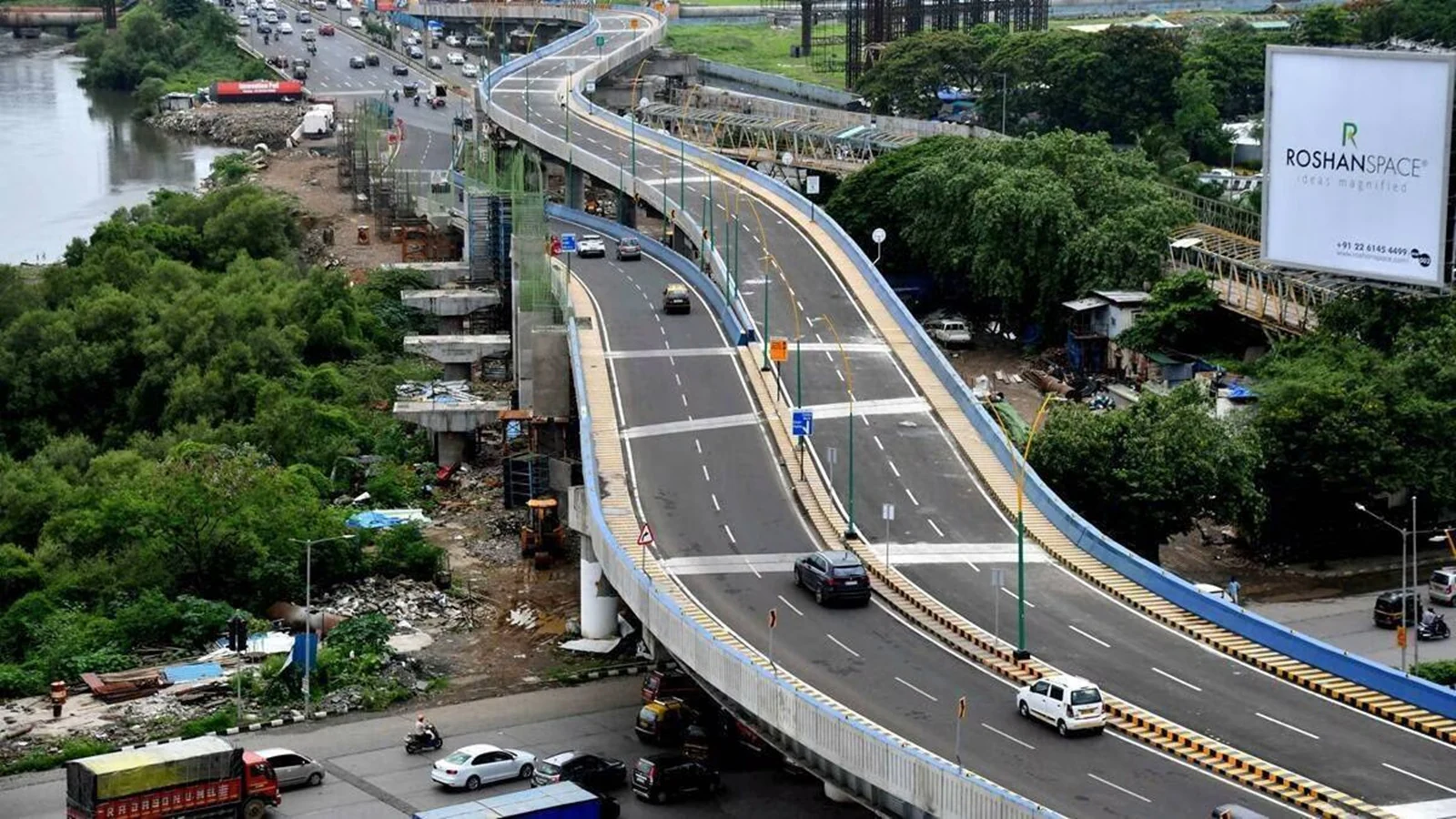
Mumbai GMLR Project Advances With Tunnels And Flyovers
Mumbai’s long-planned east–west mobility corridor, the Goregaon-Mulund Link Road (GMLR), has entered a new phase of construction that underscores both the engineering ambition and urban transport challenges facing Asia’s most densely populated metropolis. Officials report that tunnel boring machines (TBMs) will be lowered into a purpose-built launching shaft in March, even as the first major flyover is expected to open to traffic by late May — milestones that signal incremental progress on a project designed to transform east–west connectivity in the city.
The GMLR is a 12.2-kilometre east–west link being built by the Brihanmumbai Municipal Corporation (BMC) to directly connect the Western Express Highway at Goregaon with the Eastern Express Highway at Mulund. Urban transport planners have long flagged the lack of a direct east–west axis in Mumbai’s suburban network as a principal bottleneck that forces residents and freight vehicles into circuitous routes, worsening congestion, emissions and travel times.Construction activity on the ground reflects the project’s dual character: above-ground structures that can provide near-term relief, and large-scale tunnelling that will reshape long-distance suburban travel. Civics officials say the 1.3 km flyover from Dindoshi Court in Goregaon East to Ratnagiri Hotel Junction should be functional by May 31, easing pressure on existing arterial roads even before the subterranean section is complete. Concurrently, the massive TBMs — engineered to bore twin tunnels beneath Sanjay Gandhi National Park and residential districts — will be set into motion after assembly in March.
For commuters and residents, the phased openings represent tangible improvements in daily mobility. The new flyover, a six-lane elevated structure, is expected to redistribute traffic flows that typically funnel onto local streets, reducing idling times and emissions at peak periods. Over the longer term, the twin tunnels — part of the project’s core that includes a 4.7 km underground stretch plus a 1.6 km box tunnel — are projected to cut travel time between the western and eastern suburbs to around 25 minutes from over an hour during rush hour, experts say.Urban planners emphasise that the GMLR’s importance goes beyond convenience. Mumbai’s geographic constraints — bounded by water bodies and protected greenspace — have historically limited the expansion of surface transport corridors. By integrating flyovers and tunnels, the project seeks to enhance climate resilience and reduce emissions by curbing stop-start traffic patterns that contribute to poor air quality. At the same time, careful phasing is essential to mitigate disruption in densely settled neighbourhoods along the route.
Yet the project’s complexity poses challenges as well as opportunities. Past delays and utility relocations have occasionally set back schedules, prompting authorities to prioritise early deliverables such as the May flyover opening to ensure incremental benefits are delivered while more intricate tunnelling proceeds. Maintaining coordination across multiple engineering disciplines, safety protocols and environmental safeguards will be integral as the TBMs begin underground excavation, planners say.
Looking ahead, the GMLR’s phased execution will be an important test case in how megacities like Mumbai can reconcile rapid infrastructure expansion with sustainable and inclusive urbanism. Timely delivery, community engagement and adaptive traffic management will determine whether the corridor ultimately alleviates congestion and supports equitable access to opportunity across the metropolitan region.