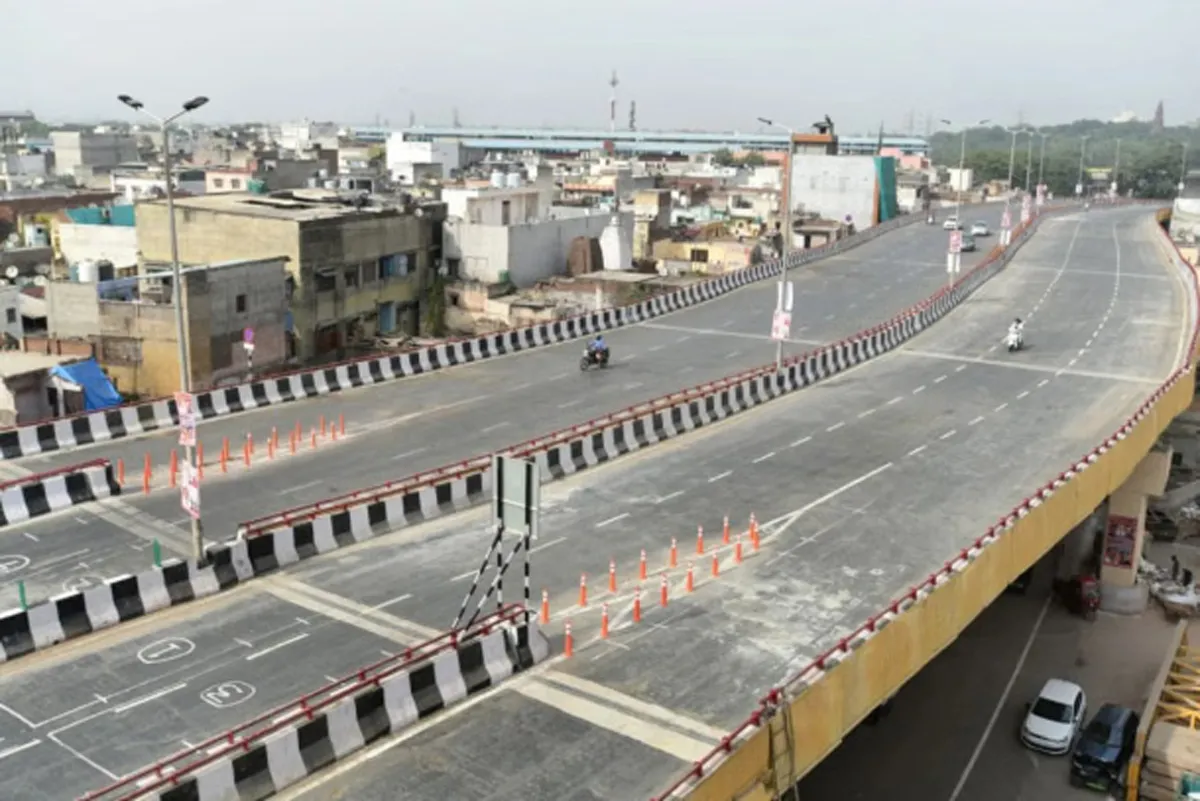
Mumbai’s east–west connectivity is set for a major boost as the first phase of the Goregaon–Mulund Link Road (GMLR) advances toward a 2026 opening. The corridor, designed as a high-speed 12-kilometre link across the Goregaon and Mulund suburbs, aims to ease long-standing mobility pressures and support a more efficient, inclusive and lower-emissions transport network for the city.
The Brihanmumbai Municipal Corporation (BMC) is overseeing the multistage project, which includes a combination of elevated structures, interchanges and twin underground tunnels. The initial phase covers a 1.2-kilometre flyover originating near the Dindoshi area and landing near the edge of the Sanjay Gandhi National Park (SGNP), from where commuters will eventually be able to enter the tunnel section directly. Officials involved in the work said the first phase is “progressing steadily” and remains on track for mid-2026 commissioning.
Once complete, the broader GMLR corridor is expected to significantly reduce travel time between Mumbai’s western and eastern suburbs two zones that currently rely on circuitous or heavily congested routes. Transport planners believe the project will be a “game changer” by offering a faster, more predictable route while enabling smoother movement of goods, services and daily commuters. They argue that a dependable east–west road link also supports more balanced development and reduces pressure on established arterial roads.
The flyover under construction will accommodate six lanes of traffic on a raised platform and include walkways on both sides to ensure safer pedestrian access an element urban mobility researchers say is essential for gender-neutral and inclusive mobility planning. Deck slabs and an elevated rotary interchange are also part of the initial phase, designed to improve traffic dispersal and minimise bottlenecks.According to officials, 27 of the flyover’s 31 pillars have already been completed, with the remaining structure targeted for early 2026. The BMC expects the west-bound arm of the flyover to be ready by January 2026, followed by the east-bound segment by April. Ancillary works such as lighting, safety systems and finishing will continue in parallel, allowing the flyover to open for public use by May 2026.
The subsequent phases involve extensive tunnelling work, scheduled to begin in 2026, and expected to take around a year for civil excavation. Experts say the tunnel component is central to reducing surface congestion and maintaining ecological sensitivity, particularly in areas bordering SGNP.The overall GMLR project carries an estimated investment of ₹14,000 crore, with a full completion target of 2028. Officials maintain that integrating the GMLR with upcoming corridors such as the Versova–Bhayandar Coastal Road will contribute to a more seamless and low-carbon mobility ecosystem across Mumbai’s suburban belt.
As the city continues to expand, residents and mobility experts hope the project will offer not just faster journeys but also a more equitable urban future one where infrastructure supports accessibility, safety and environmental responsibility.
Mumbai GMLR First Phase Flyover To Open Connecting Goregaon And Mulund 2026