


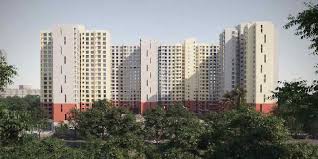
Ghatkopar has quietly moved to the centre of Mumbai’s residential recalibration, as homebuyers increasingly prioritise time efficiency, neighbourhood services and redevelopment-led supply over sheer proximity to traditional business districts. Once viewed as a secondary eastern suburb, the area is now drawing sustained demand across income groups, reflecting how infrastructure-led transformation is reshaping housing choices in the city.
A key driver has been connectivity. Ghatkopar is among the few neighbourhoods in Mumbai where suburban rail, metro and arterial road networks intersect at a single node. Urban mobility specialists note that this multi-modal access significantly reduces commute uncertainty, a factor that has gained importance as hybrid work patterns settle into a long-term norm. Faster east–west movement has also softened historical divides between Mumbai’s suburbs, making employment hubs across the island city more reachable from the east. Beyond transport, Ghatkopar’s social infrastructure has matured rapidly. Over the last decade, investments in healthcare, education and retail have strengthened the suburb’s self-sufficiency. Families no longer need to travel long distances for specialised medical care, higher education or everyday leisure. Urban planners argue that such proximity-driven living lowers daily travel demand, indirectly supporting lower emissions and improved quality of life. The housing market reflects this diversity. Entry-level buyers continue to find options in older but well-connected precincts, while mid-income households are gravitating towards redeveloped residential complexes offering modern safety standards and shared amenities. At the upper end, newer projects in parts of western Ghatkopar are catering to buyers seeking larger homes within established neighbourhoods rather than distant luxury enclaves. Analysts point out that this layered supply is unusual in Mumbai, where most suburbs tend to skew sharply towards either affordability or premium housing.
Redevelopment has emerged as a defining force. Ageing buildings and former industrial parcels are being replaced by taller, more efficient residential towers, often with improved open spaces and upgraded utilities. According to urban development experts, such regeneration helps cities grow inward rather than outward, using existing infrastructure more efficiently while improving seismic safety and environmental performance. From an investment standpoint, rental demand remains stable, supported by professionals working in nearby business districts, students attending educational institutions and healthcare workers linked to local hospitals. Properties closer to mass transit corridors continue to command faster absorption, underlining the market’s preference for accessibility over size alone. However, planners caution that sustained growth will require parallel attention to drainage, water management and pedestrian infrastructure. As density rises, civic upgrades must keep pace to ensure that liveability gains are not eroded by congestion or environmental stress.
Ghatkopar’s evolution illustrates a broader shift in Mumbai’s housing story one where well-connected, mixed-use neighbourhoods are gaining relevance over peripheral expansion. The next phase will depend on how effectively redevelopment aligns with inclusive design, climate resilience and everyday urban needs.
Also Read: Nagpur Infrastructure Push Reshapes Property Outlook
Mumbai Ghatkopar Emerges As Balanced Housing Hub
