


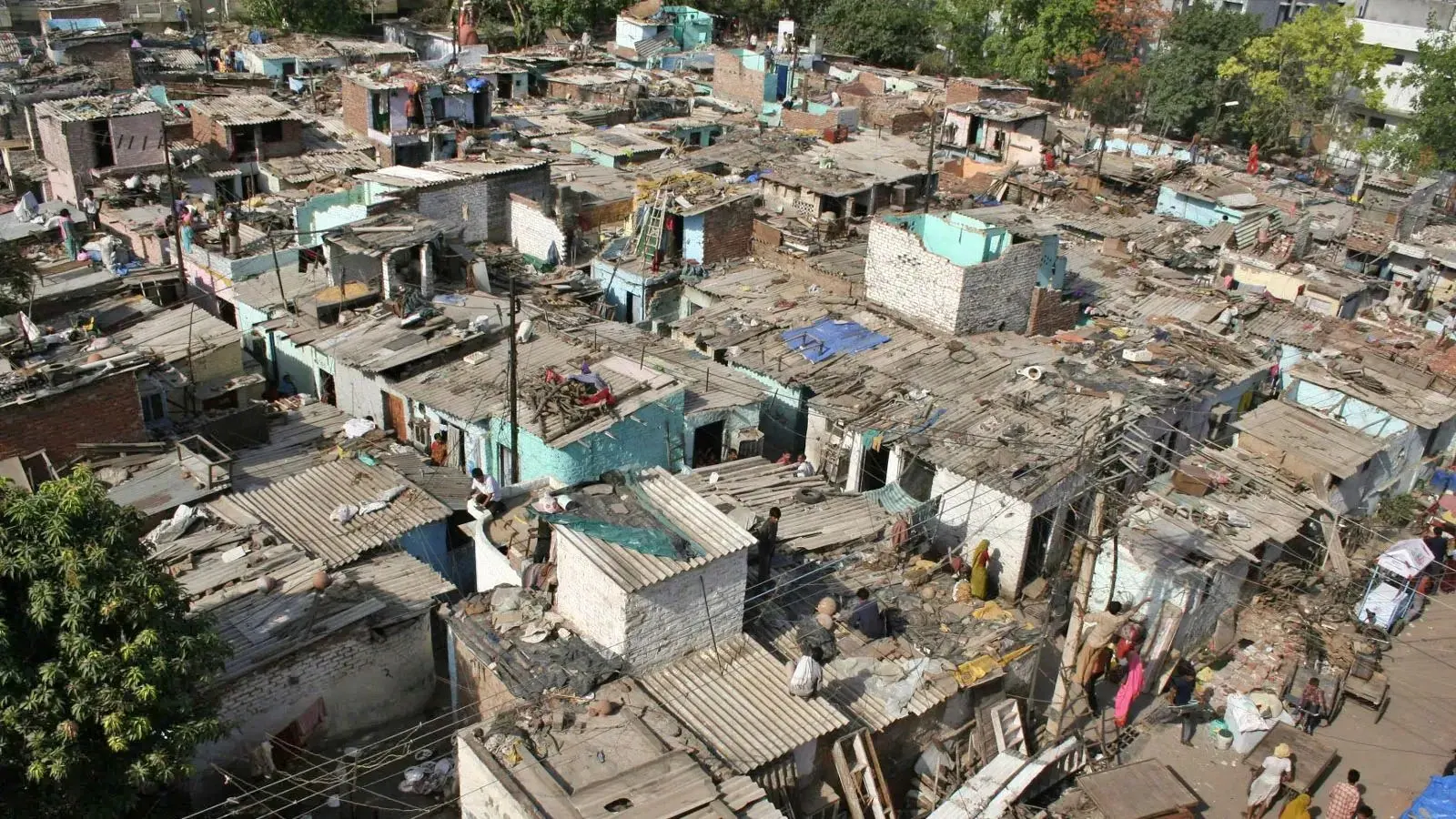
Mumbai Metropolitan Region Development Authority (MMRDA) has secured a ₹1,500 crore loan from the Bank of Maharashtra to kickstart its first major slum redevelopment initiative.
The ambitious project aims to transform the sprawling Ramabai Ambedkar Nagar and Kamraj Nagar settlements along the Eastern Express Highway in Ghatkopar, home to over 16,000 families. This financial infusion represents the first tranche of funding for the ₹8,498 crore redevelopment plan that is expected to set a new benchmark for inclusive, environmentally sustainable housing development in the Mumbai Metropolitan Region. Planning authority officials have confirmed that the loan will be repaid over 15 years, and the project execution will begin once the Slum Rehabilitation Authority (SRA) transfers the designated 75-acre land parcel.
The redevelopment plan is not just a housing project, but a comprehensive community upliftment initiative. It seeks to replace approximately 16,575 existing tenements with well-designed 300 sq ft one-bedroom apartments that come equipped with modern amenities. These include landscaped gardens, primary healthcare centres, and educational institutions — all integral to ensuring social equity and enhancing quality of life for displaced families. Officials have reiterated that this project marks a policy shift in how Mumbai approaches slum rehabilitation — no longer as temporary or reactive, but as a proactive model rooted in dignity, permanence, and ecological sensitivity. This is the first time that MMRDA, traditionally involved in transport and infrastructure, is leading a full-fledged slum redevelopment project.
According to senior officials, nearly 46% of the total project cost — around ₹3,916 crore — will be sourced through institutional loans, while 39% will be mobilised internally. The remaining 15% is expected to be raised through other financial mechanisms, potentially including state government assistance or public-private partnerships. What sets this initiative apart is not only the scale but the integrated development model it proposes. In addition to the rehabilitation apartments, the plan includes the construction of nearly 5,000 more units to house individuals affected by other infrastructure development projects in Mumbai. These could include those displaced by ongoing metro rail, road widening, or transport infrastructure expansions.
Sources within MMRDA also revealed that there will be a “free-sale” component in the redevelopment blueprint — a segment of apartments that can be sold in the open market. However, the scale and pricing strategy for these units is yet to be finalised. This component could significantly offset the cost burden of the redevelopment and potentially enable cross-subsidisation, a model often used in urban renewal schemes to maintain financial viability while ensuring social equity. A senior planning official explained that if MMRDA decides to develop the project on its own, it may earn up to ₹1,000 crore. However, if it opts to collaborate with a private developer under a joint venture model, earnings could increase to ₹2,900 crore. This potential revenue generation makes the project a financially attractive proposition, even as it delivers a massive public good.
Experts in urban planning have lauded the development, stating that it represents a strategic shift towards more empowered and self-financed public agencies taking on housing equity in India’s largest metropolitan areas. Many see this as a long-overdue evolution in how slum redevelopment is approached — moving away from speculative models toward mission-driven governance that values people and the environment. More importantly, the project is being hailed as a possible blueprint for future slum rehabilitation initiatives not only in Mumbai but across other urban centres in India. With proper execution, it could demonstrate how high-density housing redevelopment can align with principles of climate resilience, social inclusion, and gender neutrality.
By integrating civic amenities such as healthcare, green spaces, and education infrastructure within the development, the project aims to reduce long-term environmental impacts and improve the liveability of one of Mumbai’s most congested and underserved areas. The planning body has committed to completing the project within three years once land handover is complete. This timeline, though ambitious, is being supported by a strong administrative framework and evolving regulatory clarity under Maharashtra’s slum rehabilitation policies. Urban policy observers have pointed out that the successful execution of the Ramabai Nagar and Kamraj Nagar redevelopment project will not only restore dignity to thousands of families but also relieve pressure on Mumbai’s overstretched infrastructure. By providing formal housing and social services, the project could help transition slum communities into sustainable urban settlements that are less vulnerable to environmental hazards and more integrated into the broader city economy.
Officials involved in the project stressed that transparency, accountability, and long-term viability would guide all phases of development — from land acquisition to final handover. There is also a clear intent to minimise displacement trauma and ensure seamless rehabilitation through phased construction, timely compensation, and citizen engagement. With a significant share of Mumbai’s population still residing in informal settlements, the success of MMRDA’s first slum redevelopment project could signal the beginning of a more inclusive and environmentally conscious approach to urbanisation. While challenges remain — from coordination with multiple agencies to ensuring citizen trust — the financial closure of the loan and clear political backing mark a decisive first step in what could be a transformative urban story for Mumbai.
Also Read : Mumbai Commuters to Pay Rs 2 Extra as BEST Adds Toll
