


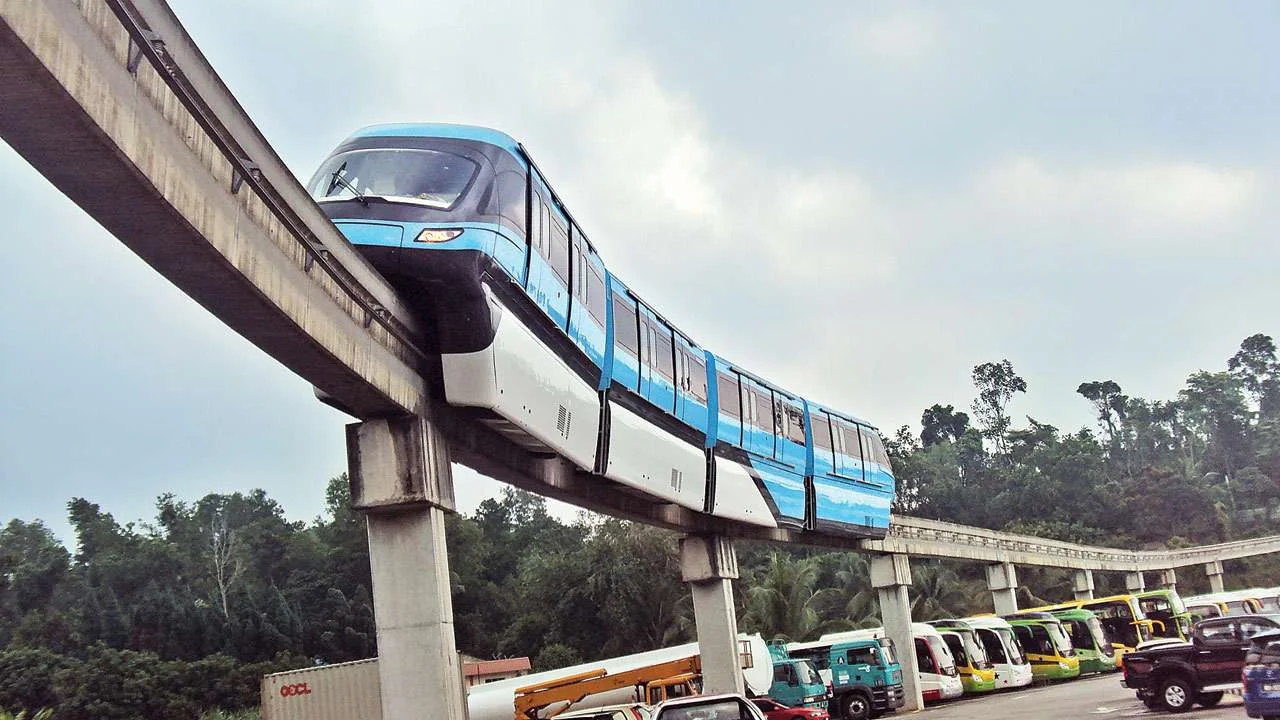
Mumbai’s long-struggling monorail corridor has taken a significant step towards stabilisation, with the city’s transport authority shortlisting four firms for a fresh operations and maintenance contract worth ₹297 crore. The Maha Mumbai Metro Operation Corporation Limited (MMMOCL) has moved the proposals into technical evaluation, signalling renewed efforts to provide consistent, reliable services on the Sant Gadge Maharaj Chowk–Chembur stretch. The development marks another attempt to reintegrate the monorail into Mumbai’s wider sustainable mobility network.
According to officials, the contract spans five years and has attracted interest from established infrastructure and transport firms. All four participants—Adani Infrastructure Management Services, Indwell Constructions, Konkan Railway Corporation, and Power Mech Projects—have cleared the initial scrutiny stage. Their financial bids will be opened once technical qualifications are confirmed. A senior official noted that competition among multiple bidders reflects the growing demand for modernised, low-emission urban transit options across major cities. The scope of the contract includes the full operations and maintenance of the 20-kilometre monorail system, which has faced recurring disruptions, staffing shortages, and maintenance challenges since its launch. Industry experts believe that outsourced O&M contracts, backed by defined service-level benchmarks, can help improve reliability and passenger confidence—long-standing gaps in the monorail’s journey. Strengthening such systems, they add, supports the broader objective of encouraging shifts away from private vehicle use, which is essential for building cleaner, low-carbon cities.
The monorail’s location in dense eastern neighbourhoods underscores its potential as a connector between suburban rail, metro corridors, and bus networks. For many residents, it represents the only rapid transit option that avoids road congestion. Transport planners argue that improving its efficiency can reduce commute times for thousands, while simultaneously easing pressure on overstretched road infrastructure. This aligns with Mumbai’s wider shift towards multimodal transport, enabling equitable mobility across user groups, including those without access to private vehicles. MMMOCL has incorporated performance-linked requirements into the tender, including punctuality targets, energy-efficient operations, and maintenance protocols that minimise downtime. Officials explained that the goal is to ensure predictable service quality, allowing commuters to depend on the monorail as a daily mode of transport rather than an inconsistent alternative. They added that the system’s viability depends heavily on professionalised operations for both rolling stock and station assets.
Industry analysts point out that renewed investment in the monorail also holds long-term implications for sustainable development. Public transport corridors, when effectively managed, improve air quality, reduce emissions, and make high-density areas more liveable. As the city continues expanding its network of metro lines, buses, and pedestrian infrastructure, the monorail is expected to serve as a supporting link in an integrated transport grid. With the evaluation process underway, the final selection of the lowest qualified bidder is expected in the coming months. If implemented effectively, the five-year contract could mark a fresh chapter for the monorail—strengthening mobility choices while contributing to Mumbai’s goal of more inclusive, climate-resilient urban transport.
Also Read: Thane Revives Kolshet Kalher Creek Bridge Project Promising Seven Minute Bhiwandi Connectivity
