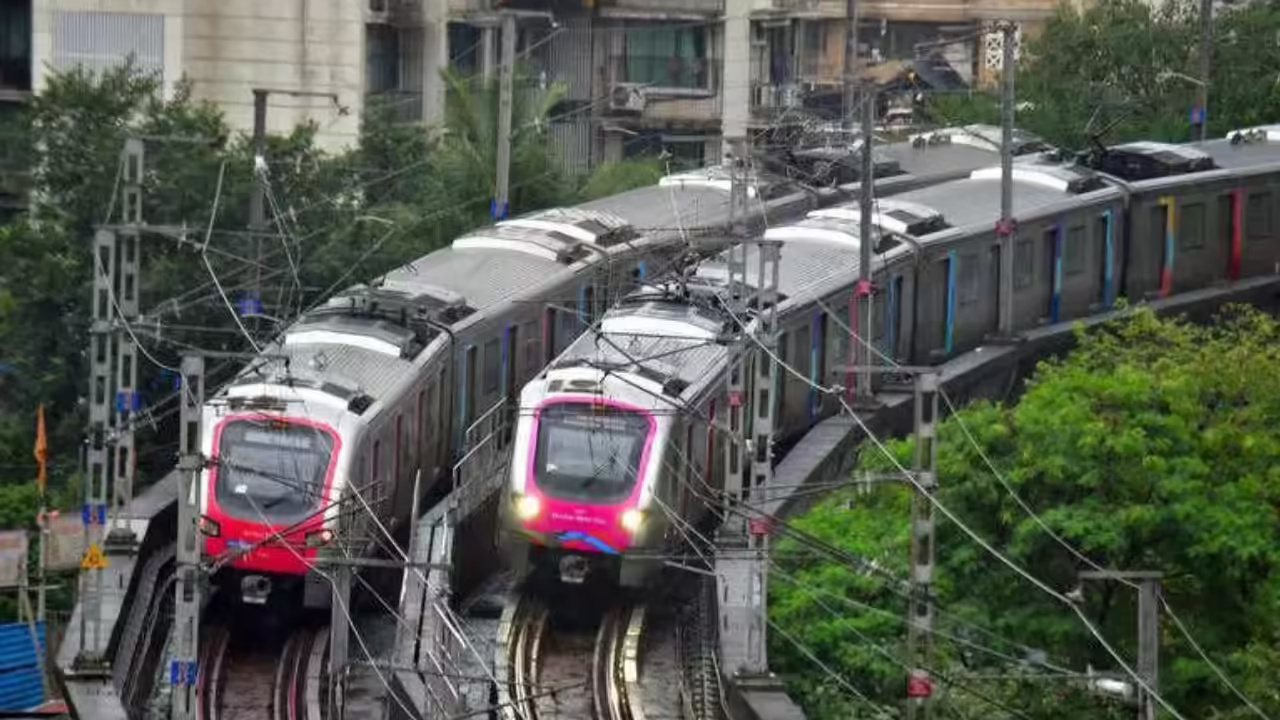
Mumbai’s long-awaited airport-to-airport metro link has taken a decisive step forward, with the state government finalising the alignment of Metro Line 8. The corridor is planned to offer a direct rapid-transit connection between Chhatrapati Shivaji Maharaj International Airport (CSMIA) and the Navi Mumbai International Airport (NMIA), creating a crucial mobility bridge between the city’s two key aviation hubs. Officials say the alignment approval places the project firmly on track to become a major component of Mumbai’s sustainable transport ecosystem.
The elevated corridor, to be developed by the city’s planning authority, will largely run through Navi Mumbai and connect several high-density nodes before terminating within the new airport complex. Eleven stations have been identified within Navi Mumbai limits, offering interchange opportunities for commuters across Vashi, Nerul, Seawoods, and Ulwe. Urban transport experts view the alignment as a key step in reducing dependence on road travel along the Sion–Panvel Highway, one of the region’s most congested arterial routes. After crossing Mankhurd, the proposed line will trace the Sion–Panvel corridor until Juinagar, before turning inward toward Nerul and Seawoods. An interchange is planned near Wonders Park, while another major station is expected near a prominent educational and healthcare cluster in Nerul. The corridor will then curve towards Ulwe, passing institutional and municipal precincts before entering the NMIA campus, where two stations—NMIA West and NMIA Terminal 2—will cater directly to airport-bound travellers.
A senior official said the approval of the alignment now allows the project to be integrated into the Mumbai Metropolitan Region Development Authority’s (MMRDA) broader 337-km regional metro plan. Although earlier proposed as a joint venture, the project will now be driven through a public–private partnership model, with the city’s planning authority taking full ownership. This structure, officials say, is aimed at accelerating timelines and mobilising investment without straining public resources. Industry observers note that connecting both airports through high-capacity mass transit will help rebalance mobility patterns across the metropolitan region. The corridor is expected to offer a significant alternative to road-based travel, reducing congestion, emissions, and travel time for passengers arriving at either airport. Such shifts are increasingly vital as Mumbai works towards building low-carbon, integrated, and resilient transport networks.
The development coincides with the inauguration of NMIA, where commercial flight operations are expected to begin on 25 December. The new metro corridor, once operational, will provide the first seamless rail link between the old and new airports, supporting wider economic activity across Navi Mumbai’s rapidly urbanising clusters. While detailed timelines are yet to be announced, planners believe the alignment approval marks the most significant milestone for Metro Line 8 to date. Citizens and mobility experts alike are hopeful that a well-connected airport metro will reduce surface traffic, improve accessibility across suburbs, and support Mumbai’s transition toward cleaner and more inclusive urban mobility.
Mumbai Gets Final Approval For Line 8 Linking Two Airports Through Navi Mumbai