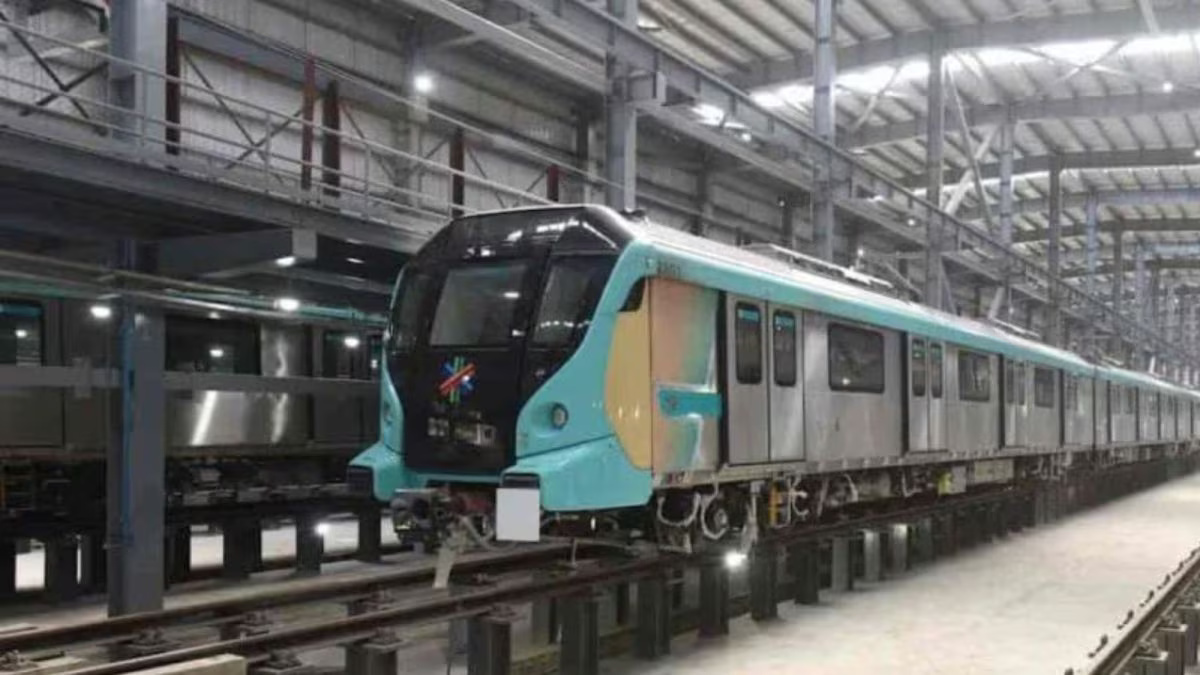
Mumbai’s urban transport landscape is set for a significant shift after the state government cleared a new high-capacity metro corridor designed to directly connect the city’s two airports. The approval paves the way for a 35-kilometre rapid transit line linking the existing international airport in the western suburbs with the upcoming greenfield airport in Navi Mumbai, a move expected to reshape regional mobility, logistics planning and land use patterns across the Mumbai Metropolitan Region.
The project, with an estimated investment exceeding ₹22,000 crore, addresses a long-standing gap in airport-to-airport connectivity. At present, travel between the two aviation hubs depends largely on congested arterial roads and suburban rail interchanges, often resulting in unpredictable travel times. Urban transport experts say the Mumbai Metro Gold Line could offer a reliable alternative for passengers, airport workers and freight-linked services once both airports operate at scale. Officials involved in metropolitan planning describe the corridor as a strategic addition rather than a standalone project. The alignment is expected to intersect with existing and proposed metro lines, suburban rail nodes and key road corridors, enabling smoother multimodal transfers. Such integration is increasingly seen as essential for megacities where aviation growth, population density and daily commuting pressures intersect.
Beyond mobility, the Mumbai Metro Gold Line is also expected to influence economic geography. Improved transit access between Mumbai and Navi Mumbai is likely to strengthen emerging commercial districts, warehousing clusters and residential developments along the route. Real estate analysts note that transit-oriented development around stations could ease pressure on saturated business districts while distributing employment closer to affordable housing zones. Environmental considerations have also shaped the project’s framing. Shifting a portion of airport-bound travel from private vehicles to electric mass transit could reduce fuel consumption and tailpipe emissions across a corridor that currently sees heavy road traffic. Urban planners argue that airport connectivity through metro systems is a practical step towards lowering the carbon footprint of high-frequency travel in large metropolitan regions.
The approval places the project into its next phase, which will involve detailed alignment studies, financing structures and execution timelines. Infrastructure specialists caution that coordination across multiple agencies will be critical, particularly where the corridor passes through dense urban areas and rapidly developing nodes. As Mumbai prepares for a future with two fully operational airports, the Mumbai Metro Gold Line is expected to play a pivotal role in ensuring that growth in air traffic does not translate into greater congestion on city streets. Its success will ultimately be judged by how effectively it delivers seamless, affordable and low-emission connectivity for millions moving across the region each year.
Mumbai Gets Direct Metro Link Between Airports