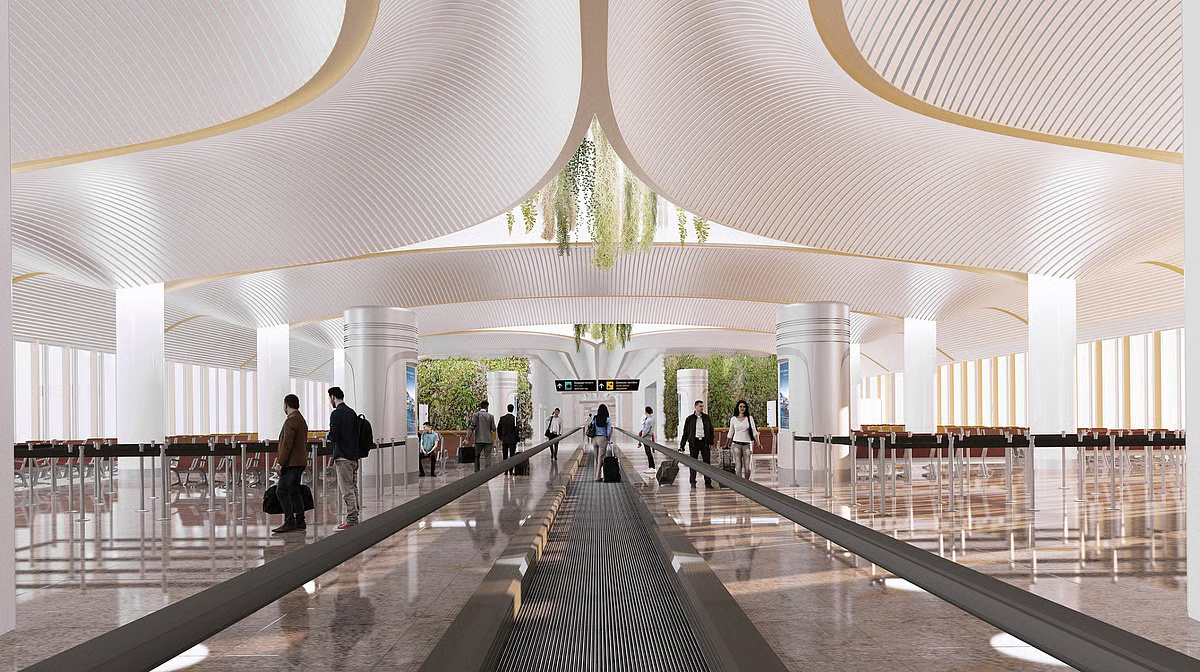
Mumbai has formally entered a new phase of urban and aviation development with the commissioning of Navi Mumbai International Airport, positioning the city as India’s first fully functional dual-airport metropolis. The operationalisation of the new airport marks a structural shift in how air travel demand is managed in the Mumbai Metropolitan Region, long constrained by limited runway capacity and high congestion at the existing airport.
Located in Navi Mumbai, the greenfield airport has been planned as a complementary facility rather than a substitute, enabling a decentralised aviation model that spreads traffic, reduces operational bottlenecks, and improves resilience across the region’s transport network. Urban infrastructure experts say this transition is critical for a megacity that serves as India’s financial and commercial gateway. According to officials overseeing civil aviation, the airport has been designed to handle up to 20 million passengers annually in its initial phase, along with half a million tonnes of cargo. This capacity is expected to grow steadily, supporting both domestic and international routes while strengthening Maharashtra’s role in national and regional aviation flows. Industry analysts note that the scale of the project places it among India’s most significant airport investments of the past decade.
On its opening day, the airport handled dozens of scheduled flights connecting multiple Indian cities, signalling early airline confidence in the facility. Services operated by leading domestic carriers enabled thousands of passengers to transit through the airport, easing pressure on the city’s older aviation hub. An airport operator said the phased ramp-up strategy would allow systems, staff and ground connectivity to stabilise before traffic scales further. Beyond passenger movement, the cargo-handling capability of Navi Mumbai International Airport is expected to reshape regional logistics. With dedicated freight infrastructure and proximity to industrial zones, ports and upcoming logistics parks, the airport is positioned to shorten supply chains and improve efficiency for time-sensitive goods. Trade experts suggest this could enhance Mumbai’s competitiveness as a distribution hub while reducing congestion-related emissions within the city core.
Urban planners also point to the broader city-building implications of the dual-airport model. Improved access to Navi Mumbai and surrounding districts is likely to stimulate transit-oriented development, generate employment closer to emerging residential clusters, and reduce long-distance daily commuting. When aligned with suburban rail, metro and road networks, such infrastructure can support more balanced, inclusive urban growth. As air travel demand in India continues to rise, Mumbai’s shift towards a two-airport system offers a template for managing growth without overburdening a single urban node. If integrated carefully with sustainable mobility and land-use planning, Navi Mumbai International Airport could help the region meet economic ambitions while moving towards a more efficient and environmentally responsible urban future.
Mumbai Gains India First True Dual Airport System With NMIA Opening