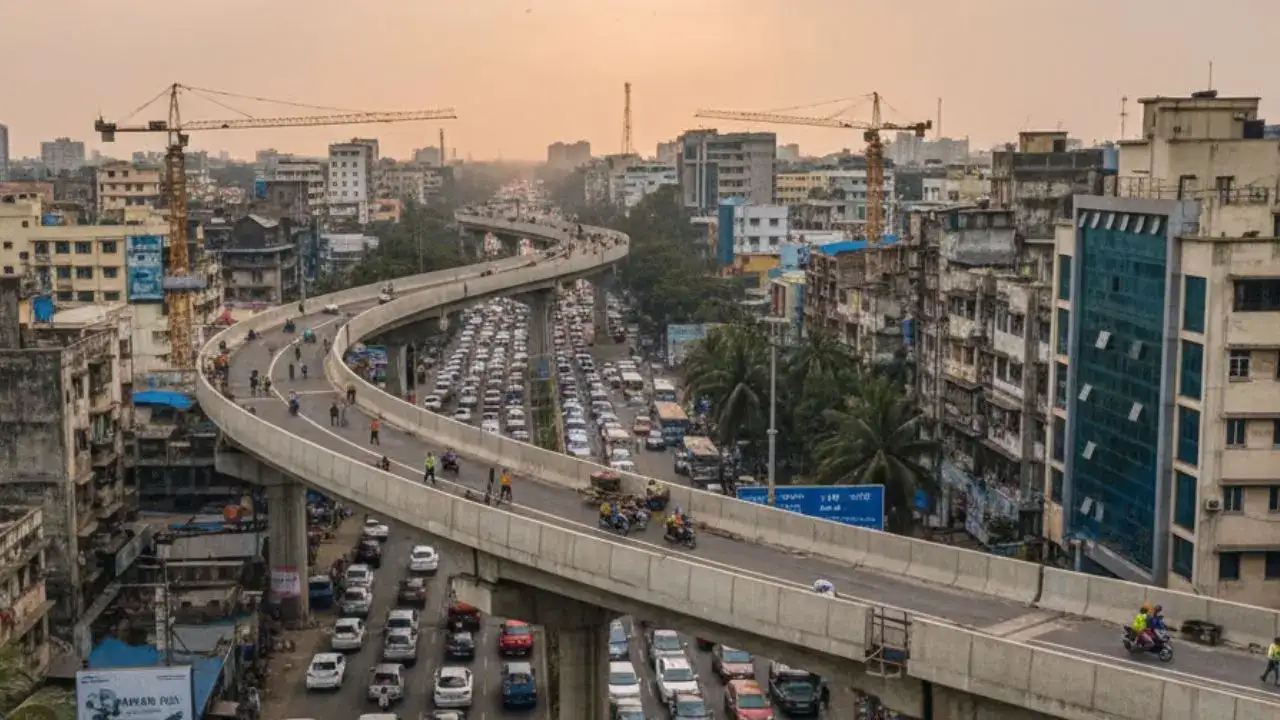
Mumbai’s civic authorities have initiated a fresh technical review of the Veer Savarkar flyover in Goregaon West after an expert team from a leading national engineering institute recommended specific design refinements that could influence whether the structure must be demolished or upgraded. The assessment, conducted during a site inspection this week, marks a significant step in resolving an infrastructure dilemma linked to the proposed Mumbai Coastal Road Project (North).
According to civic officials, the visiting experts examined the flyover’s physical alignment, available clearance, turning radii and the feasibility of optimising its existing spans. These checks were aimed at determining whether the flyover could accommodate emerging mobility needs without requiring full demolition. Following the inspection, the team requested revised design drawings and supporting engineering documents before completing its formal report. An official involved in the exercise confirmed that civic engineers are now incorporating the suggested refinements and will submit the updated set of drawings within the next fortnight. A technical review meeting is expected thereafter, during which the feasibility of using monopile technology as an alternative foundation system will be evaluated in depth.
Monopile construction—widely used in offshore wind and bridge projects—relies on a single large-diameter reinforced pile anchored deep into the ground. Experts note that its smaller footprint and reduced material demand could offer benefits in dense urban environments, particularly where land constraints and ecological sensitivities are at play. If deemed viable for the Goregaon structure, the method could support Mumbai’s wider objectives of minimising demolition waste, reducing emissions from construction activity and prioritising low-impact infrastructure upgrades. Built seven years ago at a cost of Rs 27 crore, the flyover serves as an important east–west connector, linking the Western Express Highway with residential clusters in Goregaon West and helping commuters bypass S.V. Road. Its future became uncertain earlier this year after civic planners proposed dismantling it to create space for the northern extension of the Mumbai Coastal Road corridor from Versova to Dahisar. The proposal drew strong community and political opposition, with many arguing that demolition would be wasteful and disruptive at a time when the city is striving for more sustainable mobility planning.
Urban planners tracking the development say the ongoing review reflects a necessary shift towards more resource-efficient decision-making. Instead of assuming demolition as the default option, they argue that cities must increasingly explore engineering alternatives that conserve materials, safeguard neighbourhood continuity and reduce the environmental burden of construction. The final recommendation from the expert institute is expected to guide the city’s next steps. Whether the flyover is retained, retrofitted or redesigned, the decision will likely set a precedent for how Mumbai approaches future infrastructure upgrades in a carbon-conscious urban era.
Mumbai Flyover Study Seeks Design Tweaks As BMC Prepares Revised Plans Submission