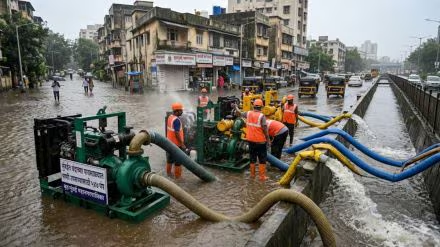
Mumbai Flood Plan Expands With 547 Pump Deployment
Mumbai’s civic body is scaling up its monsoon preparedness strategy with a significant increase in dewatering infrastructure, as the Brihanmumbai Municipal Corporation (BMC) plans to deploy 547 pumps across the city ahead of the 2026 rainy season. The move reflects a growing emphasis on rapid-response flood mitigation in one of India’s most flood-prone urban regions.
The expanded deployment—up from 504 pumps last year—will focus on low-lying and waterlogging-prone locations, where even moderate rainfall can disrupt daily life. The pumps will be operational from late May through mid-October, covering the full monsoon cycle and ensuring continuous readiness during peak rainfall periods. Dewatering pumps play a critical role in Mumbai’s flood management system, particularly given the city’s geography. Several areas lie below sea level, and natural drainage is often insufficient during high tides or intense rainfall. These pumps actively remove accumulated water by lifting it into stormwater drains, rivers, or directly into the sea, helping prevent prolonged waterlogging. The increased deployment comes amid growing concerns over climate variability and unpredictable rainfall patterns. In recent years, Mumbai has experienced sudden, high-intensity downpours outside traditional peak periods, placing additional pressure on drainage systems. Civic authorities are therefore shifting towards more proactive and distributed flood management measures.Urban planners note that the reliance on pumping infrastructure highlights both progress and persistent gaps in the city’s stormwater system. While Mumbai has undertaken upgrades to drainage networks, much of the system still depends on gravity flow and has limited capacity during extreme rainfall events. As a result, pumps act as critical intervention tools in managing excess water during peak conditions.
The strategy also reflects lessons from past monsoon disruptions, where inadequate or malfunctioning pumps contributed to severe flooding in key areas. Increasing the number of units, along with backup systems and contractual maintenance, is aimed at improving reliability and response time during emergencies.From a governance perspective, the deployment involves coordination between municipal departments and private contractors responsible for operation and maintenance. Given staffing limitations within civic workshops, external agencies are tasked with ensuring that pumps remain functional throughout the season, highlighting the growing role of outsourced infrastructure management in urban services. For residents, the implications are immediate. Faster water clearance in flood-prone zones can reduce commute disruptions, protect property, and improve overall urban resilience during heavy rains. However, experts caution that pumping alone cannot address systemic challenges such as clogged drains, encroachments, and inadequate desilting.The expansion also ties into broader urban resilience planning. As cities face increasing climate risks, infrastructure investments are shifting towards adaptive systems that can respond dynamically to extreme weather events rather than relying solely on static capacity upgrades.
Looking ahead, the effectiveness of Mumbai’s monsoon preparedness will depend on how well these pumps integrate with other measures, including drainage maintenance, early warning systems, and land-use planning.As rainfall patterns become more erratic, the city’s approach to flood management is evolving—from reactive crisis handling to more anticipatory and technology-supported interventions aimed at keeping a dense urban ecosystem functional under stress.