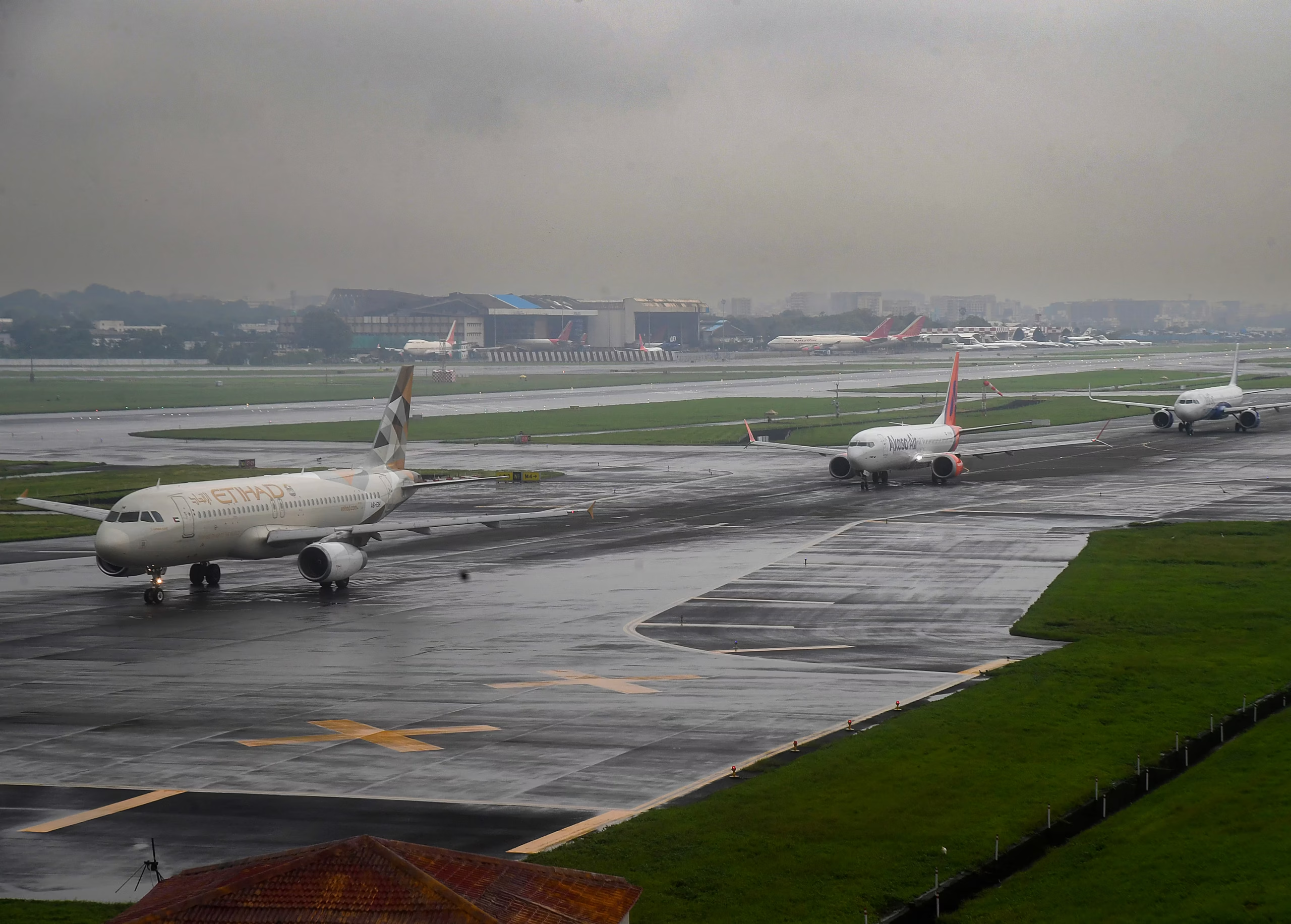
Mumbai flight suffers tail strike during heavy rains DGCA begins probe
Passengers aboard a Bangkok to Mumbai flight had an anxious moment when an Airbus A321 aircraft struck its tail on landing amid heavy rains early Saturday. The aircraft, operated by a leading carrier, was forced into a go-around after descending to under 550 feet, before finally touching down safely at Mumbai’s main runway. The incident has raised renewed concerns about flight safety in India’s busiest airports during extreme weather conditions.
The airline confirmed that the tail strike occurred while the pilots attempted a low-altitude manoeuvre in poor visibility. Following protocol, the aircraft was withdrawn from service for inspection and repairs before being cleared for future operations. Officials emphasised that passenger and crew safety remained the airline’s top priority and that operational disruptions would be minimised.
What has drawn criticism, however, is that Mumbai’s air traffic control was not immediately informed of the tail strike. Aviation experts underline that such an omission is serious, as a strike can damage runway surfaces, dislodge materials, or leave debris, posing risks to subsequent flights. Standard safety procedures require airlines to alert controllers instantly so that runway checks can be carried out. The Directorate General of Civil Aviation (DGCA) has initiated a probe into the incident. Regulators have in recent years tightened oversight of tail strike occurrences, particularly on the Airbus A321 fleet. With a fuselage 22 feet longer than the standard A320, the aircraft demands greater precision during take-off and landing, especially in turbulent conditions.
Industry insiders highlight that this is not the first such case in the domestic skies. Earlier this year, another A321 operating between Mumbai and Chennai suffered a similar strike, while a separate incident last year saw a Delhi departure compromised by tail impact. The DGCA had already fined the airline ₹30 lakh in 2023 after identifying systemic shortcomings in training and operational procedures, with four tail strikes reported within six months. The recurrence of such events places India’s aviation growth story under scrutiny. With domestic traffic expanding rapidly and monsoon turbulence becoming more frequent, safety margins are being tested. Experts suggest that carriers must strengthen pilot training for challenging weather operations and invest in advanced landing technologies. Cities like Mumbai, with high passenger volumes and monsoon-driven unpredictability, are especially vulnerable if safety protocols are diluted.
Observers also point out the environmental dimension. As India strives for sustainable and net-zero carbon aviation, ensuring flight safety is not only about preventing accidents but also about reducing operational wastage. Every diversion, aborted landing, or grounding adds to carbon emissions, fuel burn, and costs, undermining the sector’s long-term sustainability goals. For passengers, the safe landing came as a relief, but the incident adds to anxieties about transparency and preparedness in India’s aviation sector. The final word now rests with the DGCA’s investigation, which will determine whether regulatory gaps or operational lapses were at play. What remains clear is that aviation safety must remain uncompromised, even as India’s cities push towards smarter, greener connectivity.