


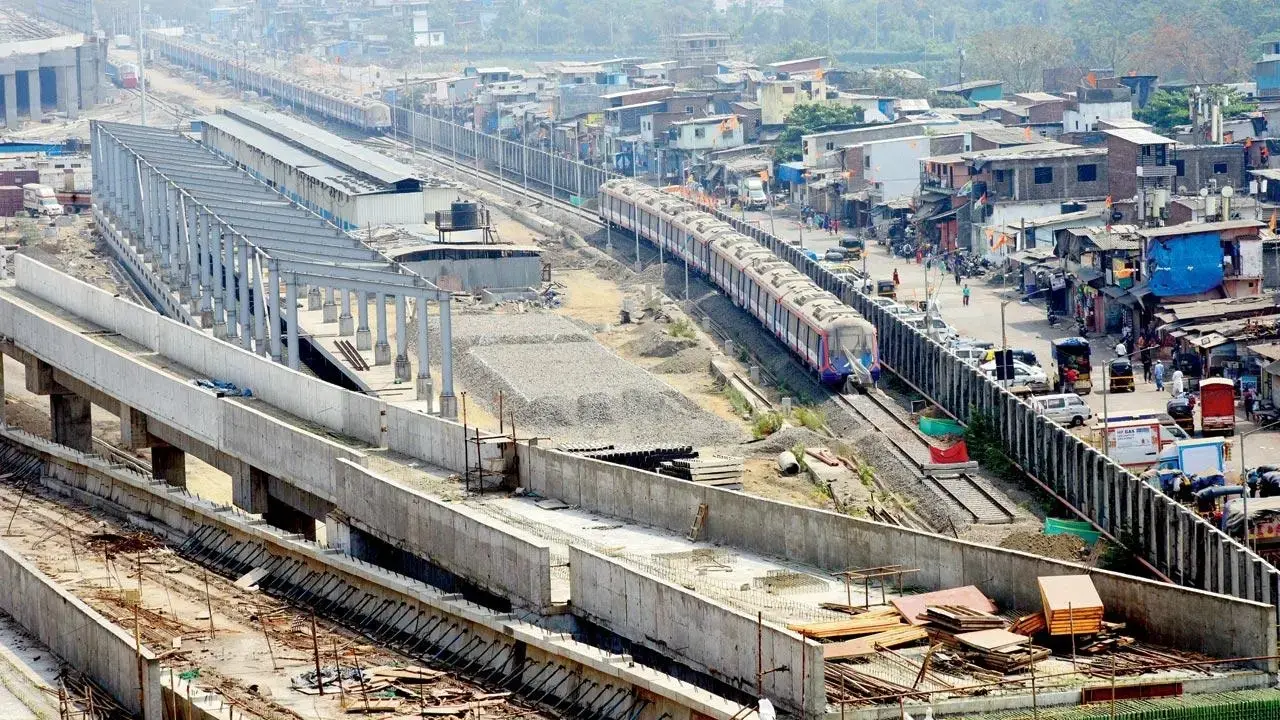
Metropolitan Region Development Authority (MMRDA) has implemented a new policy imposing strict financial penalties on contractors who fail to mobilise adequate manpower. The policy comes at a time when over 150 kilometres of metro corridors are under active construction across the Mumbai Metropolitan Region.
Under the newly introduced manpower mobilisation policy, the MMRDA will levy fines of ₹1 lakh per day if a contractor reports a workforce shortfall between 25 and 50 percent. If the shortfall exceeds 50 percent, the penalty increases to ₹2 lakh per day. These fines are effective immediately and are applicable without prior notice. Officials associated with the metro project stated that the objective is not only to penalise delays but to foster a system of accountability and discipline. According to the MMRDA, the policy is rooted in the idea that infrastructure development must proceed with urgency, reliability, and public interest at its core. With multiple metro lines expected to be completed within the year, any delays in construction would directly affect mobility and quality of life for over two crore citizens in the region.
Senior officials indicated that this policy is part of a broader shift in governance, where infrastructure projects are being managed with sharper focus, better coordination, and performance-driven frameworks. The authority has already started deploying dedicated team leaders for each metro package to monitor manpower deployment and execution timelines. The MMRDA has also introduced site-level audits and daily reporting mechanisms to enforce compliance. Routine reviews of contractor performance will help ensure that bottlenecks are identified early and addressed swiftly.
The authority clarified that fines would not be the only consequence. Contractors who fail to meet “Key Dates” or miss milestone targets will face additional contractual penalties. These measures, officials said, were necessary to maintain the momentum of one of the country’s largest urban transport initiatives. The policy received full backing from state leadership, with key government representatives expressing that infrastructure development in a global city like Mumbai must reflect global standards of execution. According to top state officials, this new direction demonstrates the state’s intent to position Mumbai as a leader in urban mobility while setting an example for cities across India.
Urban planning experts have welcomed the move, viewing it as an opportunity to make public infrastructure delivery more predictable and transparent. With a high volume of commuter traffic expected on new metro routes, delays can cause cascading socio-economic impacts—from reduced productivity to increased vehicular pollution due to prolonged dependency on road transport. The penalties also serve a secondary purpose: signalling to contractors that only firms with robust manpower management, worker welfare systems, and proven delivery capabilities will be entrusted with future packages. This filtering process is expected to bring greater professionalism into large-scale infrastructure delivery.
However, the new policy is not without challenges. Labour mobilisation can be affected by seasonal migration, industrial actions, or on-site housing and health facilities. Observers suggest that while enforcement is necessary, the MMRDA should also provide ecosystem support—such as improved living conditions for workers—to ensure that contractors can fulfil their obligations. The MMRDA’s policy also has potential implications for cost structures. Contractors may revise project budgets to accommodate fines as risk factors. In the long term, this could lead to more accurate pricing and improved risk-sharing arrangements between public authorities and private players.
The authority has reiterated that its approach is not about punishment alone, but performance. “We are not just building metro lines; we are building trust with citizens,” said one official, highlighting that public faith in infrastructure depends on visible progress and credible delivery. The metro project, when completed, is expected to significantly reduce travel times, decongest roads, and lower emissions—aligning closely with Mumbai’s goals of sustainable, zero-carbon growth. Ensuring timely delivery is therefore not just a logistical necessity but an environmental and social imperative.
With multiple metro corridors set to be commissioned by late 2025, the success of this new policy will be measured by how closely contractors stick to schedules, how efficiently issues are resolved, and how effectively commuter expectations are met. By enforcing fines for manpower shortfalls, Mumbai is signalling that it will no longer tolerate delays in critical urban projects. The move is not just administrative—it reflects a broader cultural shift towards accountability, timeliness, and transparency in the delivery of public infrastructure. If successful, this model could reshape how infrastructure is executed across urban India.
Also Read: Delhi Metro Removes Banners to Restore City Aesthetics
