


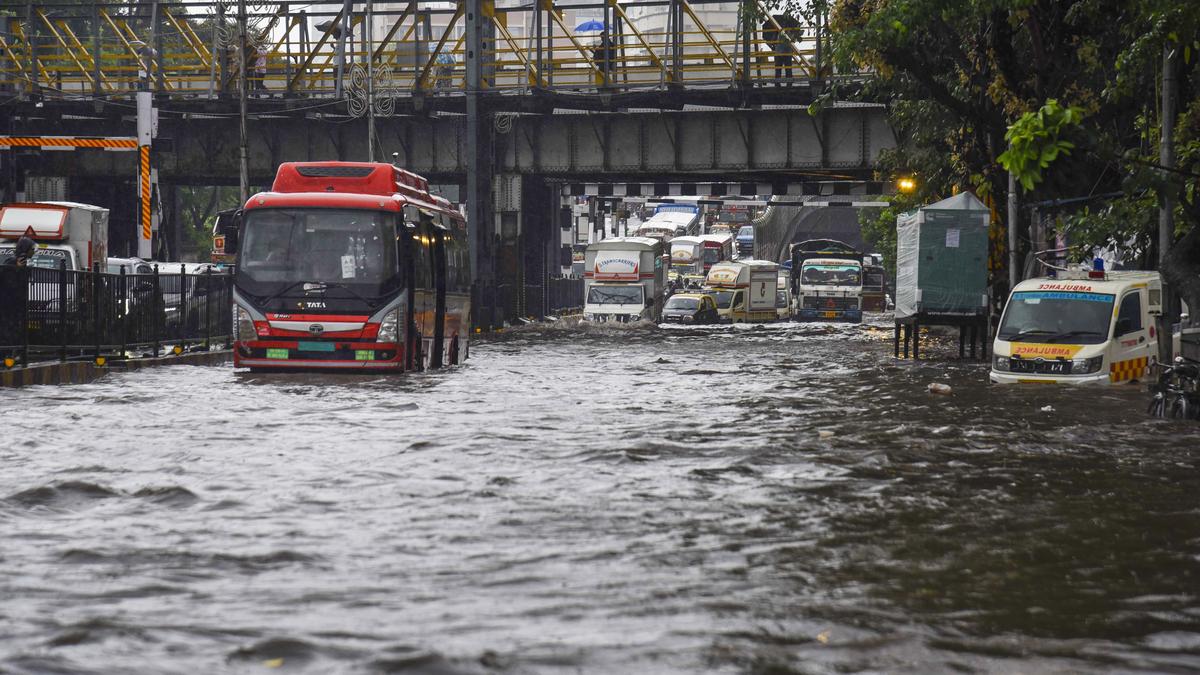
Mumbai’s much-hyped pre-monsoon preparedness came under scrutiny this week as the Brihanmumbai Municipal Corporation (BMC) imposed a cumulative fine of ₹40 lakh on four private contractors for failing to activate critical flood-prevention infrastructure during Monday’s intense downpour.
The civic action comes after the city experienced severe waterlogging in multiple low-lying zones, paralysing vehicular traffic and briefly disrupting suburban railway operations. The heavy rains, which delivered up to 250 mm of rainfall in some areas within a span of 13 hours, overwhelmed drainage systems in parts of South and Central Mumbai—precisely where the city had installed mini pumping stations aimed at mitigating such risks.The BMC, in a late Tuesday press release, confirmed that the operators of mini pumping stations at Hindmata, Gandhi Market, Yellow Gate and Chunabhatti had failed to comply with contractual requirements. Each operator has been fined ₹10 lakh for non-performance and violation of terms, which mandated these flood-control systems be fully operational before 25 May, ahead of the monsoon’s onset.
These mini stations, critical to draining water from Mumbai’s flood-prone zones, are part of a decentralised mitigation strategy adopted in recent years. They operate independently of the city’s main pumping infrastructure and are designed to deliver rapid local relief during flash floods. However, the civic body noted that not only were the stations not functioning at full capacity, but in some cases, they had not even been activated during peak rainfall hours.Localities like Dadar TT, Hindmata, Parel, Kalachowki, and Wadala bore the brunt of the malfunction, with road traffic reduced to a crawl and residents stranded in flooded streets. In some areas, stormwater mixed with sewage overflowed onto pavements, raising public health and sanitation concerns.
The BMC clarified that the penalty is part of a zero-tolerance approach toward lapses in monsoon management, especially given the increasing frequency of extreme weather events attributed to climate change. It reiterated that stringent action would be taken against any further negligence in the coming months, given that June traditionally marks the beginning of peak monsoon activity.Interestingly, the Chunabhatti station was also penalised, despite receiving lower rainfall than other zones. Officials explained that the decision was based on its underperformance during the rainfall window, suggesting a systemic failure in ensuring round-the-clock readiness.
As Mumbai intensifies its efforts toward becoming a climate-resilient metropolis, episodes like these underscore the gaps in urban governance and contractor accountability. While the civic body’s response marks a firm step towards enforcement, the broader question remains—can India’s financial capital adapt its ageing infrastructure to meet the realities of a rapidly changing climate?
For now, the city watches the skies and its drains with apprehension, hoping that lessons from this lapse will result in more robust, greener, and accountable urban systems.
Also Read : Development Projects Worth Rs 70000 Cr to Transform Four States
