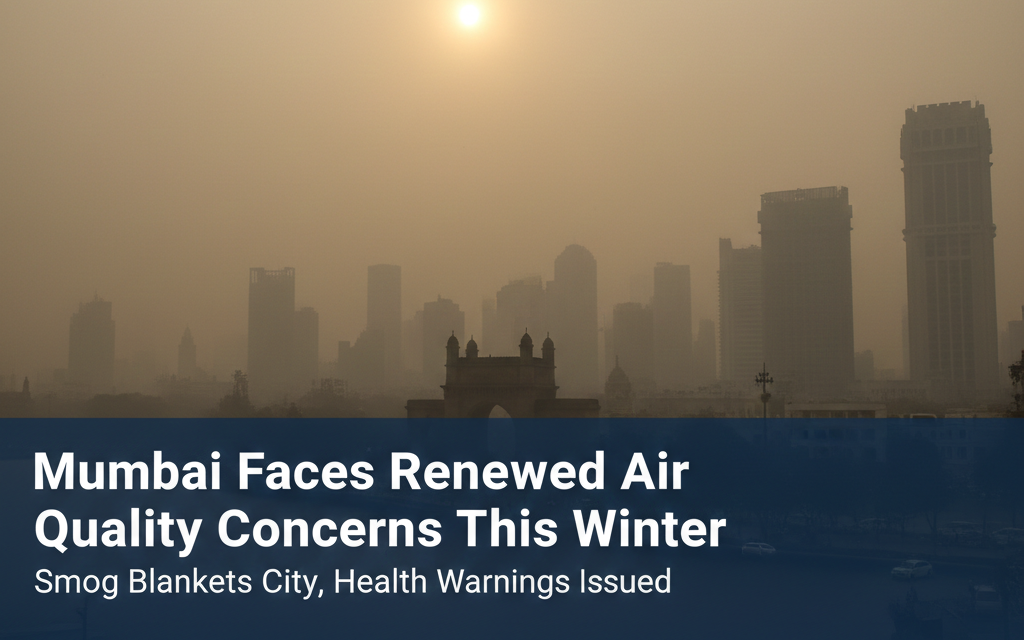
Mumbai’s air quality has once again slipped into an unhealthy range, raising fresh concerns about the city’s ability to protect public health amid rising urban density, traffic congestion, and construction activity. On Monday, monitoring data showed the city’s Air Quality Index (AQI) touching 141, placing it in the “unhealthy for sensitive groups” category and signalling a return of persistent smog across large parts of the metropolis.
Several neighbourhoods, particularly in the eastern corridor and industrial belts, recorded elevated pollution levels through the day. Urban health practitioners noted an increase in respiratory complaints, including coughing, throat irritation, and allergy-related symptoms, especially among children, senior citizens, and individuals with pre-existing heart and lung conditions. The deterioration comes at a time when Mumbai’s winter meteorological conditions typically limit the dispersion of airborne pollutants. Data released by national pollution monitoring agencies indicated that particulate matter remained the dominant concern, with PM10 levels exceeding safe thresholds at most monitoring stations. Transport hubs and high-traffic zones emerged as the most affected, underscoring the growing challenge of managing emissions in a city where mobility demand continues to rise alongside infrastructure expansion. In contrast, a few suburban pockets with relatively higher green cover reported comparatively moderate readings, highlighting the uneven distribution of environmental stress within the urban landscape.
Urban planners and environmental experts pointed to a combination of factors driving the sustained haze. Calm wind patterns have reduced pollutant dispersal, while secondary particulate matter — formed through chemical reactions involving vehicular emissions and industrial by-products — has intensified pollution levels. Ongoing construction, road dust, and diesel-based freight movement were also identified as contributors to deteriorating air quality. Despite repeated judicial scrutiny and policy directives aimed at curbing air pollution, enforcement gaps remain evident. Measures such as dust suppression at construction sites, stricter vehicle emission checks, and traffic management during peak hours have shown limited on-ground impact, according to civic observers. The persistence of poor air quality raises questions about coordination between urban planning, transport policy, and environmental regulation in India’s financial capital.
From a broader urban development perspective, the episode highlights the urgent need to integrate air quality management into Mumbai’s growth strategy. As the city continues to attract investment in real estate, infrastructure, and logistics, experts argue that pollution mitigation must become a core component of project planning and mobility design. Cleaner transport systems, expanded public transit usage, and nature-based solutions such as urban green buffers are increasingly seen as essential for long-term resilience. Looking ahead, sustained improvements will depend on consistent monitoring, transparent data-sharing, and stronger enforcement across sectors. With climate risks intensifying and public health costs mounting, Mumbai’s struggle with air quality serves as a reminder that economic growth and environmental stability must progress together to ensure a liveable and inclusive urban future.
Mumbai Faces Renewed Air Quality Concerns This Winter