


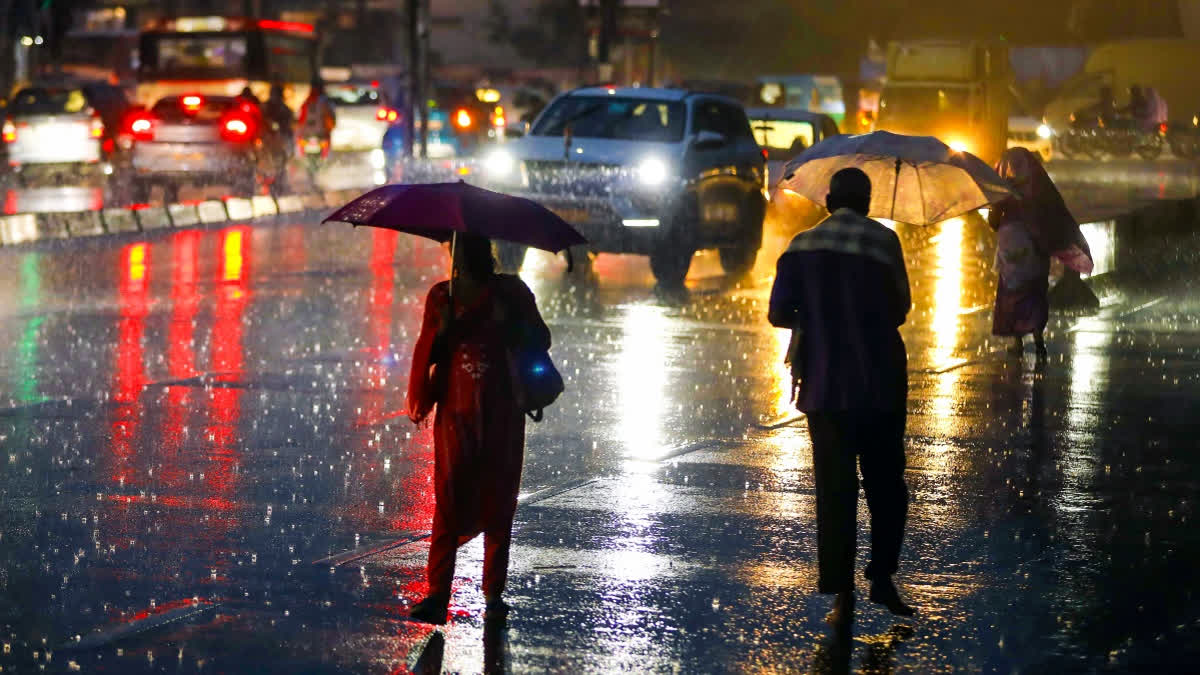
Mumbai and several districts of Maharashtra are grappling with severe monsoon disruption after the India Meteorological Department (IMD) issued an orange alert predicting heavy to very heavy rainfall, thunderstorms, and gusty winds. The alert covers Mumbai, Pune, Ahilyanagar, Beed, and Palghar, with officials warning that the intensity of showers may persist for the next 24 hours.
On Monday, vast swathes of Mumbai’s arterial routes were submerged, paralysing mobility in key neighbourhoods such as King’s Circle, Lalbaug, Worli, Dadar, and Parel. Even the JJ Flyover, usually seen as a reliable elevated escape from monsoon flooding, was not spared, while the newly built underpass at Worli leading to the coastal road project went underwater. Experts noted that recurring waterlogging in such critical infrastructure underscores the urgent need for sustainable drainage planning in India’s financial capital. Officials confirmed that schools in Beed district were ordered shut for Classes 1 to 7 on Tuesday, citing safety risks from continued downpours. The Marathwada region, including Chhatrapati Sambhajinagar, is witnessing its third consecutive day of intense showers, further raising concerns of crop damage and disruption to rural livelihoods.
Air travel too came under pressure, with airlines advising passengers flying from Pune to factor in possible delays. An advisory issued by a leading carrier urged commuters to track flight status in real time, prepare for longer road commutes due to waterlogging, and account for traffic congestion around airports. According to IMD experts, gusty winds of 30–50 kmph are expected to accompany the heavy showers across Konkan and Marathwada, with lightning and thunderstorms adding to safety risks. Vidarbha has been placed under a yellow alert, warning of moderate to heavy rains in the coming days. The meteorological agency has underlined that these weather patterns are consistent with an extended monsoon cycle, influenced by changing wind systems over the Arabian Sea.
Civic officials in Mumbai acknowledged that while pre-monsoon preparations reduced flooding in select zones, the persistence of waterlogging in low-lying areas highlights gaps in stormwater drainage capacity. Experts also point to the mounting challenge of balancing rapid urbanisation with climate resilience, urging cities like Mumbai and Pune to adopt sustainable, zero-carbon solutions for flood management, urban planning, and mobility infrastructure. While the rains provide much-needed water recharge for reservoirs, the disruption across transport, education, and public safety reveals how urban systems remain vulnerable to climate variability. The coming days will be critical for both civic agencies and residents as Maharashtra navigates the peak of this year’s monsoon cycle.
Also Read: BMC Approves Second Phase Kala Ghoda Precinct Redevelopment With Twelve Crore Budget
