


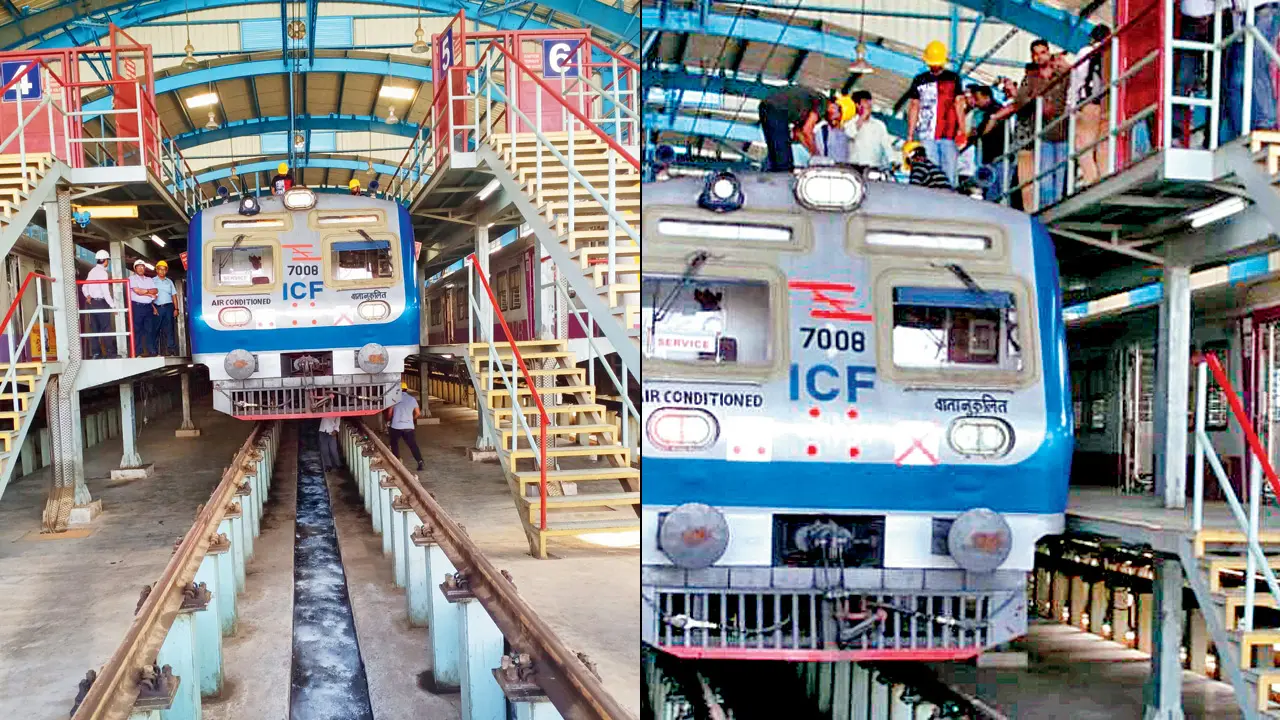
Mumbai’s suburban railway network is on the brink of a significant transformation, with 138 new trains set to join the city’s sprawling fleet over the next five years. Officials report that while this expansion will boost commuter services, it also exposes a pressing infrastructure challenge: limited stabling space for the growing fleet.
With multiple projects underway — including the Virar–Dahanu third and fourth lines, Borivali–Virar and Kalyan–Kasara corridors, and the Karjat–Panvel link — the network will see new stations and car sheds. However, railway authorities are actively seeking land beyond Mumbai to park and maintain the new rakes, as existing stabling yards are stretched to capacity. Currently, Western Railway (WR) operates 112 trains across 1,406 services but has stabling space for only 116 trains. To keep pace, WR plans 61 new stabling lines by 2031, with 25 beyond Dahisar, 25 near Virar, and 11 at Dahanu. Central Railway (CR), operating 166 trains across 1,810 services, anticipates its fleet doubling to 304 trains with MUTP Phases 3 and 3A. Yet, only 92 of the 266 additional stabling lines required have been planned, creating a substantial shortfall.
“The decision to develop stabling yards in suburban areas such as Virar, Dahanu, and Panvel responds to acute land scarcity in central Mumbai. These expansions will relieve operational pressure and enhance flexibility,” explained a senior MRVC official. Two new EMU car sheds are also planned — one at Vangaon for WR and another at Bhivpuri for CR — incorporating advanced inspection systems with sensor-based checks to reduce manual workloads. Each facility will accommodate 80–100 trains, supplementing the six existing sheds that currently manage roughly 250 trains. Experts and commuter representatives stress that efficient use of existing yards, combined with technological innovations like AI-based scheduling, will be critical to avoid delays. Urban planners note that operational disruptions could affect daily services unless new stabling yards and infrastructure upgrades are completed in tandem with the expansion of the suburban network.
The railways face a delicate balancing act: introducing new trains to meet surging commuter demand while ensuring sustainable, timely operations. Mumbai’s population growth and dependence on suburban rail services make this a high-stakes challenge for both authorities and the city’s daily commuters.
Also Read :Indore Municipal Corporation Plans Floating Wetlands To Rejuvenate City Rivers Sustainably
