


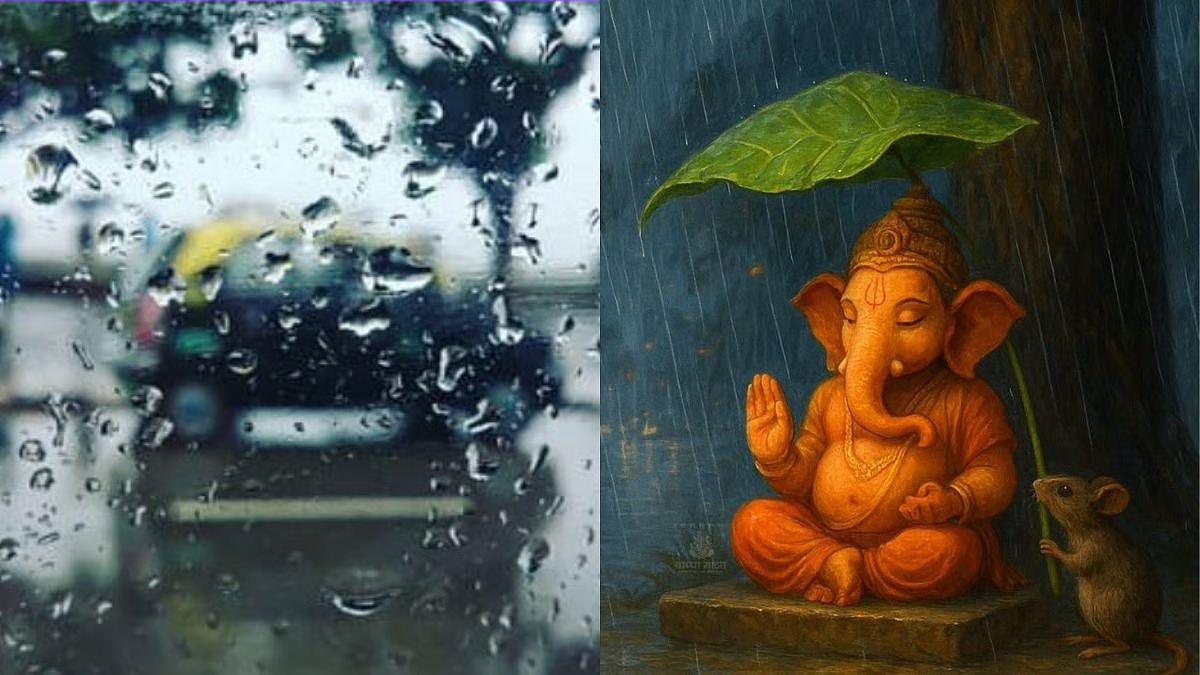
Mumbai woke up to steady spells of rain on Saturday as the city geared up for the final day of Ganpati visarjan. With lakhs of devotees expected to join immersion processions, the India Meteorological Department (IMD) issued weather alerts across Mumbai and its neighbouring districts, warning of conditions that may impact both travel and safety.
The IMD placed Mumbai under a yellow alert, signalling the likelihood of moderate to heavy rainfall during the day. Officials noted that light showers through the morning were expected to intensify by late afternoon and evening. The maximum temperature is forecast to remain around 30 degrees Celsius, while humidity and coastal winds will continue to add to the sultry conditions. Thane and Navi Mumbai too have been placed under yellow alerts. Civic authorities have cautioned that sudden bursts of rain may extend immersion timelines and cause delays on major roads. With crowds expected across visarjan routes, officials advised commuters to plan their movements in advance, especially during peak procession hours. Maximum temperatures in the satellite cities are expected at 29 degrees with minimums around 24 degrees.
Palghar district, which has faced persistent downpours throughout the past week, has been issued an orange alert. The weather office warned of the risk of very heavy showers in isolated areas, which could lead to waterlogging and affect rural transport networks. The district’s temperatures are projected to range between 24 and 28 degrees Celsius, accompanied by strong winds. Along the Konkan belt, Raigad, Ratnagiri and Sindhudurg remain under yellow alerts. These districts are forecast to see uneven rainfall—intense in some pockets and light in others. Meteorological experts predict wind speeds of up to 30 kmph and rising humidity, creating rough conditions for coastal communities. The sea is likely to remain choppy, with high waves expected, raising concerns for fisherfolk and coastal residents.
Urban planners and climate experts have pointed out that Mumbai’s visarjan coincides with a period of heightened monsoon activity, underscoring the city’s vulnerability to weather extremes. They emphasised that while celebrations remain central to cultural life, sustainable infrastructure, efficient water drainage, and climate-responsive urban design are essential to reduce disruption during such large-scale public gatherings. Officials have assured that disaster management teams, civic staff, and police units are on high alert to ensure both safety and smooth movement during the immersion processions. However, they urged citizens to remain cautious, avoid unnecessary travel during peak rains, and use public transport wherever possible to minimise congestion.
As Mumbai readies itself for the grand farewell to Ganpati, the balance between cultural traditions and climate resilience will once again be tested under the watch of the monsoon skies.
Also Read : North East Aviation Summit Highlights Connectivity Growth And Infrastructure Plans
