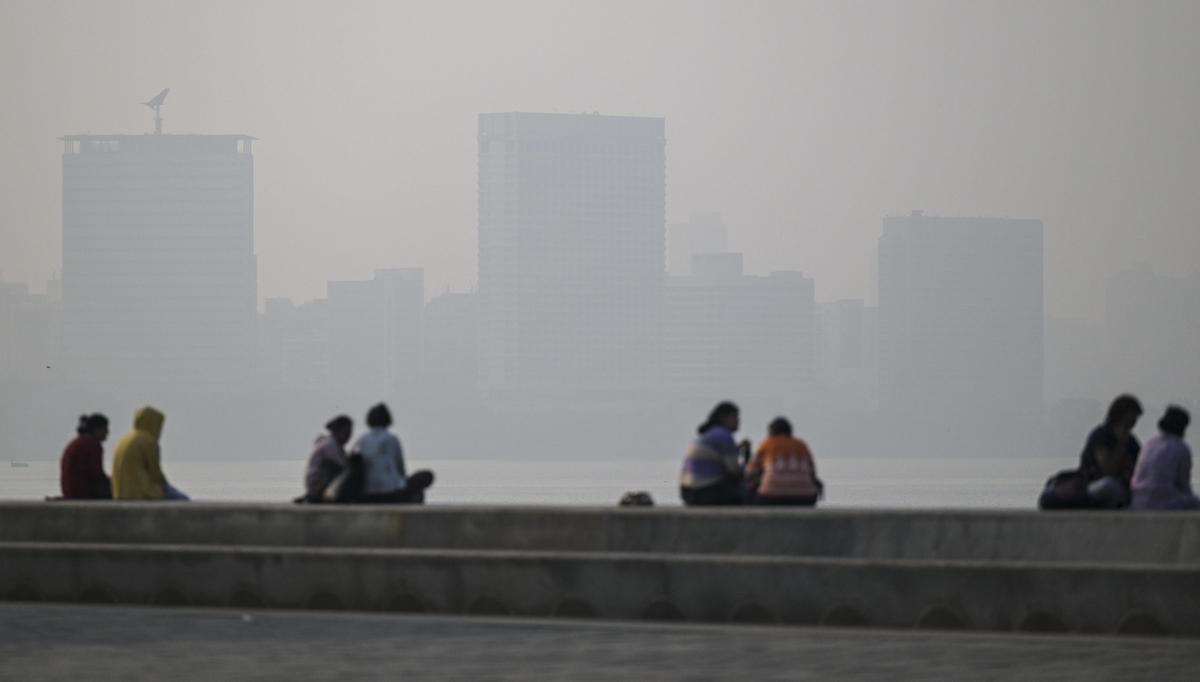
Mumbai began Monday with a crisp winter morning, temperatures ranging between 19°C and 32°C, yet the city’s signature blue skies were partially obscured by a dense layer of smog. The India Meteorological Department (IMD) had forecast clear skies, but the effects of ongoing urban development, traffic emissions, and construction dust quickly dominated, creating discomfort and visibility challenges across the metropolis.
Experts note that Mumbai’s rapid infrastructure expansion, including metro corridors, coastal roads, bridges, and private real estate projects, contributes significantly to airborne particulate matter. “Dust from construction, coupled with vehicle emissions, traps fine particles in low-lying areas, worsening air quality,” an environmental analyst explained. These emissions, unable to disperse efficiently in early winter conditions, have led to hazardous atmospheric conditions. By morning, citywide AQI measurements indicated a worrying 255 on average, placing Mumbai firmly in the ‘unhealthy’ bracket. Industrial and commercial zones faced the highest pollution, with Wadala Truck Terminal recording 455, Chembur 316, and Kurla 306. Prominent business districts, including Bandra Kurla Complex and coastal areas like Worli, registered AQI above 300. Suburban residential areas were slightly better, yet still concerning, with Jogeshwari East at 113, Govandi 133, and Parel–Bhoiwada 187.
The health impact on residents was evident. Citizens reported burning eyes, throat irritation, headaches, and dryness in nasal passages. Such exposure to PM2.5 particles can exacerbate respiratory conditions and other health vulnerabilities, particularly among children and the elderly. Urban planners suggest a long-term strategy integrating green buffers, stricter emissions control, and enhanced monitoring of construction dust. Mumbai’s pollution scenario underlines the challenge of balancing urban growth with environmental sustainability. “While winter brings cooler temperatures, air quality management remains critical to safeguard public health,” a senior urban development official remarked. Experts urge residents to limit outdoor activity during peak pollution periods and to use protective measures such as masks and indoor air purifiers.
This early winter smog event signals the need for comprehensive urban air management solutions, from green infrastructure to clean mobility, to preserve Mumbai’s livability and support equitable, zero-carbon urban development.
Mumbai Faces Chilled Morning With Smog Filled Skies And Unhealthy AQI Levels